The Communion of Saints, Explained
Explore Saints · 2 min read · Updated
A clear guide to the communion of saints: what Catholics share, whom it includes, and how the belief touches daily life.
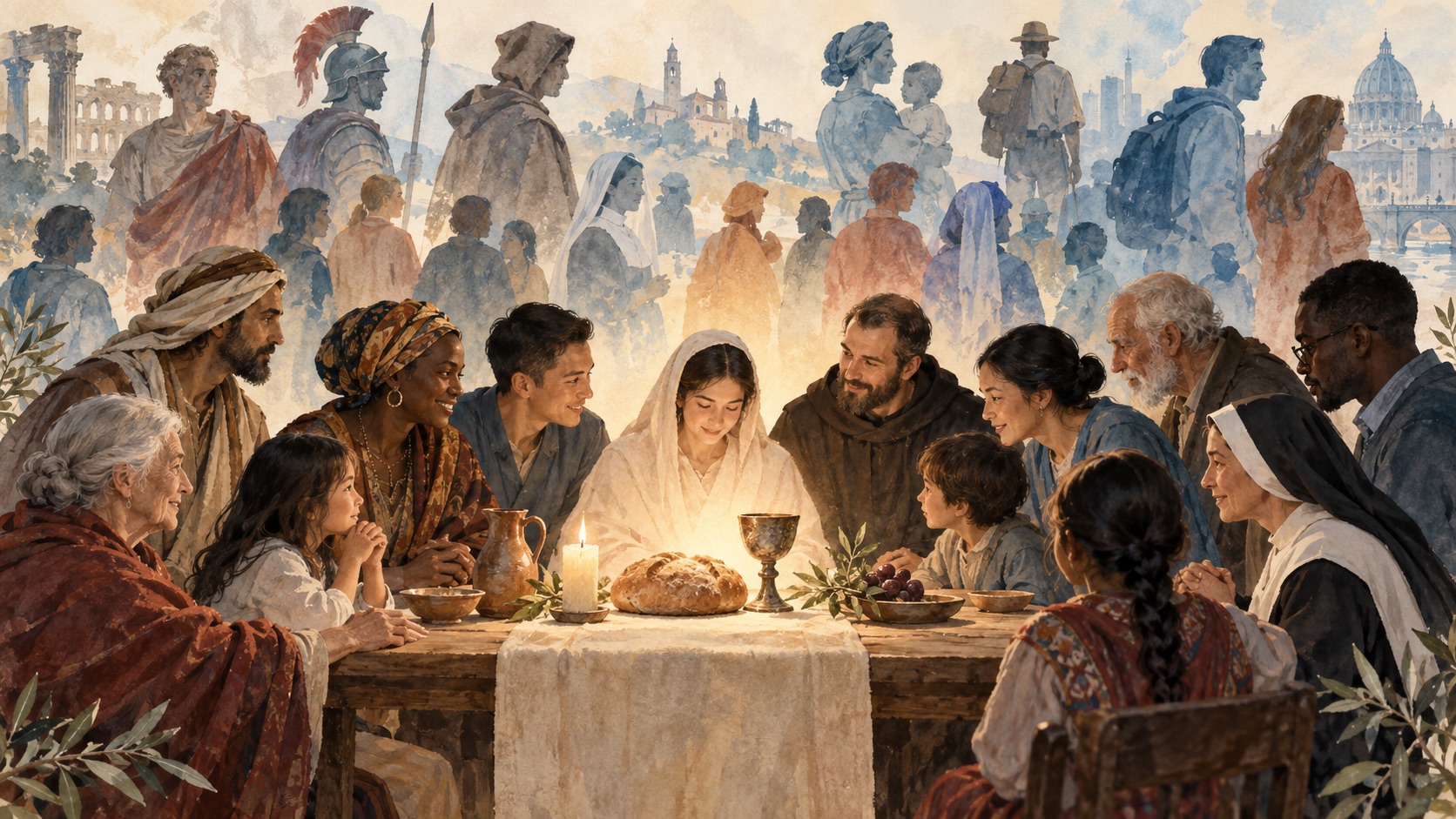
A family bigger than the parish directory
The phrase 'communion of saints' can sound like the title of a very large guest list. The Catholic meaning is richer. The Catechism gives it two linked senses: sharing in holy things, especially the Eucharist, and communion among holy people. Christ is the center of that shared life. The Church includes believers living now, those being purified after death, and those blessed in heaven.
A Catholic can speak of the Church across centuries because this communion reaches beyond any one generation. The people in it held very different lives and, surely, different opinions about the weather.
Sources: Catechism 946–948 and 954–962
What actually gets shared?
The Catechism names faith, the sacraments, spiritual gifts, and charity among the goods shared within the Church. It puts care for others inside the teaching, not in a footnote. A meal delivered to a sick neighbor and a prayer offered for someone in trouble are very different acts, but both express concern for another member of the body.
The teaching reaches well beyond famous names. Josephine Bakhita's story, for example, raises a present question: whose dignity is being denied nearby, and what help have they actually asked for?
Explore further
Sources: Catechism 949–953 · Pope Francis on Josephine Bakhita
Why pray for the dead or ask saints for prayers?
Catholics pray for those who have died and ask those in heaven to intercede because they believe death does not sever the Church's bond in Christ. The Catechism describes the saints' intercession as service within God's plan. It also says prayer for the dead belongs to the Church's practice. Both practices place their hope in God.
If the idea is new to you, start with a familiar action: ask a living friend to pray for someone who is ill. Then look at the Catholic claim that those with Christ also care for the Church. The comparison explains the request; Catholic teaching about life after death supplies the rest.
Explore further
Sources: Catechism 954–959 · Catechism 2683
A small way to live a large belief
Think of one person who needs help. Ask what would actually help, then offer a specific action you can do: a ride, a meal, a call, an introduction, or a quiet hour of company. Pray for them by name if that is your practice. When you remember someone who has died, give thanks for a particular good they brought into your life and pray for them.
The communion of saints is an expansive doctrine. Its first practical test may be wonderfully unglamorous: whether someone who needs help receives it.
Sources: Catechism 949–959