Why Do Saints Have Feast Days?
How the Church remembers saints within the liturgical year.
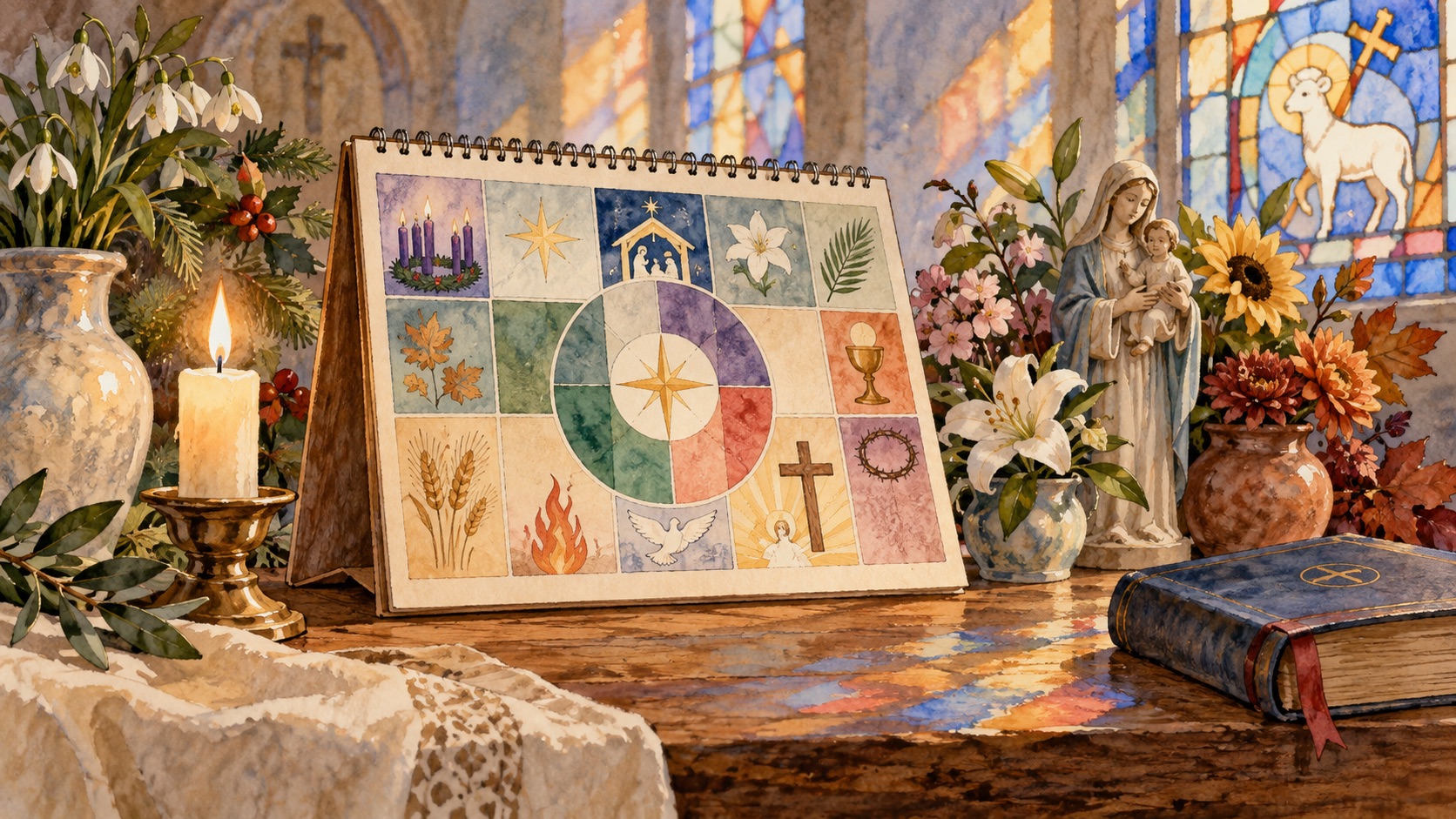
Christ remains at the center
The liturgical year follows the mystery of Christ’s life, death, and resurrection. Easter has a place unlike any other feast. Within that larger pattern, the Church remembers Mary, martyrs, and other saints. A saint’s feast day is a chance to thank God for a life shaped by grace and to learn from that witness. These memorials point believers toward Christ.
Sources: Catechism 1168–1173
Use the calendar well
Find a saint named on today’s calendar, read a reliable account, and choose one response: pray, serve someone, or reflect on a virtue. The date is a doorway into a life, not a substitute for knowing it. Calendars can differ by rite, country, and local community. If two sources give different days, check which calendar each uses before assuming one is wrong.
Sources: Catechism 1168–1173
A date is a starting point
A feast day may lead you to a saint you would never have searched for by name. Read beyond a one-line calendar entry. Ask who the person was, which community remembers them, and what is known from early or reliable sources. If the story includes a dramatic miracle or speech, notice whether the source presents it as historical evidence or as a later tradition.
Sources: Catechism 1168–1173
Keep the right proportion
The Church’s calendar is centered on Christ, with Sunday and Easter carrying particular weight. Remembering a saint should deepen that focus. A small practice can be enough: read the biography, offer a prayer of thanks, and do one act of mercy. If a local feast is unfamiliar, ask your parish about its place in your community’s worship. The calendar is meant to guide prayer and memory, not to become a checklist.
Sources: Catechism 1168–1173
When dates differ
A saint may appear on different dates in different calendars. A local celebration may not appear in a general calendar. Before sharing a date, identify the rite or community behind your source. Your parish can explain its own observance. The difference need not prevent you from learning the life or praying with the Church.
Sources: Catechism 1168–1173