Saint profile
John of the Cross
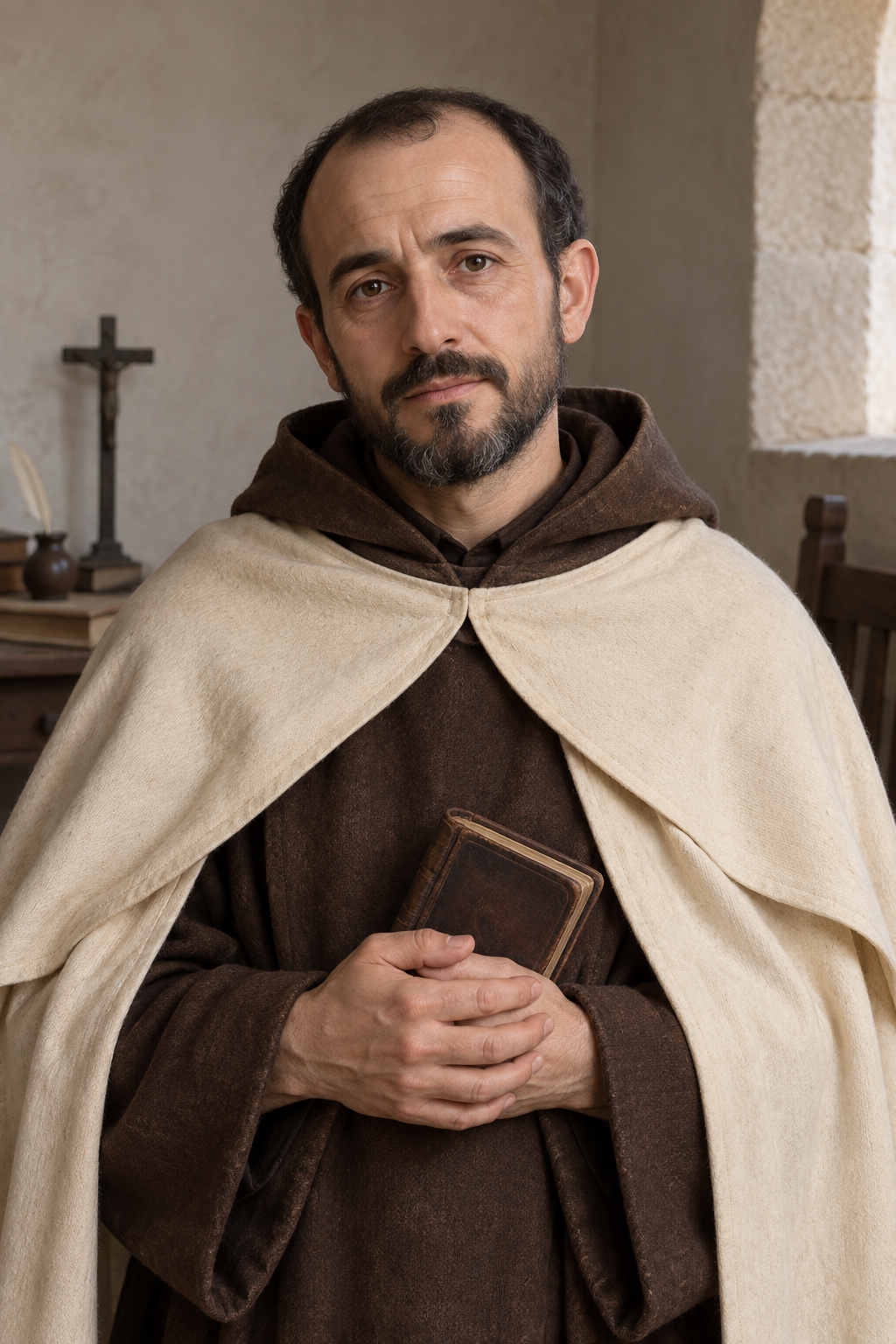
About John of the Cross
John of the Cross was a Spanish mystic, Carmelite friar, priest, and Doctor of the Church, renowned for his mystical poetry and theology. Born Juan de Yepes to an impoverished family in Fontiveros, Spain, John worked in a hospital while studying with the Jesuits before joining the Carmelites in 1563.
After ordination in 1567, John met Teresa of Ávila, who convinced him to help reform the Carmelite order, returning to its original rule of poverty and contemplation. In 1568, John and two others established the first monastery of Discalced (barefoot) Carmelite friars at Duruelo, living in extreme poverty and prayer.
The reform created conflict with Carmelite leaders who opposed it. In 1577, John was kidnapped by opponents and imprisoned in a tiny cell in Toledo for nine months. He endured darkness, cold, inadequate food, and regular beatings. During this imprisonment, John composed some of his greatest mystical poetry, including the "Spiritual Canticle," memorizing his verses and writing them down after his dramatic escape in August 1578.
After his escape, John held various positions in the reformed Carmelites, serving as prior, rector, and provincial councilor. He proved to be a wise superior and compassionate spiritual director, guiding many souls in contemplative prayer.
John's four major prose works explain his mystical theology: "The Ascent of Mount Carmel" and "Dark Night of the Soul" (commentaries on his poem "Dark Night"), "The Spiritual Canticle" (commentary on his poem of the same name), and "The Living Flame of Love." These works describe the soul's journey to union with God through purification (the "dark nights" of sense and spirit), illumination, and transforming union.
John's mystical theology is remarkably systematic and profound. The "dark night" is not depression but a divine purification where God detaches the soul from created things and sensible consolations, preparing it for intimate union with Himself. John describes the goal as "transformation in God" where the soul becomes "God by participation."
His poetry, considered among the finest in Spanish literature, uses erotic imagery (inspired by the Song of Songs) to describe spiritual union with God—the soul as bride seeking the divine Bridegroom.
Internal conflicts arose in the Discalced Carmelites, and John faced opposition from former allies. He was stripped of offices and sent to a remote monastery, where he fell ill. He died at Úbeda in 1591, age 49, choosing the most austere cell and asking for readings from Job and the Psalms.
John was canonized in 1726 and declared a Doctor of the Church in 1926. His mystical theology profoundly influences Christian contemplatives of all traditions.