Saint profile
Samuel
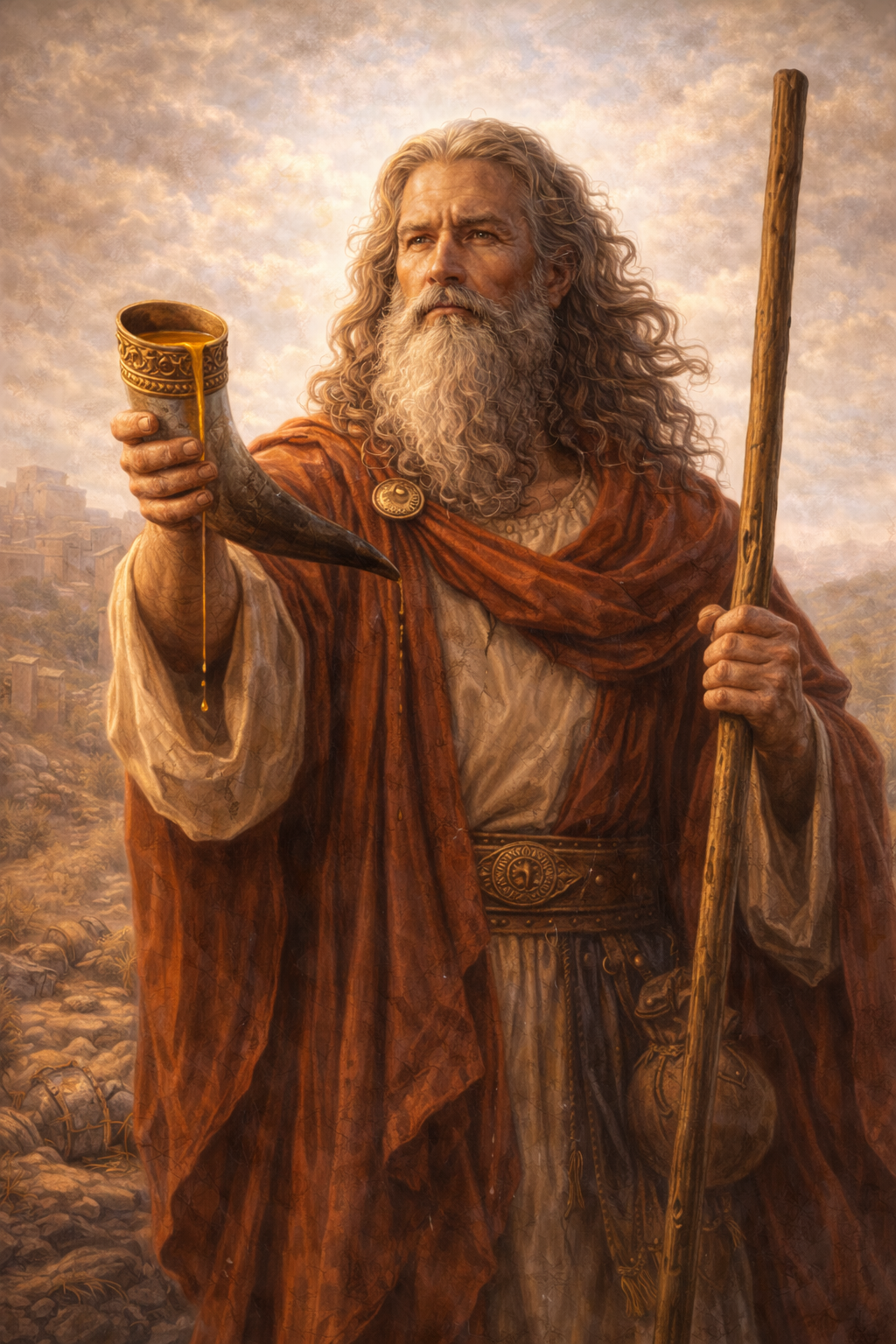
About Samuel
Samuel was the last and perhaps greatest of Israel’s judges, a prophet who anointed Israel’s first two kings and served as a crucial transitional figure between the period of the judges and the monarchy. His life bridges a turning point in Israel’s history, as leadership moved from tribal judges to centralized kingship.
Samuel was born in answer to the fervent prayers of his mother Hannah, who had been barren and deeply distressed by her rival wife Peninnah, who had children. During an annual pilgrimage to Shiloh, where the Ark of the Covenant was kept, Hannah prayed so intensely and silently that Eli the priest thought she was drunk. When he realized her prayer was sincere, he blessed her, saying God would grant her request.
Hannah vowed that if God gave her a son, she would dedicate him to the Lord for all his life, and that no razor would touch his head, indicating a Nazirite vow. God answered her prayer, and she gave birth to Samuel, whose name means “heard by God” or “asked of God.” After Samuel was weaned, likely around age three, Hannah fulfilled her vow by bringing him to Eli at the Tabernacle in Shiloh and dedicating him to lifelong service. Her prayer of thanksgiving, recorded in 1 Samuel chapter 2, is a profound song celebrating God’s sovereignty and foreshadowing Mary’s Magnificat.
Samuel grew up serving in the Tabernacle under Eli’s supervision, wearing a linen ephod even as a child. This was a dark time in Israel’s spiritual history. Eli’s sons, Hophni and Phinehas, were corrupt priests who showed contempt for the Lord’s offerings and abused their position. Though Eli rebuked them, they refused to listen, and God determined to judge their household.
One night, while Samuel was still young, he heard a voice calling his name. Thinking it was Eli, he ran to him three times. Eli eventually realized that the Lord was calling the boy and instructed him to respond, “Speak, Lord, for your servant is listening.” God then revealed to Samuel that He would bring judgment on Eli’s family for failing to restrain his sons. Though afraid, Samuel faithfully delivered the message to Eli.
From that time forward, the Lord was with Samuel, and all Israel—from Dan to Beersheba—recognized that he was established as a prophet of the Lord. God continued to reveal Himself to Samuel at Shiloh through His word. When the Philistines later defeated Israel in battle, Eli’s sons brought the Ark of the Covenant into combat, thinking it would ensure victory. Instead, the Ark was captured, Hophni and Phinehas were killed, and Eli died upon hearing the news.
Samuel rose into national leadership and traveled a yearly circuit from his home in Ramah to Bethel, Gilgal, and Mizpah, judging Israel at each place. Under his leadership, Israel experienced spiritual renewal, putting away foreign gods and serving the Lord alone. When the Philistines attacked at Mizpah, Samuel interceded, and the Lord thundered against Israel’s enemies, bringing victory. Samuel set up a memorial stone called Ebenezer, declaring, “Thus far the Lord has helped us.”
In his old age, Samuel appointed his sons as judges, but they proved corrupt, taking bribes and perverting justice. The elders of Israel then demanded a king so they could be like other nations. Though displeased, Samuel warned them of the costs of monarchy, including conscription, taxation, and loss of freedom. Despite the warnings, the people insisted, and God told Samuel they were rejecting Him as king, not Samuel.
Samuel privately anointed Saul of the tribe of Benjamin as Israel’s first king and later confirmed him publicly. He continued to guide and rebuke Saul, delivering God’s judgment when Saul disobeyed by offering unauthorized sacrifices and sparing King Agag and the best of the Amalekite plunder. Samuel declared God’s verdict that Saul was rejected as king, saying, “To obey is better than sacrifice.” Samuel mourned for Saul but never saw him again.
God later sent Samuel to Bethlehem to anoint David, the youngest son of Jesse, as Israel’s future king. Though David would not reign for many years, Samuel anointed him in the presence of his brothers, marking God’s choice.
When Samuel died, all Israel gathered to mourn him, and he was buried at his home in Ramah. Even after his death, Samuel’s influence endured; when Saul consulted a medium at Endor, Samuel’s spirit appeared and foretold Saul’s imminent death. Samuel stands as one of Scripture’s most exemplary figures—a prophet of integrity who heard God’s voice from childhood, faithfully judged Israel, courageously spoke truth to power, and guided the nation through a decisive transition in its history.