Saint profile
Isaiah
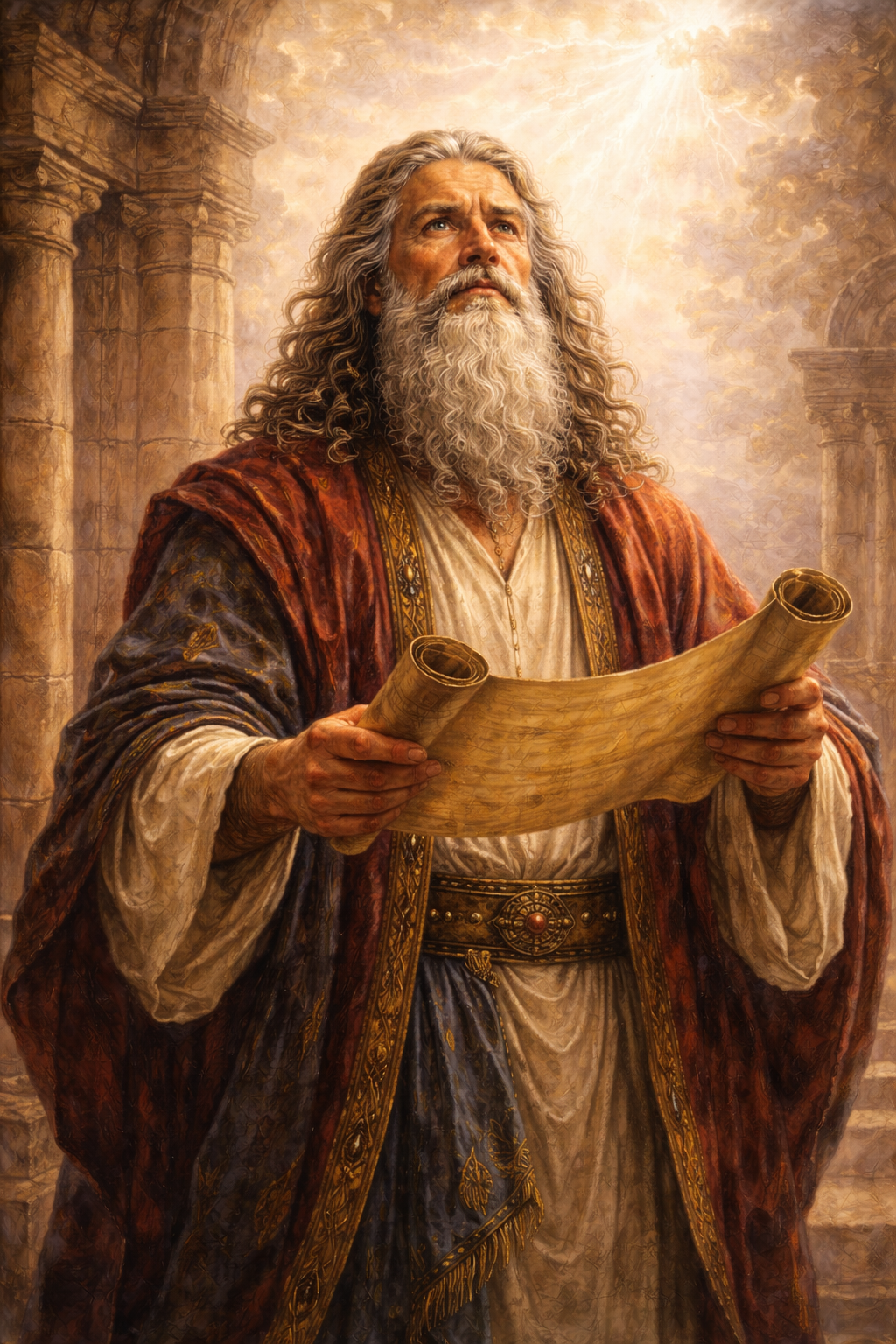
About Isaiah
Isaiah, whose name means “the Lord is salvation,” was one of the greatest prophets of Israel. He was called by God during the reign of King Uzziah of Judah and prophesied through the reigns of Jotham, Ahaz, and Hezekiah, a ministry spanning more than sixty years in the eighth century BC. The book of Isaiah is the longest prophetic book in Scripture and contains some of the most beautiful poetry and the clearest prophecies of the coming Messiah in the Bible.
Isaiah was apparently from a noble family in Jerusalem and may even have been related to the royal house. He was married to a prophetess and had at least two sons with symbolic names: Shear-Jashub, meaning “a remnant shall return,” and Maher-Shalal-Hash-Baz, meaning “quick to the plunder, swift to the spoil.”
Isaiah’s prophetic call came in the year King Uzziah died. He saw the Lord seated on a throne, high and exalted, with the train of His robe filling the temple. Seraphim stood above Him, calling out, “Holy, holy, holy is the Lord Almighty; the whole earth is full of his glory.” The temple shook, and Isaiah cried out in fear, confessing his unclean lips. A seraph touched his mouth with a live coal from the altar, declaring his sin atoned for, and Isaiah responded to God’s call, “Here am I. Send me!”
God commissioned Isaiah to preach to a people who would hear but not understand, whose hearts would become hardened until the land was devastated and only a remnant remained. God revealed that from this remnant, like a stump left after a tree is cut down, a holy seed would come forth.
Isaiah boldly confronted Judah’s hypocrisy, injustice, and idolatry. He declared that God despised their empty rituals and sacrifices because they were not accompanied by righteousness. God called the people to seek justice, defend the oppressed, and care for widows and orphans, warning that rebellion would lead to destruction.
Isaiah pronounced woes on those who twisted moral truth, trusted their own wisdom, and denied justice for personal gain. At the same time, he saw a future vision of hope: a day when the mountain of the Lord would be exalted, nations would stream to it, swords would be beaten into plowshares, and war would cease.
During the reign of King Ahaz, Isaiah assured Judah that they need not fear invading enemies. When Ahaz refused to trust the Lord, Isaiah gave the sign of Immanuel: a virgin would conceive and bear a son, “God with us,” a prophecy ultimately fulfilled in Jesus Christ. Isaiah warned that trusting Assyria instead of God would bring disaster.
Isaiah’s prophecies often held both immediate historical fulfillment and long-range messianic meaning. He foretold Assyria’s rise and fall, the return of a faithful remnant, and the coming of a righteous king from the line of Jesse. This king would rule with justice and usher in an era of peace where creation itself would be transformed.
The famous “suffering servant” passages describe one who would be despised, rejected, wounded for humanity’s sins, and led like a lamb to the slaughter. Though innocent, this servant would suffer according to God’s will and afterward bring justification to many. These passages find their ultimate fulfillment in Jesus Christ.
During King Hezekiah’s reign, Isaiah played a key role when Assyria besieged Jerusalem. God miraculously delivered the city by striking down the Assyrian army overnight. Later, Isaiah announced Hezekiah’s impending death, but after the king’s heartfelt prayer, God added fifteen years to his life and gave a miraculous sign.
When Hezekiah later displayed his wealth to Babylonian envoys, Isaiah prophesied that Judah would one day be exiled to Babylon and that royal descendants would serve in a foreign palace. This prophecy was fulfilled more than a century later.
Isaiah’s later prophecies overflow with hope and comfort. He proclaimed renewal for those who wait on the Lord, promised a new work of God in the wilderness, and invited all who thirst to come freely to God’s grace. He envisioned new heavens and a new earth where sorrow would vanish and God’s people would rejoice forever.
According to Jewish tradition, Isaiah was martyred during the reign of King Manasseh, Hezekiah’s son, by being sawn in two. Isaiah’s profound vision of God’s holiness, sovereignty, judgment, and redemption—expressed through unmatched poetic power and messianic clarity—has made his book one of the most influential and beloved portions of Scripture, deeply shaping both Jewish and Christian faith.