Saint profile
Jeremiah
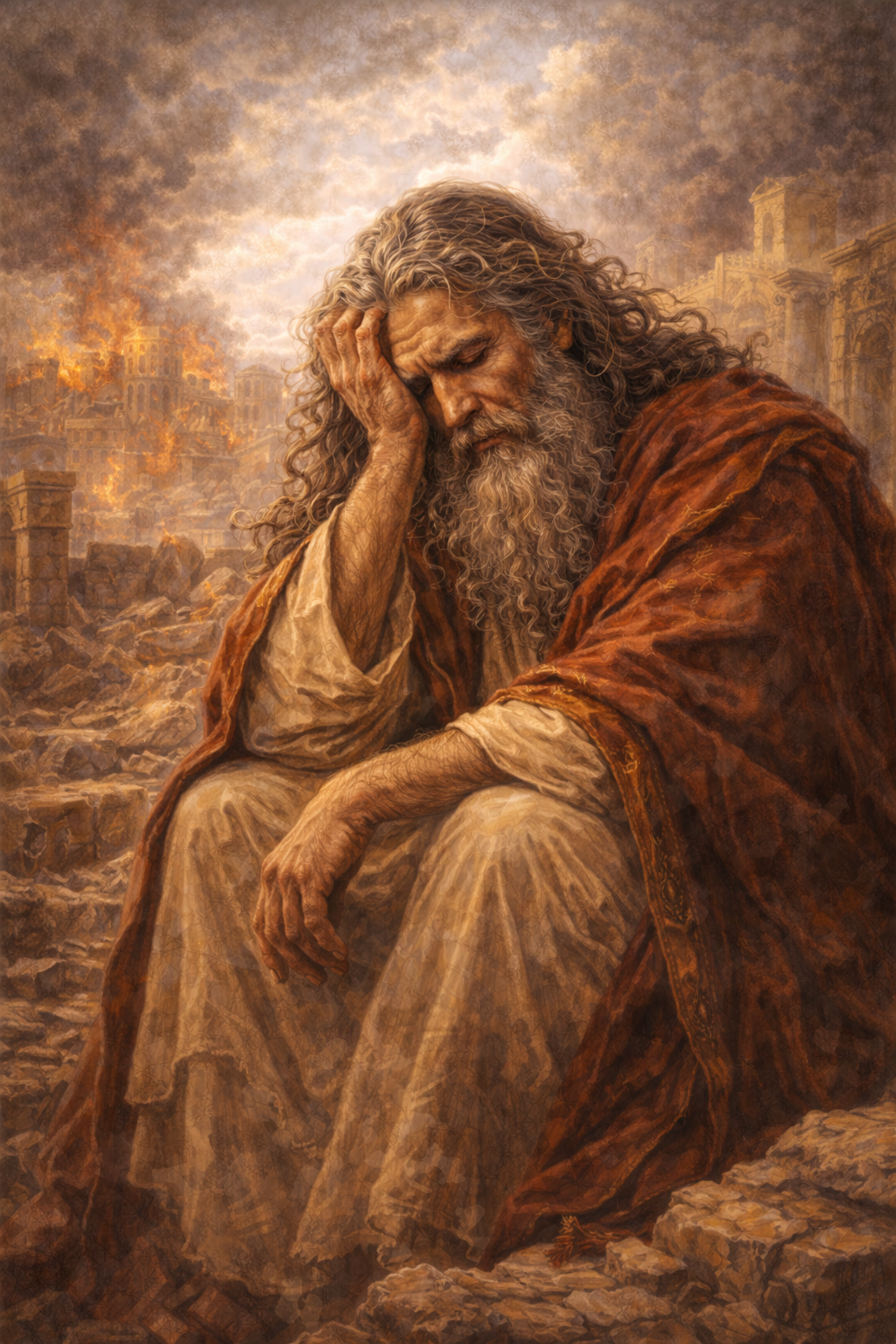
About Jeremiah
Jeremiah, known as the “weeping prophet,” was called by God to prophesy to Judah during the final decades before the destruction of Jerusalem and the Babylonian exile. His name means “the Lord exalts” or “the Lord throws down,” and his ministry—lasting more than forty years from about 627 to 580 BC—was marked by constant opposition, persecution, and sorrow as he watched his people reject God’s warnings and move steadily toward judgment.
Jeremiah was the son of Hilkiah, a priest from Anathoth in the territory of Benjamin, a few miles northeast of Jerusalem. He was called to prophetic ministry while still young, possibly as a teenager. When God first spoke to him, Jeremiah objected that he was too young and did not know how to speak. God reassured him, touched his mouth, and put His words there, appointing him to uproot and tear down, to destroy and overthrow, and also to build and to plant. God warned him that kings, officials, priests, and people would oppose him, but promised His protection.
From the beginning, Jeremiah’s message was deeply unpopular. He accused Judah of forsaking the Lord, the fountain of living water, and turning to broken cisterns that could hold no water. He denounced idolatry, injustice, and false reliance on the temple, warning that oppression of the vulnerable and devotion to other gods would bring destruction rather than security.
Jeremiah delivered his famous “Temple Sermon” at the gate of the Lord’s house, warning the people not to trust in slogans like “This is the temple of the Lord” while continuing in theft, murder, adultery, perjury, and idol worship. He declared that the temple would be destroyed like Shiloh and that the people would be sent into exile. This message nearly cost him his life, as priests and prophets demanded his execution, though officials and elders intervened and spared him.
God commanded Jeremiah to remain unmarried and childless as a living sign of the devastation to come. He was forbidden to participate in mourning or feasting, symbolizing the end of joy in the land. His personal loneliness became part of his prophetic witness.
Jeremiah’s relationship with Judah’s rulers was marked by hostility. When King Jehoiakim heard Jeremiah’s prophecies read from a scroll, he cut it up and burned it. Jeremiah simply dictated the words again to his scribe Baruch, adding further judgments. Jeremiah proclaimed that Judah must submit to Babylon, even wearing a yoke to symbolize submission, a message seen as treason. False prophets contradicted him, but their predictions failed, confirming Jeremiah’s words.
During Babylon’s siege of Jerusalem, Jeremiah was imprisoned in a cistern and left to die in the mud because officials accused him of undermining morale. He was rescued by Ebed-Melek, an Ethiopian eunuch. Even during the siege, Jeremiah obeyed God by purchasing a field in Anathoth as a sign that life would one day return to the land after exile.
After Jerusalem fell in 586 BC, the Babylonians treated Jeremiah kindly and allowed him to choose whether to go to Babylon or remain in Judah. He stayed with the remnant, but after the assassination of the governor Gedaliah, the people fled to Egypt, forcing Jeremiah to go with them against his prophetic counsel. In Egypt, Jeremiah continued to warn that disaster would follow continued idolatry.
Jeremiah’s book includes not only prophecies of judgment but also deeply personal laments. In his confessions, he poured out his anguish to God, lamenting mockery, isolation, and suffering. He cursed the day of his birth, yet confessed that he could not remain silent because God’s word burned within him like fire.
Amid judgment, Jeremiah also proclaimed extraordinary hope. He foretold a new covenant in which God’s law would be written on human hearts and sins would be forgiven. He spoke of a righteous Branch from David’s line and promised restoration after seventy years of exile. The book of Lamentations, traditionally attributed to Jeremiah, mourns Jerusalem’s destruction while affirming God’s unfailing compassion and faithfulness.
According to tradition, Jeremiah was eventually stoned to death in Egypt by his own people for refusing to soften God’s message. His life embodies the cost of faithful prophecy—rejection, suffering, and martyrdom—yet also stands as a powerful example of honesty before God, perseverance in suffering, and unwavering obedience to the truth.