Saint profile
Ezekiel
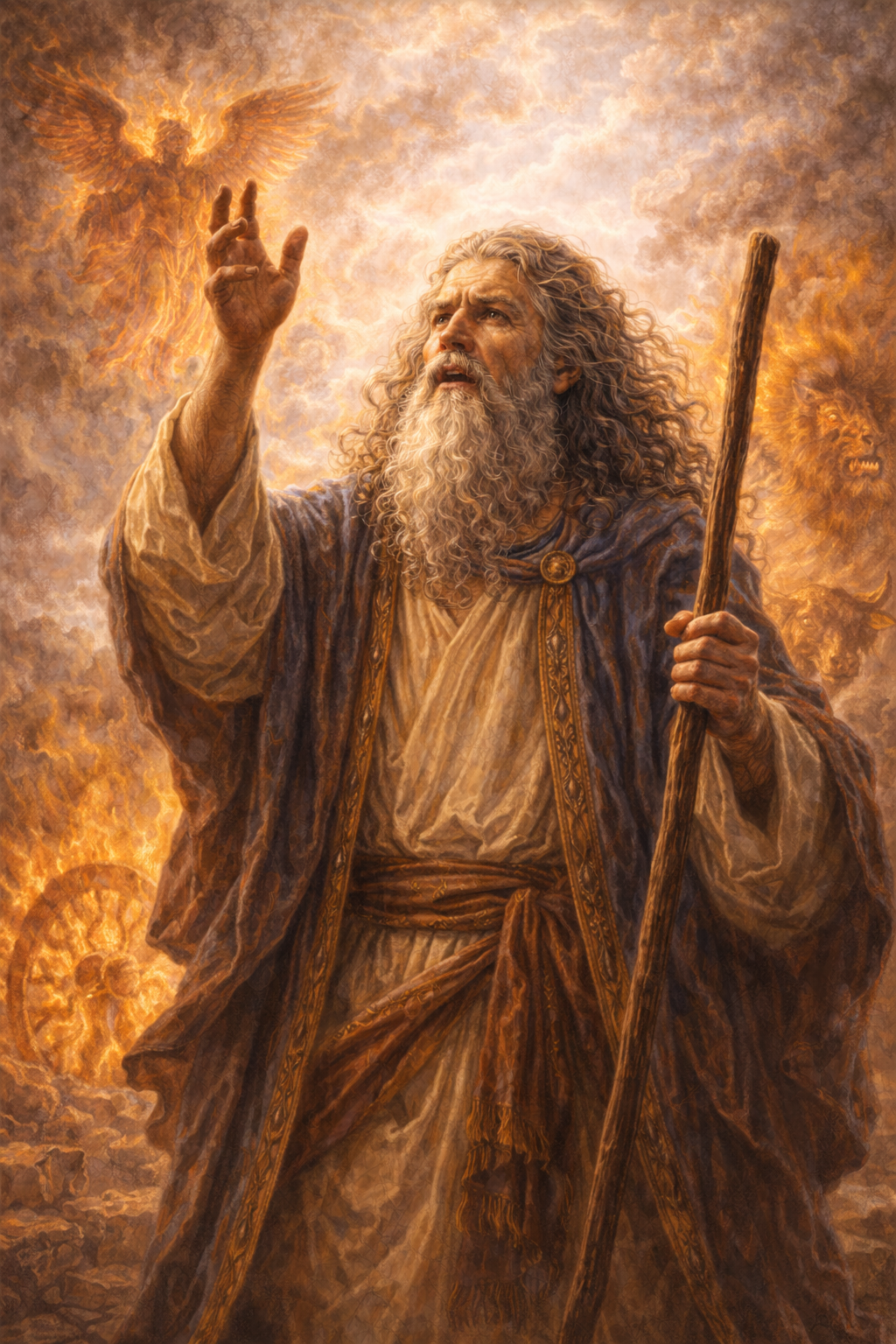
About Ezekiel
Ezekiel, whose name means “God strengthens” or “God will strengthen,” was a prophet and priest who ministered to the Jewish exiles in Babylon during one of the darkest periods in Israel’s history. He was taken into exile in 597 BC when King Jehoiachin surrendered to Nebuchadnezzar and prophesied for at least twenty-two years. Ezekiel was the son of Buzi, a priest, and lived among the exiles by the Kebar River in Babylon.
Ezekiel’s prophetic ministry began in the fifth year of King Jehoiachin’s exile, when he was thirty years old—the age when priests normally began temple service, though the temple still stood in Jerusalem. His call came through an extraordinary vision in which the heavens opened and he saw visions of God. He witnessed a great storm, living creatures with four faces, wheels within wheels full of eyes, and above them a throne with the radiant likeness of the glory of the Lord.
Overwhelmed by the vision, Ezekiel fell facedown and heard God speak. God commissioned him to preach to a rebellious and obstinate house of Israel. Ezekiel was given a scroll filled with words of lament and woe and commanded to eat it. Though its message was bitter, it tasted sweet as honey. God hardened Ezekiel’s forehead like flint and appointed him as a watchman, responsible to warn the people of coming judgment.
Before Jerusalem’s fall in 586 BC, Ezekiel’s prophecies focused on judgment. He performed dramatic symbolic acts to illustrate God’s message: lying on his sides for hundreds of days, shaving his hair and dividing it, packing baggage and digging through a wall, and remaining mute except when delivering God’s words. These signs portrayed the coming siege, exile, and destruction of Jerusalem.
In visions, Ezekiel was transported to Jerusalem and saw shocking idolatry even within the temple—false worship, pagan rituals, and abominations. He saw the glory of the Lord gradually depart from the temple, moving eastward and leaving the city entirely, signaling that judgment was inevitable.
Ezekiel denounced false prophets who proclaimed peace when there was none and condemned Israel’s leaders as selfish shepherds who neglected the flock. He proclaimed that God Himself would seek out His sheep and raise up one shepherd, His servant David, to rule over them—a messianic promise.
One of Ezekiel’s most important teachings emphasized individual responsibility. Rejecting the proverb that blamed children for their parents’ sins, he declared that each soul is accountable before God. The righteous would live, the wicked would die, but anyone who repented could find life, for God takes no pleasure in the death of the wicked.
When Jerusalem finally fell, a fugitive brought the news to Ezekiel. At that moment, God opened his mouth, ending his period of muteness. From then on, Ezekiel’s message shifted from judgment to hope and restoration.
Ezekiel prophesied against surrounding nations, assuring Israel that God would judge their enemies. He then delivered promises of renewal: God would gather His people, cleanse them, give them a new heart and a new spirit, and place His Spirit within them so they would follow His ways.
In the famous vision of the valley of dry bones, Ezekiel saw a lifeless army restored to life by God’s breath, symbolizing Israel’s national resurrection and renewed hope. He also prophesied the reunification of Israel and Judah under one king from David’s line.
Ezekiel described a future invasion by Gog of Magog, in which God would decisively intervene to demonstrate His holiness and power. His final visions focused on a new temple filled with God’s returning glory and a life-giving river flowing from it, bringing healing wherever it went.
The book concludes with a vision of the land restored, divided among the tribes, and a holy city named “The Lord Is There.” According to Jewish tradition, Ezekiel died and was buried in Babylon. His ministry reassured the exiles that God had not abandoned them and that judgment, though deserved, would give way to restoration, new life, and God’s abiding presence forever.