Saint profile
Daniel
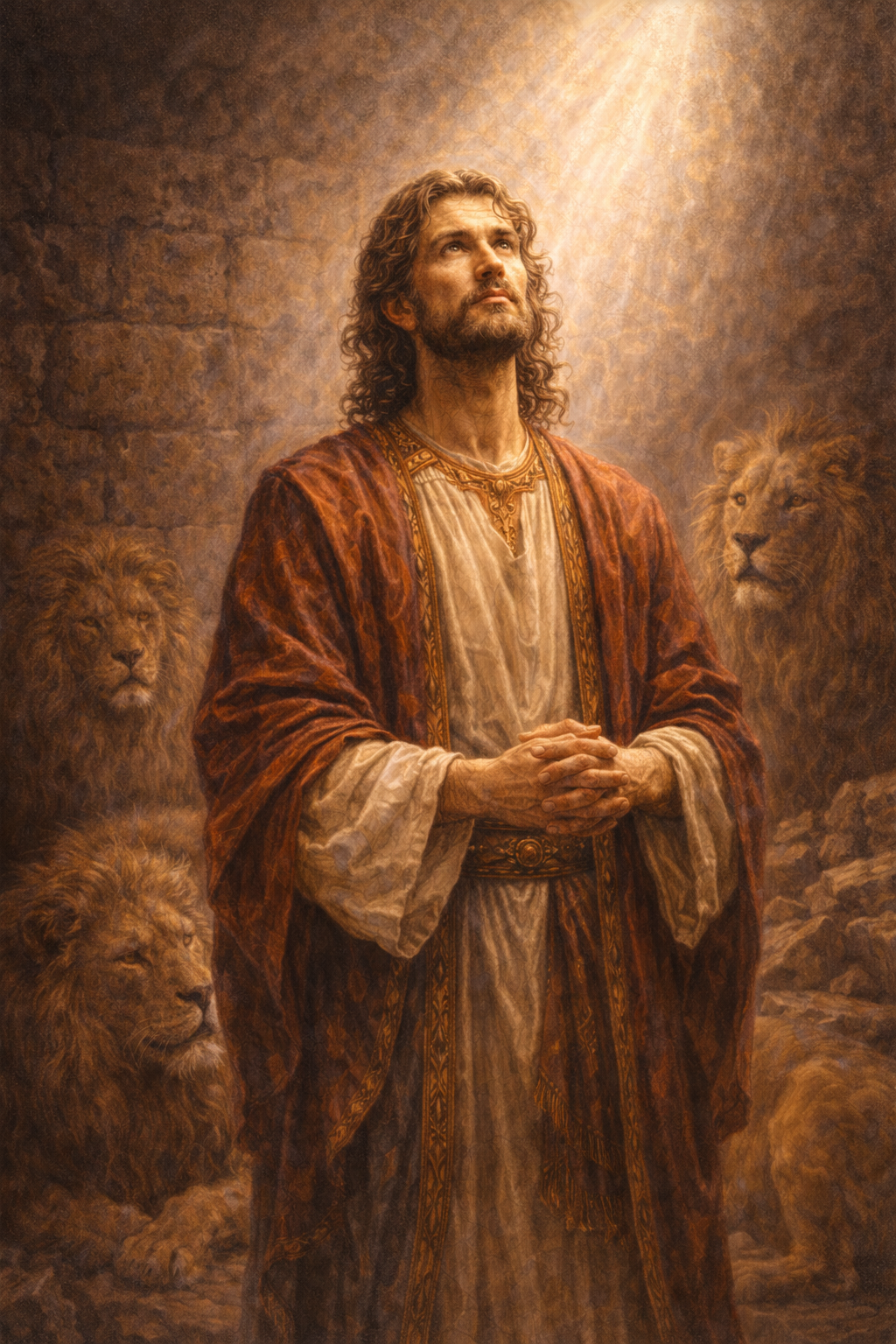
About Daniel
Daniel, whose name means “God is my judge,” was a Jewish prophet who lived during the Babylonian exile and served in the courts of Babylon and Persia for over seventy years, from the reign of Nebuchadnezzar through Cyrus the Persian. He is renowned for his unwavering faithfulness to God, his wisdom in interpreting dreams and visions, and his miraculous deliverance from the lions’ den.
Daniel was from a noble or royal family in Judah and was among the young men taken to Babylon in the first deportation around 605 BC, when he was probably a teenager. King Nebuchadnezzar commanded his chief official to select young men from the Israelite royal family and nobility who were without physical defect, handsome, intelligent, quick to understand, and qualified to serve in the king’s palace. They were to be trained for three years in the language and literature of the Babylonians and fed from the king’s table.
Daniel, along with three friends—Hananiah, Mishael, and Azariah, whose names were changed to Shadrach, Meshach, and Abednego—was selected for this program. However, Daniel resolved not to defile himself with the royal food and wine, possibly because it had been offered to idols or violated Jewish dietary laws. He asked permission to eat only vegetables and drink only water. Though the guard feared this would make them appear unhealthy, Daniel proposed a ten-day test.
After ten days, Daniel and his friends looked healthier and better nourished than those eating the royal food, and they were allowed to continue their diet. God gave these four young men knowledge and understanding of all kinds of literature and learning, and Daniel was granted the ability to understand visions and dreams. When the king examined them at the end of their training, he found them ten times wiser than all the magicians and enchanters in his kingdom.
In the second year of Nebuchadnezzar’s reign, the king had a disturbing dream and demanded that his wise men tell him both the dream and its interpretation. When they failed, he ordered the execution of all the wise men of Babylon, including Daniel and his friends. Daniel asked for time, prayed with his companions, and God revealed the mystery to him in a vision. Daniel praised God and explained to the king that the dream came from the God of heaven, who reveals mysteries.
The dream described a great statue made of gold, silver, bronze, iron, and clay, which was destroyed by a rock cut without human hands. Daniel explained that the statue represented successive kingdoms, beginning with Nebuchadnezzar’s, and that God would ultimately establish an eternal kingdom that would never be destroyed. Amazed, Nebuchadnezzar acknowledged Daniel’s God and promoted him to a high position.
Later, when Nebuchadnezzar erected a golden statue and commanded everyone to worship it, Daniel’s three friends refused and were thrown into a blazing furnace. The king saw four men walking unharmed in the fire, and the three were delivered without injury, demonstrating God’s power and protection.
Years afterward, Nebuchadnezzar had another troubling dream about a great tree that was cut down. Daniel interpreted it as a warning that the king would be humbled because of his pride. Despite Daniel’s counsel to repent, the prophecy was fulfilled, and Nebuchadnezzar lived like an animal until he acknowledged God’s sovereignty. Afterward, his sanity and kingdom were restored.
During the reign of Belshazzar, a mysterious hand wrote words of judgment on the palace wall during a feast. Daniel interpreted the message, declaring the end of the Babylonian kingdom. That very night, Belshazzar was killed, and the kingdom fell to the Medes and Persians.
Under Darius the Mede, Daniel rose to prominence as one of three administrators. When his enemies plotted against him, they convinced the king to issue a decree forbidding prayer to any god except the king. Daniel continued to pray as he always had and was thrown into the lions’ den. God sent an angel to shut the lions’ mouths, and Daniel was delivered unharmed. Darius then proclaimed the greatness of Daniel’s God throughout the kingdom.
Daniel later received profound visions and prophecies concerning future kingdoms, the coming of the Messiah, and the end times, including the famous prophecy of the “seventy weeks.” He was instructed to seal these revelations until the time of the end.
Daniel remained faithful and influential through the reign of Cyrus the Persian, who allowed the Jewish exiles to return to Jerusalem and rebuild the temple. Daniel lived to see the beginning of the fulfillment of Jeremiah’s prophecy concerning the seventy-year exile. His life stands as a powerful example of steadfast faith, moral integrity, disciplined prayer, and faithful service to God even while working within pagan governments.