Saint profile
Teacher Eleazar
About Teacher Eleazar
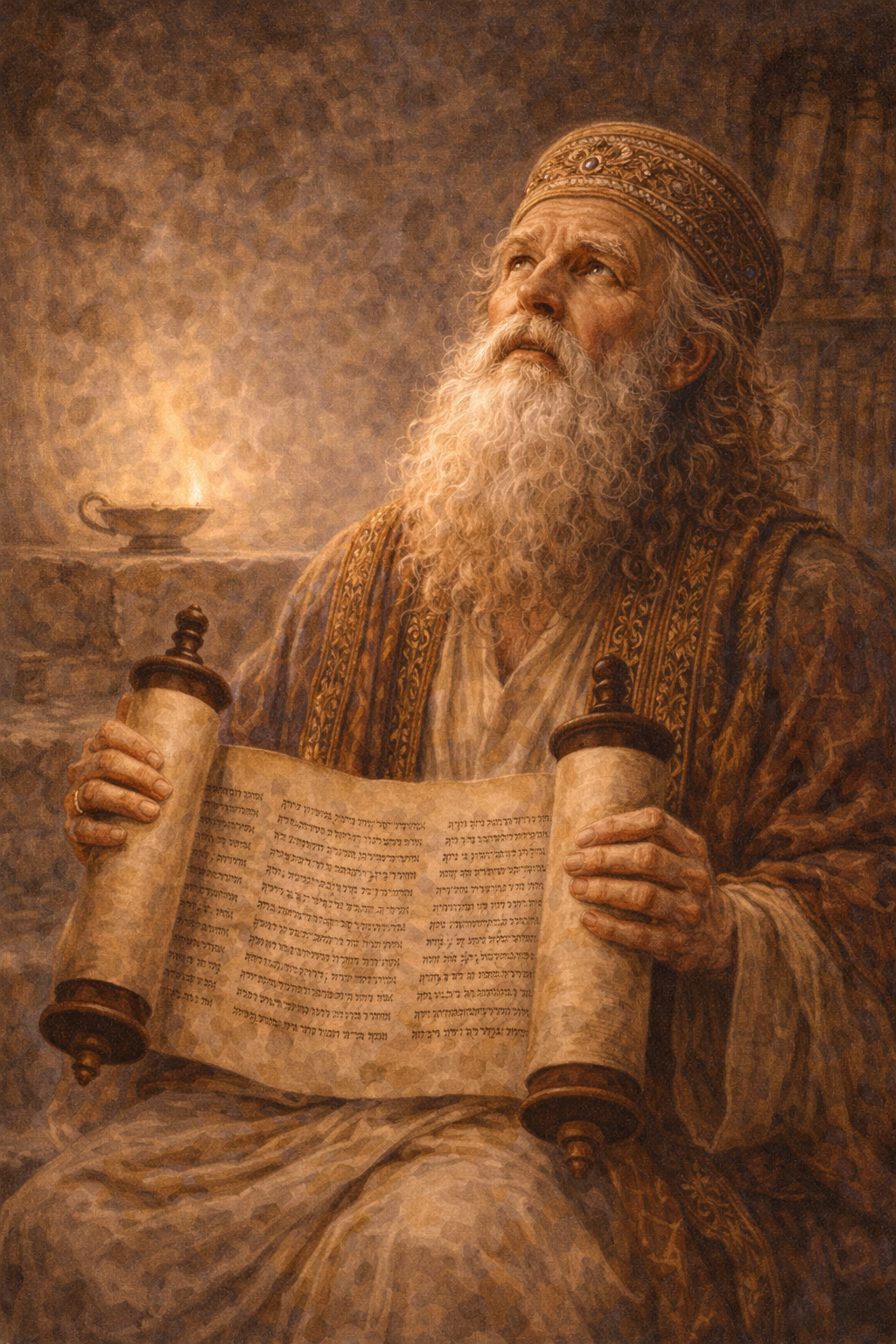
Eleazar was a prominent scribe and teacher of the Law in Jerusalem, one of the principal scribes highly respected for his advanced age, noble character, and deep learning in the Torah. His martyrdom is recorded in 2 Maccabees chapter 6 and represents the beginning of the Maccabean persecution under the Seleucid king Antiochus IV Epiphanes around 167 BC. Eleazar was ninety years old, a man of handsome appearance with gray hair and dignified bearing.
When Antiochus Epiphanes issued decrees forcing Jews to abandon their ancestral customs and violate the Law of Moses, compelling them to eat pork and other unclean foods, Eleazar was among those selected to be forced publicly to eat swine's flesh. His compliance was intended to encourage others to apostatize. He was brought to the place of execution and ordered to open his mouth and eat pork.
Eleazar, considering his honorable life and advanced age, his distinguished position in society, his gray hair and exemplary conduct from childhood, and above all the sacred legislation established by God, responded with dignity, telling them to send him immediately to Hades. He declared that such pretense was not worthy of a man of his years, for many of the young might suppose that Eleazar, in his ninetieth year, had gone over to an alien religion. Through such deception, he feared others would be led astray while he disgraced his old age.
Some of those in charge of the illegal sacrifice, who had known Eleazar for a long time, took him aside privately and urged him to bring meat of his own providing that was lawful for him to eat and to pretend to eat the pork sacrificed as the king had commanded. By doing this, they suggested, he could escape death and be treated kindly because of their long friendship. This would have been an easy deception that could have saved his life while technically avoiding sin.
But Eleazar made a noble decision worthy of his years, the authority of his advanced age, and the dignity of his lifelong conduct, and above all worthy of the holy law given by God. He declared that even if he avoided punishment by mortals, he would not escape the hands of the Almighty. By bravely giving up his life, he said, he would show himself worthy of his old age and leave to the young a noble example of how to die willingly and honorably for the holy laws.
Immediately after saying this, Eleazar went to the rack for torture. Those who had been kindly disposed toward him moments before now turned against him, considering his words madness. As he was about to die under the blows, he groaned aloud, affirming that although he endured terrible suffering in his body, in his soul he was glad to suffer because he feared the Lord.
Eleazar died in this manner, leaving in his death an example of nobility and a memorial of courage not only to the young but to the entire nation. His martyrdom was not merely about refusing to eat pork; it was about refusing to compromise his witness to God's law and refusing to cause others to stumble by his example. As a prominent teacher, he understood that his actions would deeply influence those who looked to him as a model of faithfulness.
Had he chosen the easy path of deception, he might have preserved his life, but he would have taught that God’s law could be compromised under pressure and that deception was acceptable in times of persecution. Instead, Eleazar chose torture and death over even the appearance of apostasy.
His death demonstrated that the Law of God was worth dying for, that integrity was more valuable than life itself, and that courage is not limited by age. His martyrdom inaugurated the period of Maccabean resistance, inspiring the seven brothers and their mother who soon followed his example, and ultimately contributing to the revolt led by Judas Maccabeus that would temporarily restore Jewish independence and purify the temple.
Eleazar’s witness became a model for Jewish and Christian martyrs throughout history, showing that faithfulness to God must never be compromised regardless of the cost. His choice of a “good death” over a compromised life has resonated through the centuries as a lasting example of devotion, integrity, and the enduring power of faithful witness.