Saint profile
James (son of Zebedee)
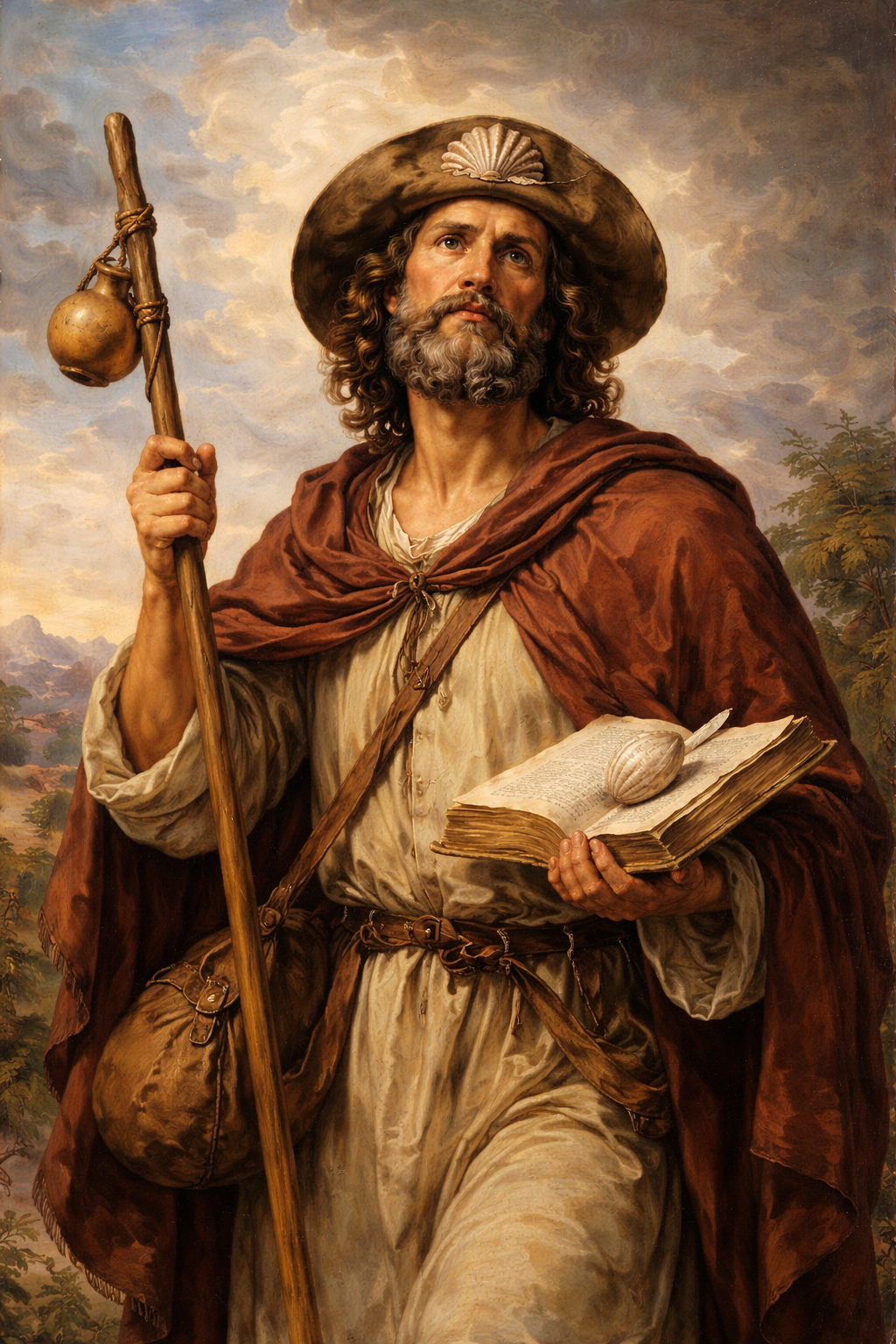
About James (son of Zebedee)
James, son of Zebedee, was one of the twelve apostles and a member of Jesus' inner circle, along with his brother John and Peter. He was called "James the Greater" to distinguish him from James the son of Alphaeus (James the Less), and he holds the distinction of being the first apostle to be martyred for his faith. James and his brother John were fishermen from Galilee, working with their father Zebedee in the family business on the Sea of Galilee, in partnership with Simon Peter and Andrew.
Jesus called James and John while they were in a boat with their father, preparing their nets. As soon as Jesus called them, they left the boat and their father and followed Him. This immediate response showed their readiness to abandon their livelihood and family obligations to follow the Lord. Along with Peter and John, James was privileged to witness events that the other apostles did not see. He was present when Jesus raised Jairus' daughter from the dead, when only the girl's parents and these three apostles were allowed in the room. He witnessed the Transfiguration on the mountain, where Jesus' appearance changed and He spoke with Moses and Elijah, and where the voice of God declared, "This is my Son, whom I love; with him I am well pleased. Listen to him!" James was also among the three who accompanied Jesus into the Garden of Gethsemane on the night of His arrest, where Jesus asked them to keep watch while He prayed in agony.
James and John were nicknamed "Boanerges" by Jesus, which means "Sons of Thunder," likely because of their passionate, sometimes aggressive temperament. This fiery nature was displayed when a Samaritan village refused to welcome Jesus, and James and John asked, "Lord, do you want us to call fire down from heaven to destroy them?" Jesus rebuked them for this suggestion. On another occasion, their mother came to Jesus with a request that her two sons might sit at His right and left hand in His kingdom. Jesus asked if they were able to drink the cup He was about to drink, and they confidently answered yes. Jesus told them they would indeed drink from His cup, though the positions of honor were not His to grant but the Father's.
James' bold assertion that he could drink Jesus' cup proved prophetic. According to the Book of Acts, King Herod Agrippa I, seeking to please the Jewish leaders who opposed the early church, "had James, the brother of John, put to death with the sword" around AD 44. This made James the first of the twelve apostles to suffer martyrdom and the only apostle whose martyrdom is recorded in Scripture. His death occurred during the persecution that scattered many believers from Jerusalem, yet it strengthened rather than weakened the church.
Early church tradition provides additional details about James' witness before his execution. According to Clement of Alexandria, as preserved by Eusebius, the guard who brought James to trial was so moved by his testimony that he confessed himself a Christian on the spot. As they were both led away to execution, the guard asked James for forgiveness. After a moment's pause, James said, "Peace be with you," and kissed him, and they were both beheaded together.
A strong tradition in Spain claims that James preached the gospel there before returning to Jerusalem for his martyrdom, and that after his death, his body was miraculously transported to Spain and buried at Santiago de Compostela in Galicia. During the Middle Ages, Santiago de Compostela became one of the most important pilgrimage sites in Christendom, rivaling Jerusalem and Rome. The pilgrimage route, known as the Camino de Santiago (the Way of St. James), drew hundreds of thousands of pilgrims and continues to be walked by many today. James became the patron saint of Spain, and the military Order of Santiago was founded in his honor.
While the Spanish tradition cannot be verified historically, it reflects the widespread veneration of this apostle throughout the medieval church. What is certain is that James was among Jesus' closest companions during His earthly ministry, that he witnessed the key moments of Jesus' revelation of His glory and His suffering, that he boldly proclaimed Christ after Pentecost, and that he sealed his testimony with his blood, becoming the protomartyr among the apostles. His willingness to drink from Christ's cup of suffering, his transformation from a "son of thunder" seeking earthly positions of power to a humble servant willing to die for his faith, and his example of unwavering commitment even unto death have inspired Christians for two millennia. James demonstrated that following Jesus may indeed require the ultimate sacrifice, and that such a sacrifice is not defeat but victory, not an end but a beginning of eternal glory.