Saint profile
John (son of Zebedee)
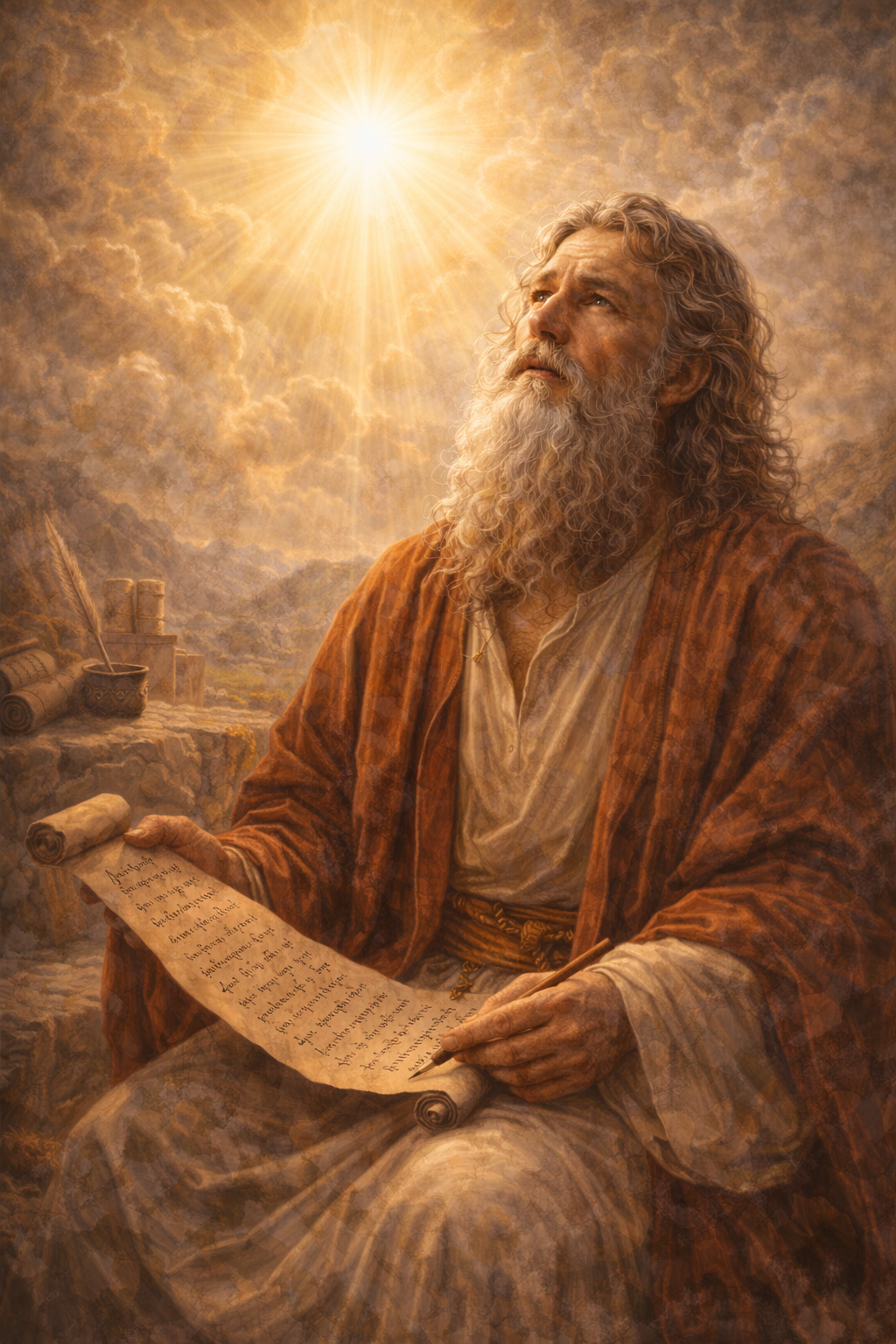
About John (son of Zebedee)
John, the son of Zebedee and brother of James, was one of Jesus' twelve apostles and holds a unique place as "the disciple whom Jesus loved." He was a fisherman from Galilee who, along with his brother James, left his father's business to follow Christ. John became the author of five New Testament books—the Gospel of John, three epistles, and the Book of Revelation—making him one of the most influential figures in Christian history. His writings emphasize the themes of love, light, truth, and the intimate relationship between Jesus and His followers.
Like his brother James, John was part of Jesus' inner circle along with Peter. These three witnessed the raising of Jairus' daughter, the Transfiguration where they saw Jesus' divine glory revealed and heard the Father's voice from heaven, and Jesus' agony in Gethsemane. John, along with James, was called a "Son of Thunder" by Jesus, reflecting an initially fiery and ambitious temperament. This is seen when the brothers asked Jesus if they should call down fire on a Samaritan village that rejected Him, and when their mother requested positions of honor for them in Jesus' kingdom.
Despite this early impetuosity, John underwent a profound transformation through his relationship with Jesus, becoming known as the apostle of love. His Gospel is unique among the four, focusing less on chronological events and more on the theological significance of Jesus' identity as the eternal Word who became flesh. John's Gospel opens with the majestic prologue: "In the beginning was the Word, and the Word was with God, and the Word was God." It contains Jesus' great "I AM" statements, His extended farewell discourse to the disciples, and the High Priestly Prayer.
John had a special closeness to Jesus that the other Gospels acknowledge. At the Last Supper, John reclined next to Jesus, and when Peter wanted to know who would betray Jesus, he motioned to John to ask. John leaned back against Jesus and asked, "Lord, who is it?" This physical and emotional closeness characterized their relationship. When Jesus was arrested, most disciples fled, but John followed to the high priest's courtyard and, because he was known to the high priest, was able to bring Peter inside.
Most remarkably, John was the only apostle who stood at the foot of the cross during Jesus' crucifixion. While others had fled in fear, John remained with Mary, Jesus' mother, and the other women. From the cross, Jesus saw His mother and John standing nearby and said to Mary, "Woman, here is your son," and to John, "Here is your mother." From that time on, John took Mary into his home and cared for her. This tender scene reveals both Jesus' concern for His mother's welfare and His deep trust in John.
On resurrection morning, when Mary Magdalene reported the empty tomb, Peter and John ran to see. John, being younger, outran Peter and reached the tomb first, but waited for Peter before entering. When they saw the grave clothes lying there, John "saw and believed," making him possibly the first person to believe in the resurrection based on the evidence of the empty tomb.
After Pentecost, John worked closely with Peter in the early Jerusalem church. They healed the lame beggar at the temple gate, were arrested together and boldly testified before the Sanhedrin, and were sent together to Samaria to pray for new believers to receive the Holy Spirit. Paul mentioned John as one of the "pillars" of the Jerusalem church along with Peter and James (the brother of Jesus).
John wrote three epistles that emphasize the importance of love, truth, and right doctrine. His first epistle contains the famous declaration "God is love" and the command "Dear friends, let us love one another, for love comes from God." He warned against false teachers who denied that Jesus Christ came in the flesh and urged believers to test the spirits and hold fast to the truth. His writings show a pastor's heart, repeatedly addressing his readers as "dear children" or "beloved."
According to early church tradition, John spent his later years in Ephesus, where he supervised the churches of Asia Minor. During the persecution under Emperor Domitian (AD 81-96), John was exiled to the island of Patmos, a Roman penal colony in the Aegean Sea. There he received the apocalyptic visions recorded in the Book of Revelation, which he wrote to encourage persecuted Christians with visions of Christ's ultimate victory and the coming new heaven and new earth.
Tradition states that after Domitian's death, John was released and returned to Ephesus, where he lived to an advanced age, possibly into his nineties, making him the only apostle to die a natural death rather than martyrdom. Church fathers report that in his final years, when he was too frail to walk, he was carried into the assembly and would simply repeat the message: "Little children, love one another." When asked why he always said this, he replied, "Because it is the Lord's command, and if this alone be done, it is enough."
Legend also reports that John was once challenged to drink poisoned wine. He made the sign of the cross over the cup, the poison was rendered harmless (sometimes depicted as a serpent leaving the cup), and he drank it without harm, leading to his patronage of those concerned about poison. John died peacefully in Ephesus around AD 100, and a church was built over his tomb. His transformation from a "Son of Thunder" to the beloved apostle of love, his faithfulness at the cross when others fled, his profound theological insights into Christ's divine nature, and his emphasis on love as the distinguishing mark of Christ's disciples have made him one of the most beloved figures in Christian history.