Saint profile
Philip
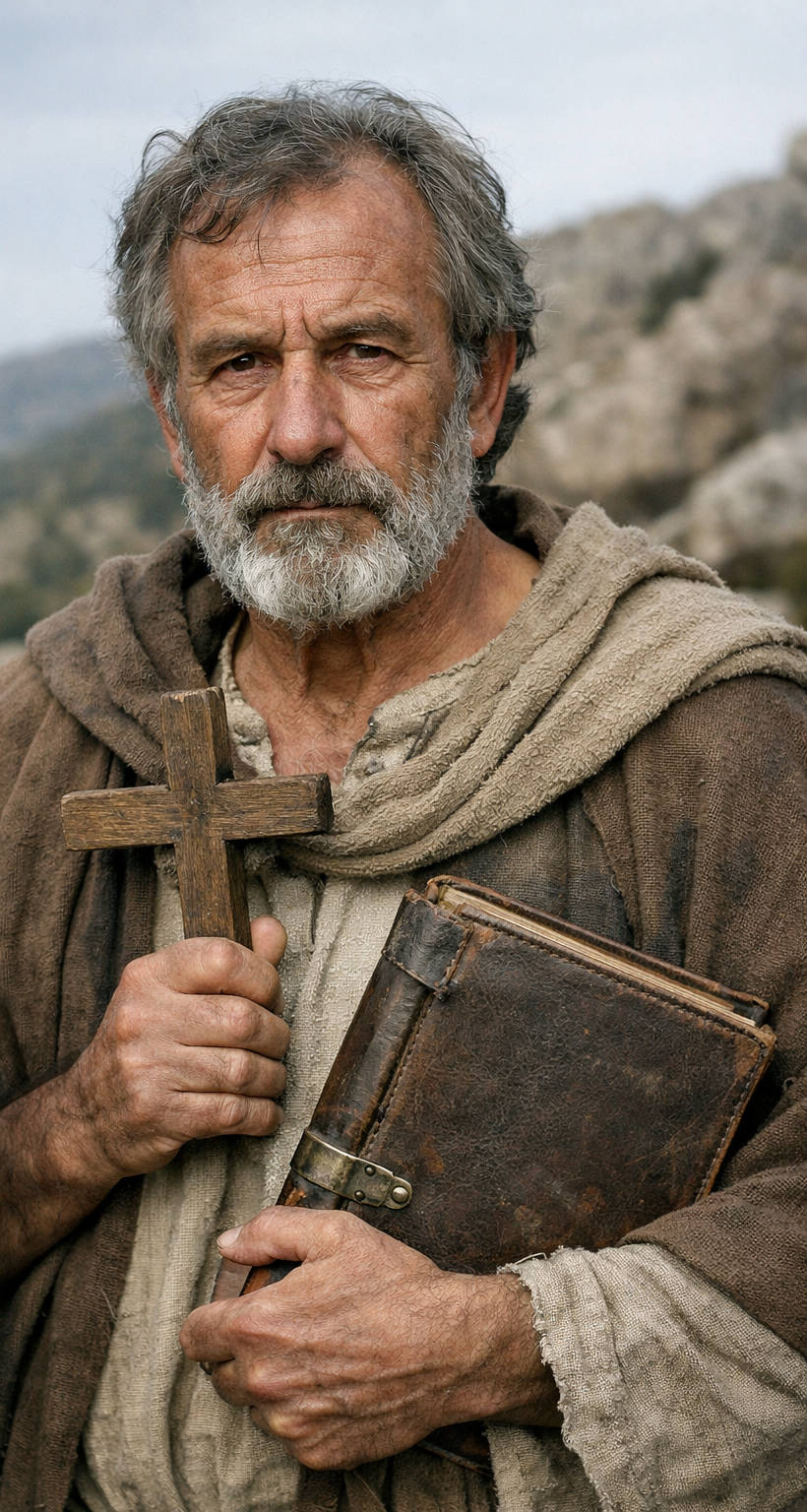
About Philip
Philip was one of the twelve apostles, called by Jesus directly with the words "Follow me." He came from Bethsaida, the same town as Andrew and Peter, and appears to have been among the earliest disciples to follow Jesus. Philip is mentioned more frequently in the Gospel of John than in the other Gospels, where he emerges as a thoughtful, literal-minded disciple who sometimes struggled to grasp spiritual truths but earnestly sought to understand and follow Jesus.
Philip's calling is recorded in John's Gospel. The day after Jesus called Andrew and Peter, He decided to leave for Galilee and found Philip, saying simply, "Follow me." Philip immediately responded by finding his friend Nathanael (likely Bartholomew) and telling him, "We have found the one Moses wrote about in the Law, and about whom the prophets also wrote—Jesus of Nazareth, the son of Joseph." When Nathanael expressed skepticism about anything good coming from Nazareth, Philip gave a perfect response: "Come and see." This invitation to experience Jesus personally rather than arguing theologically showed Philip's wisdom and became a model for evangelism—bringing people into Jesus' presence and letting Him reveal Himself.
Philip appears at several significant moments in Jesus' ministry, often asking questions that revealed both his practical nature and his occasional difficulty grasping spiritual realities. Before the feeding of the five thousand, Jesus tested Philip by asking him, "Where shall we buy bread for these people to eat?" John notes that Jesus asked this only to test Philip, for He already knew what He was going to do. Philip responded with a practical calculation: "It would take more than half a year's wages to buy enough bread for each one to have a bite!" His focus on the impossibility of the situation from a human perspective missed the opportunity to trust in Jesus' supernatural provision. Yet this very limitation allowed Jesus to demonstrate His divine power more dramatically.
When some Greeks came to Jerusalem for the Passover feast and wanted to see Jesus, they approached Philip, perhaps because his Greek name suggested he might be more accessible to Gentiles. Philip went to Andrew, and together they told Jesus. This incident, occurring shortly before Jesus' crucifixion, prompted Jesus to speak about His coming death and glorification, comparing Himself to a grain of wheat that must fall to the ground and die to produce many seeds. Philip may not have fully understood it at the time, but his simple act of bringing these Greeks to Jesus was connected to Jesus' mission to draw all people to Himself.
Philip's most famous exchange with Jesus occurred at the Last Supper. During Jesus' farewell discourse, when Jesus spoke about going to prepare a place for His disciples and said, "If you really know me, you will know my Father as well," Philip interrupted with an earnest request: "Lord, show us the Father and that will be enough for us." This question revealed both Philip's desire to see God and his failure to recognize that in Jesus, he was already seeing the Father. Jesus responded with gentle reproof: "Don't you know me, Philip, even after I have been among you such a long time? Anyone who has seen me has seen the Father. How can you say, 'Show us the Father'?" This exchange led to Jesus' profound teaching about His unity with the Father and the promise that those who believe in Him would do even greater works because He was going to the Father.
After Jesus' ascension, Philip is mentioned among the apostles who gathered in the upper room, devoting themselves to prayer along with the women, Mary the mother of Jesus, and Jesus' brothers. Beyond this, the New Testament is silent about Philip's subsequent ministry, but early church traditions provide accounts of his missionary work.
According to various traditions, Philip preached the gospel in Greece, Syria, and Phrygia (in modern-day Turkey). Some accounts associate him with the conversion of the Ethiopian eunuch recorded in Acts 8, but this was likely Philip the Evangelist, one of the seven deacons, rather than Philip the Apostle. The apostle Philip is said to have worked extensively in Hierapolis in Phrygia (near modern Pamukkale, Turkey), where he was martyred.
Tradition states that Philip was crucified upside down or killed by being hung upside down from an X-shaped cross in Hierapolis around AD 80 during the reign of Emperor Domitian. Some accounts add that he was stoned as well. Before his death, he reportedly converted the wife of the Roman proconsul, which led to his arrest and execution. Archaeological excavations at Hierapolis have uncovered what is believed to be the Martyrium of St. Philip, a fifth-century octagonal church built over the site traditionally associated with his martyrdom and burial.
Philip's character, as revealed in the Gospels, shows a man of sincere faith who sometimes struggled with doubts and literal-mindedness but genuinely wanted to know and follow Jesus. His question "Show us the Father" expresses the deep human longing to see God, a longing that Jesus satisfies by revealing that to see Him is to see the Father. Philip's willingness to bring others to Jesus—first Nathanael, later the Greeks—demonstrates that even those who don't fully understand can effectively witness by simply introducing others to Christ. His transformation from a practical-minded questioner to a bold missionary willing to die for his faith illustrates the power of sustained fellowship with Jesus and the work of the Holy Spirit. Though Philip may not have been the most prominent apostle, his honest questions, his role in bringing others to Jesus, and his ultimate martyrdom make him a significant figure in the apostolic church and an encouragement to all who follow Christ with sincere hearts even when understanding comes slowly.