Saint profile
Matthew
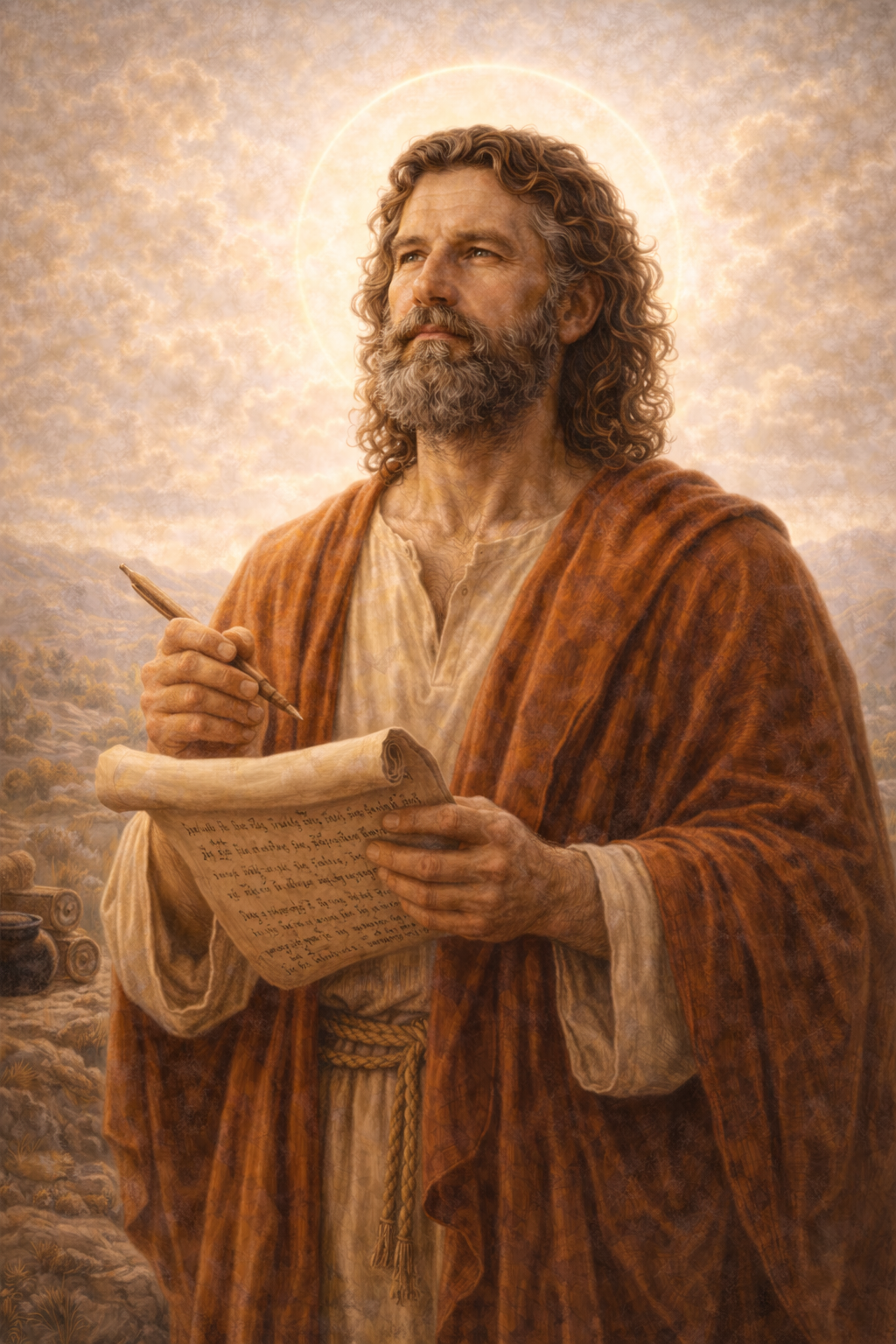
About Matthew
Matthew, also called Levi, was one of the twelve apostles and the author of the first Gospel. Before following Jesus, he was a tax collector, a profession that made him one of the most despised members of Jewish society. Tax collectors were hated not only because they collected money for the occupying Roman government but because they were known for extorting more than was required and keeping the excess for themselves. For a Jew to collaborate with Rome in this way was seen as treason against both nation and God, making tax collectors ritually unclean and social outcasts. Yet Jesus called this man to be one of His closest followers.
Matthew worked at a tax booth in Capernaum, collecting duties on goods transported along the major trade route that passed through the town. One day, as Jesus was walking by, He saw Matthew sitting at his tax collector's booth and said simply, "Follow me." The Gospel records that Matthew "got up and followed him," leaving behind his lucrative career, his financial security, and his old life. This immediate response to Jesus' call is remarkable, especially considering what Matthew was abandoning. Unlike the fishermen who could potentially return to their trade, a tax collector who left his post would forfeit his commission and could not easily go back.
Matthew's response to his calling was to throw a great banquet at his house, inviting Jesus along with many tax collectors and sinners. This celebration must have been quite a feast, as it drew criticism from the Pharisees and teachers of the law, who asked Jesus' disciples, "Why does your teacher eat with tax collectors and sinners?" Jesus' response revealed His mission: "It is not the healthy who need a doctor, but the sick. But go and learn what this means: 'I desire mercy, not sacrifice.' For I have not come to call the righteous, but sinners." Matthew's feast thus became an occasion for Jesus to articulate one of the central themes of His ministry—that He came to seek and save the lost, not to affirm the self-righteous.
After this account of his calling, Matthew is not mentioned individually again in the Gospel narratives, though he appears in the lists of the twelve apostles. However, the Gospel that bears his name is one of the most important documents in Christian history. The Gospel of Matthew was apparently written for a Jewish audience, as it contains more quotations from the Old Testament than any other Gospel and repeatedly shows how Jesus fulfilled messianic prophecies. Matthew organized his Gospel carefully around five major discourses of Jesus (mirroring the five books of Moses), including the Sermon on the Mount, the missionary discourse, the parables of the kingdom, teachings on the church, and the Olivet Discourse about the end times.
Matthew's Gospel begins with a genealogy tracing Jesus' lineage through David back to Abraham, establishing Jesus' credentials as the Jewish Messiah. It emphasizes Jesus as the fulfillment of the Law and the Prophets, as the Son of David, and as Emmanuel—God with us. The Gospel includes material found nowhere else, including the visit of the Magi, the flight to Egypt, several unique parables (such as the wheat and weeds, the hidden treasure, the pearl of great price, and the sheep and goats), and Jesus' great commission to make disciples of all nations.
Matthew's background as a tax collector uniquely prepared him to write this Gospel. His profession required literacy in both Aramaic and Greek, skill in record-keeping, and attention to detail—all essential for an evangelist. His experience with numbers is evident in his Gospel, which contains more numerical references than the others. His former life as a social outcast who found acceptance and purpose through Jesus' call gave him special insight into the grace and mercy of God.
The early church father Papias, writing around AD 125, stated that "Matthew compiled the sayings [of Jesus] in the Hebrew tongue, and everyone translated them as best he could." This may refer to an earlier Aramaic version of Matthew's Gospel or to a collection of Jesus' teachings that Matthew compiled and later incorporated into his Gospel. The Greek Gospel of Matthew as we have it was likely written between AD 50-70, making it possibly the earliest Gospel account, though many modern scholars date it somewhat later.
Tradition holds that after the resurrection and Pentecost, Matthew first ministered in Judea for some years before traveling to other lands to preach the gospel. Various traditions place his missionary work in Ethiopia, Persia, Syria, or Parthia. According to one tradition, he was martyred in Ethiopia, either by being stabbed while celebrating Mass or by being burned, stoned, and beheaded. Other accounts place his death in Hierapolis in Phrygia or in Persia. The uncertainty about the details of his death stands in contrast to the certainty about the enduring impact of his Gospel.
Matthew's feast day is celebrated on September 21 in the Western Church and November 16 in the Eastern Church. His symbol as an evangelist is a winged man or angel, because his Gospel begins with the human genealogy of Jesus. In art, he is often depicted with a money bag or counting coins, referencing his former profession, or with a pen and scroll, representing his work as an evangelist.
Matthew's transformation from despised tax collector to honored apostle and evangelist demonstrates the power of Jesus' call and the radical nature of grace. His story offers hope to those who feel their past disqualifies them from serving God—Jesus sees potential where others see only failure, and He calls people not because of who they have been but because of who they can become through His transforming power. Matthew's willingness to leave everything and follow Jesus, his joy in celebrating his new life by bringing his old associates to meet Jesus, and his lifelong service to the gospel, preserved for all time in his Gospel, make him a model of radical discipleship and the transforming power of an encounter with Christ.