Saint profile
Thomas
About Thomas
Thomas, also called Didymus (both names meaning "twin"), was one of the twelve apostles who is best known for his initial doubt of Jesus' resurrection, which led to the famous phrase "doubting Thomas." However, this characterization, while based on a real incident, does not do justice to the complexity and ultimate faith of this disciple. Thomas was a man of deep loyalty, courageous commitment, and profound theological insight who made one of the strongest confessions of Jesus' divinity in all of Scripture.
Thomas appears in the Gospel of John more than in the other Gospels, and each appearance reveals important aspects of his character. The first significant mention comes when Jesus decided to return to Judea after receiving news that His friend Lazarus was ill. The disciples objected, reminding Jesus that the Jews there had recently tried to stone Him. It would be dangerous to return. In this context, Thomas spoke up with words that revealed both his realism and his devotion: "Let us also go, that we may die with him." This was not the statement of a doubter but of a loyal follower willing to face death alongside his Master. Thomas clearly understood the danger, yet his love for Jesus overcame his fear.
The second appearance of Thomas in John's Gospel occurs during the Last Supper. Jesus was preparing His disciples for His departure, telling them He was going to prepare a place for them and that they knew the way to where He was going. Thomas interrupted: "Lord, we don't know where you are going, so how can we know the way?" This question was honest and practical—Thomas wanted concrete understanding, not vague reassurance. His question prompted one of Jesus' most profound statements: "I am the way and the truth and the life. No one comes to the Father except through me." Thomas' willingness to admit confusion and ask for clarification benefited all the disciples and has benefited Christians ever since.
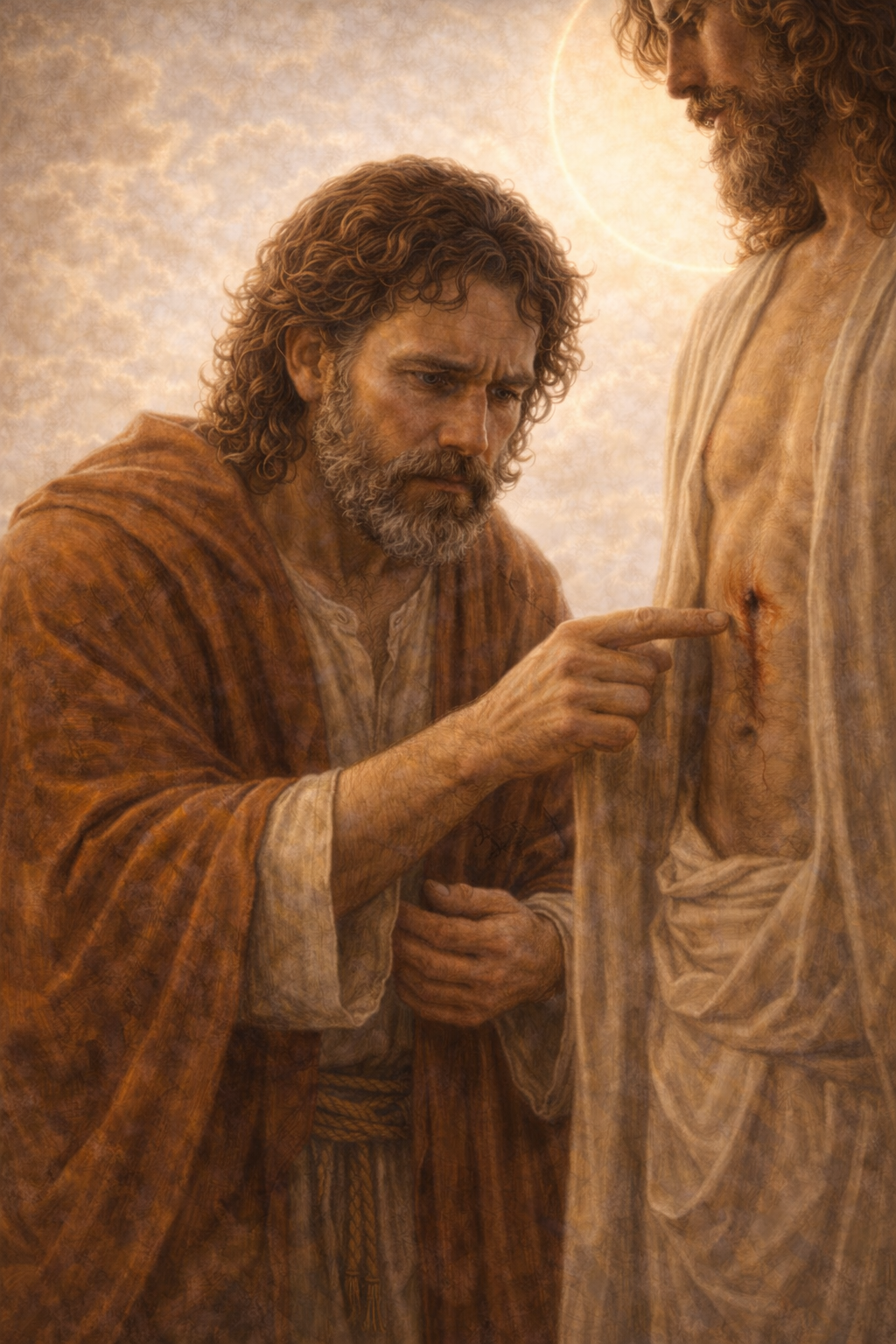
Thomas' most famous moment came after the resurrection. On the evening of resurrection day, Jesus appeared to the disciples while they were gathered behind locked doors. Thomas was not with them on this occasion—we don't know why he was absent. When the other disciples excitedly told Thomas, "We have seen the Lord!" his response has echoed through the centuries: "Unless I see the nail marks in his hands and put my finger where the nails were, and put my hand into his side, I will not believe." This statement has branded Thomas as the doubter, the skeptic who demanded proof.
Yet we should consider what Thomas was really asking for. He was not demanding something the other disciples had not received—they had seen Jesus too. Thomas simply wanted the same evidence they had been given. Moreover, his specific request to touch Jesus' wounds suggests he had been told the details of Jesus' appearance and wanted to verify that it was truly the same Jesus who had been crucified, not a spirit or vision. Thomas' doubt was not cynical unbelief but the caution of someone who wanted to be absolutely certain before committing to something so extraordinary.
A week later, Jesus appeared again to the disciples, and this time Thomas was present. Jesus immediately addressed Thomas' doubt, saying, "Put your finger here; see my hands. Reach out your hand and put it into my side. Stop doubting and believe." The text doesn't tell us whether Thomas actually touched Jesus' wounds. What we do know is his response: "My Lord and my God!" This confession is remarkable—it is the clearest, most direct affirmation of Jesus' divinity made by any disciple in the Gospels. Thomas moved from doubt to the highest faith, acknowledging Jesus not merely as teacher or even as Messiah, but as Lord and God. Jesus accepted this worship, responding with words that extend to all believers who would come after: "Because you have seen me, you have believed; blessed are those who have not seen and yet have believed."
After this, Thomas is mentioned among the disciples who saw Jesus by the Sea of Galilee after the resurrection. Beyond this, the New Testament is silent about Thomas' subsequent ministry. However, strong and ancient traditions, particularly in India, claim that Thomas brought Christianity to the Indian subcontinent.
According to the Acts of Thomas, a second or third-century document, Thomas initially resisted going to India but was eventually sold as a slave to a merchant from India and taken there. In India, he is said to have preached the gospel, performed miracles, and established Christian communities. Indian Christian tradition, particularly among the Saint Thomas Christians of Kerala, firmly maintains that Thomas arrived on the Malabar Coast in AD 52, established seven churches, and ministered there until his martyrdom.
Tradition states that Thomas was martyred near Madras (now Chennai) around AD 72. According to one account, he was praying on a mountain when he was pierced with spears by Hindu priests or soldiers. Another tradition says he was killed with arrows. His relics were eventually moved to Edessa in Mesopotamia (modern-day Turkey) and later to Ortona, Italy, though some remain enshrined at the San Thome Basilica in Chennai, built over his original tomb.
Thomas' legacy is complex and rich. While he is remembered as the doubter, he is also the disciple who was willing to die with Jesus, who asked the questions others were afraid to voice, who demanded evidence and then, when that evidence was provided, made the most exalted confession of Jesus' identity found in the Gospels. His doubt was not the end of his story but the beginning of deeper faith. His journey from "I will not believe" to "My Lord and my God" mirrors the journey many believers take from uncertainty to conviction.
Thomas represents those who struggle with doubt but are honest enough to voice it rather than pretending. Jesus' gentle response to Thomas shows that doubt, when brought honestly to Christ, can be transformed into powerful faith. The tradition of Thomas' mission to India, whether historically verifiable in all details or not, testifies to his transformation from cautious questioner to bold missionary willing to travel to the ends of the known world and die for the faith he once doubted. Thomas reminds us that faith is not the absence of questions but the persistence in seeking answers, and that those who doubt and then believe may ultimately believe most profoundly of all.