Saint profile
Thaddeus
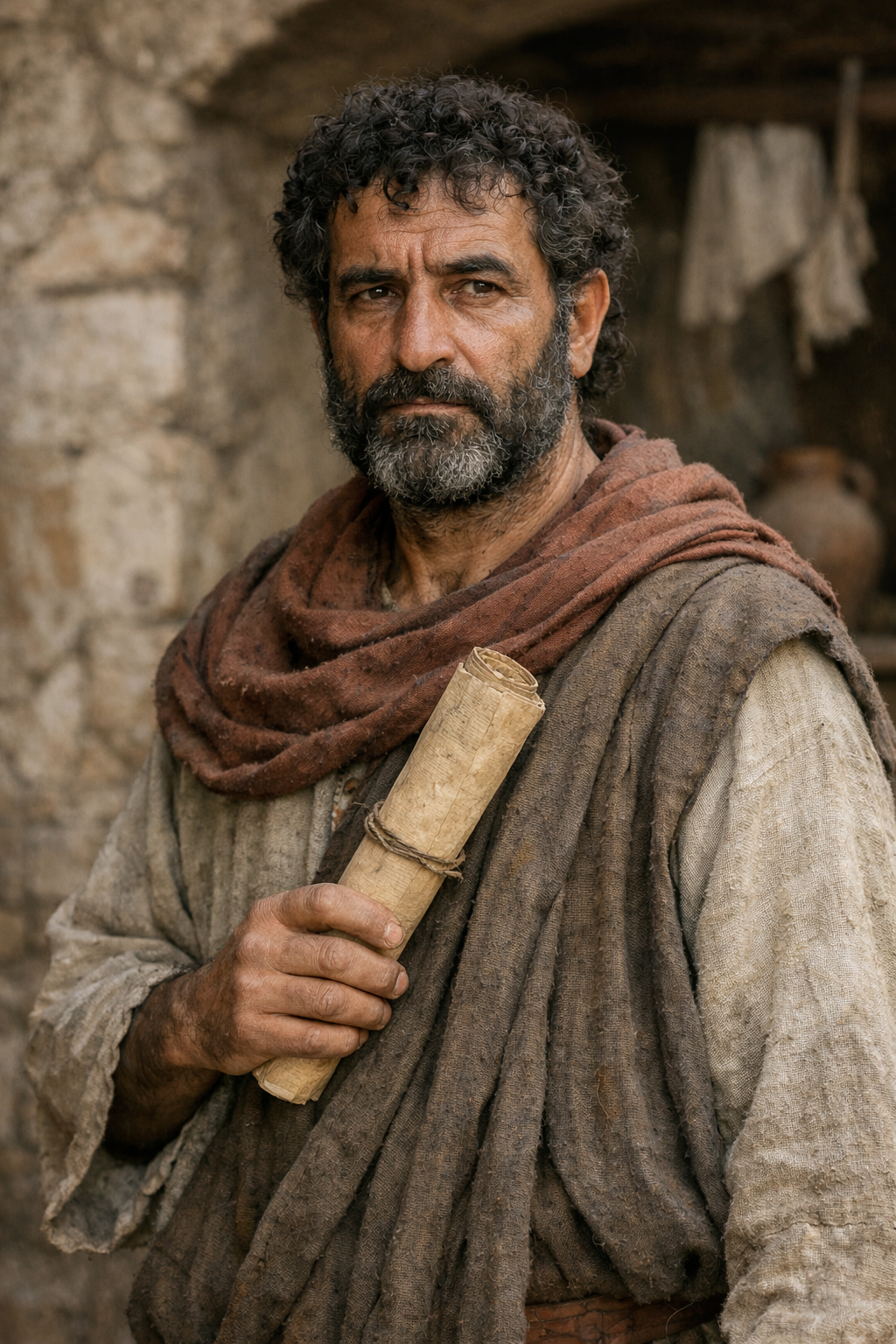
About Thaddeus
Thaddeus, also known as Judas son of James (or Jude), and sometimes called Lebbaeus, was one of the twelve apostles. The multiple names can cause confusion, but this naming variation was common in the first century, with individuals often having a Hebrew name, a Greek name, and sometimes a nickname. The name Thaddeus likely means "heart" or "courageous heart," while Lebbaeus may come from the Hebrew word for heart as well. He is carefully distinguished from Judas Iscariot, the betrayer, which is why Gospel writers and later tradition often refer to him as Thaddeus or Jude rather than Judas.
Thaddeus appears in all the lists of the twelve apostles, though the synoptic Gospels refer to him differently. Matthew and Mark call him Thaddeus, while Luke refers to him as "Judas son of James" (sometimes translated as "Judas brother of James"). This Judas/Jude is traditionally identified as the author of the brief epistle of Jude in the New Testament, where he identifies himself as "Jude, a servant of Jesus Christ and a brother of James." This James is likely James the Just, the brother of Jesus, which would make Jude also a brother (or possibly cousin) of Jesus. However, like Jesus' other brothers, Jude apparently did not believe in Jesus during His earthly ministry but came to faith after the resurrection.
The only recorded words of Thaddeus in the Gospels appear in John 14, during Jesus' farewell discourse at the Last Supper. After Jesus spoke about manifesting Himself to those who love Him, Thaddeus asked, "Lord, why do you intend to show yourself to us and not to the world?" This question reveals Thaddeus' expectation that the Messiah would reveal Himself publicly and powerfully to all people, forcing recognition from the world. It reflects a common misunderstanding among the disciples about the nature of Jesus' kingdom and mission.
Jesus' response to Thaddeus' question was profound: "Anyone who loves me will obey my teaching. My Father will love them, and we will come to them and make our home with them. Anyone who does not love me will not obey my teaching. These words you hear are not my own; they belong to the Father who sent me." Jesus explained that His self-revelation is not a public display of power to compel belief but an intimate, personal manifestation to those who love Him and obey His commands. The indwelling of the Father and Son with believers would be a spiritual reality, not a political or military demonstration. This teaching about the inner, spiritual nature of Christ's presence and kingdom must have reshaped Thaddeus' understanding.
Beyond this one question, the New Testament tells us nothing else specific about Thaddeus during Jesus' ministry. However, the epistle of Jude, if written by this apostle, provides insight into his theology and concerns. The letter warns against false teachers who have infiltrated the church, individuals who pervert grace into license for immorality and deny Jesus Christ. Jude calls believers to contend earnestly for the faith, to build themselves up in their most holy faith, to pray in the Holy Spirit, to keep themselves in God's love, and to show mercy to those who doubt while saving others by snatching them from the fire. The letter concludes with one of the most beautiful doxologies in Scripture: "To him who is able to keep you from stumbling and to present you before his glorious presence without fault and with great joy—to the only God our Savior be glory, majesty, power and authority, through Jesus Christ our Lord, before all ages, now and forevermore! Amen."
Early church tradition provides accounts of Thaddeus' missionary work after Pentecost. One prominent tradition associates him with the evangelization of Armenia and Mesopotamia. According to the early church historian Eusebius, there was a correspondence between Jesus and King Abgar V of Edessa (in Mesopotamia), in which the king asked Jesus to come and heal him. Jesus reportedly replied that He must fulfill His mission in Jerusalem but would send one of His disciples afterward. This disciple, according to tradition, was Thaddeus (though some versions say it was Addai, possibly a different person or a variant name).
The tradition states that Thaddeus went to Edessa after Pentecost and healed King Abgar, converting him and many of his people to Christianity. From Edessa, Thaddeus reportedly traveled throughout Mesopotamia, Syria, and Armenia, preaching the gospel and establishing churches. He is particularly honored in Armenia, where tradition credits him (along with Bartholomew) with bringing Christianity to the Armenian people.
According to tradition, Thaddeus was martyred around AD 65, either in Beirut or in the Armenian city of Ararat. Various accounts describe his death differently—some say he was clubbed to death, others that he was killed with an axe or halberd, and still others that he was crucified. Regardless of the specific method, the consistent tradition is that Thaddeus died as a martyr for his faith in Christ, having faithfully proclaimed the gospel in regions where Christ was not known.
Thaddeus' question at the Last Supper and Jesus' response have special relevance for believers in every age. We might wonder, like Thaddeus, why Jesus doesn't manifest Himself more obviously to the world, why He doesn't provide undeniable proof that would compel universal belief. Jesus' answer reminds us that faith is not about overwhelming evidence that removes the possibility of disbelief but about love that chooses to believe and obey. The revelation of Christ is given to those who love Him, and this revelation takes the form of His indwelling presence through the Holy Spirit, making His home with believers.
In later Catholic tradition, St. Jude Thaddeus became particularly associated with desperate situations and lost causes, though the biblical or historical reason for this association is unclear. It may be that because he was a relatively obscure apostle, people felt that prayers to him would receive special attention, or that his own question at the Last Supper reflected the confusion and desperation people feel when facing impossible situations. Regardless of the origin of this devotion, it has made St. Jude one of the most beloved saints, invoked by countless people in times of need.
Thaddeus represents the faithful disciple who may not be the most prominent or well-known but who serves Christ with whole-hearted devotion. His question shows he was thinking deeply about Jesus' mission and kingdom, even if his understanding was initially incomplete. His traditional association with desperate causes reminds us that no situation is hopeless when brought to God, and his martyrdom testifies that the gospel is worth dying for. Like the other apostles, Thaddeus was transformed from an ordinary man with ordinary misunderstandings into a bold witness willing to carry the message of Christ to distant lands and seal his testimony with his blood, demonstrating the transforming power of the resurrection and the Holy Spirit.