Saint profile
Vitus
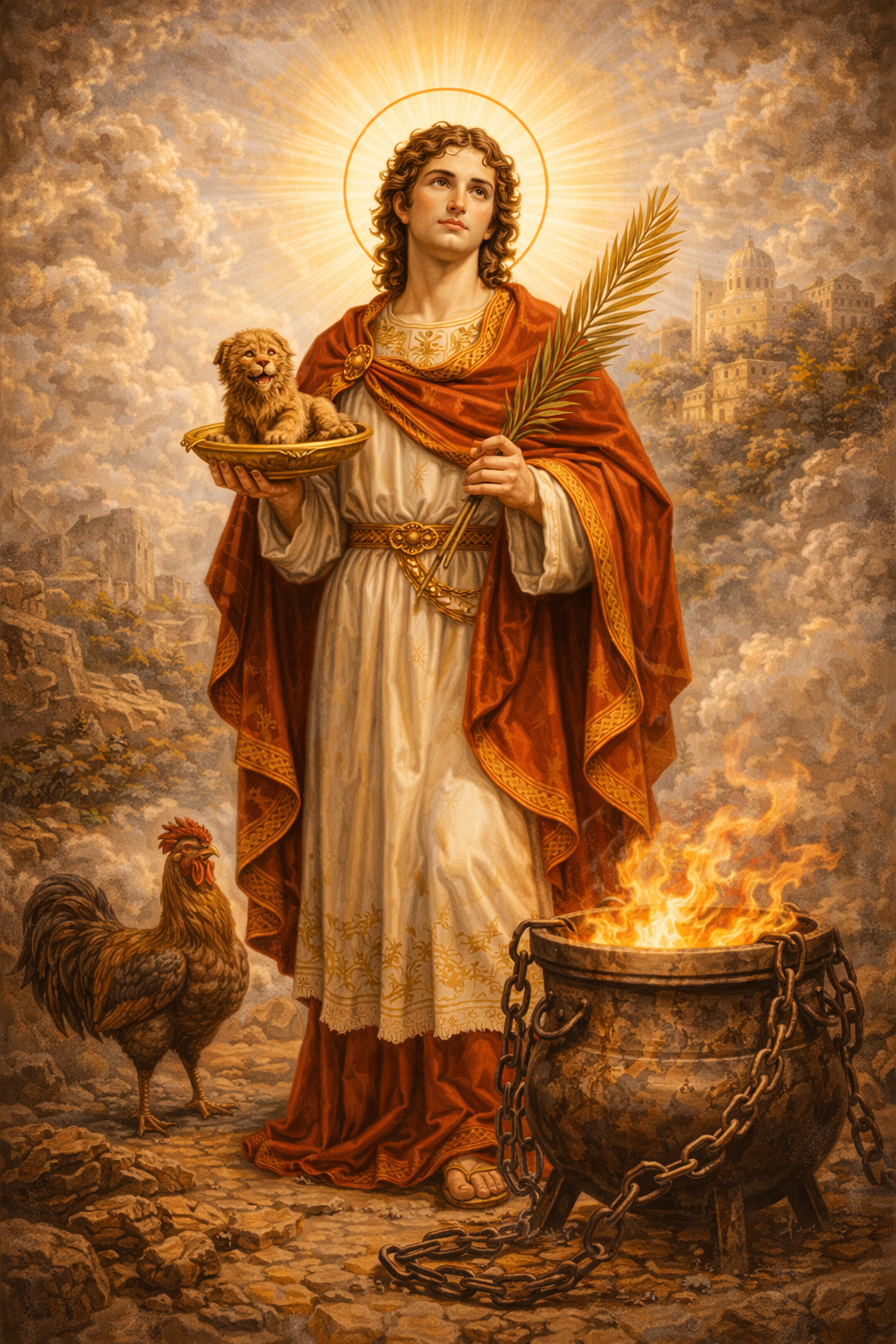
About Vitus
Saint Vitus was an early Christian martyr who lived in the late 3rd to early 4th century AD, traditionally believed to be from Sicily or southern Italy. As a young nobleman, Vitus embraced Christianity during a time when the Roman Empire, under Emperor Diocletian, fiercely persecuted Christians. His conversion brought him into direct conflict with his pagan father, who subjected him to severe torture in an attempt to force him to renounce his faith.
Despite enduring brutal suffering, Vitus remained unwavering in his commitment to Christ. His steadfastness led to his martyrdom at a very young age—around 12 or 13 years old—making him a powerful symbol of youthful courage and faith in the face of oppression.
Saint Vitus’ martyrdom took place during the Diocletianic Persecution, the empire’s last and most severe attempt to eradicate Christianity. His death, marked by endurance and faithfulness, inspired early Christians and later generations to persevere in their beliefs despite adversity.
His significance extends beyond his martyrdom: Saint Vitus became the patron saint of those afflicted by neurological disorders, especially the condition historically known as “Saint Vitus’ Dance” (Sydenham’s chorea), characterized by involuntary movements. Medieval Christians prayed to him for healing and protection.
His feast day, celebrated on June 15, honors his sacrifice and serves as a reminder of the power of faith and resilience. The dedication of grand churches such as St. Vitus Cathedral in Prague attests to his lasting spiritual and cultural importance.
In summary, Saint Vitus is remembered primarily as a courageous young martyr whose unwavering faith under persecution became a beacon of hope and strength for Christians facing trials. His legacy endures as a symbol of steadfast devotion and divine intercession for those suffering from physical and spiritual afflictions.