Saint profile
Paul
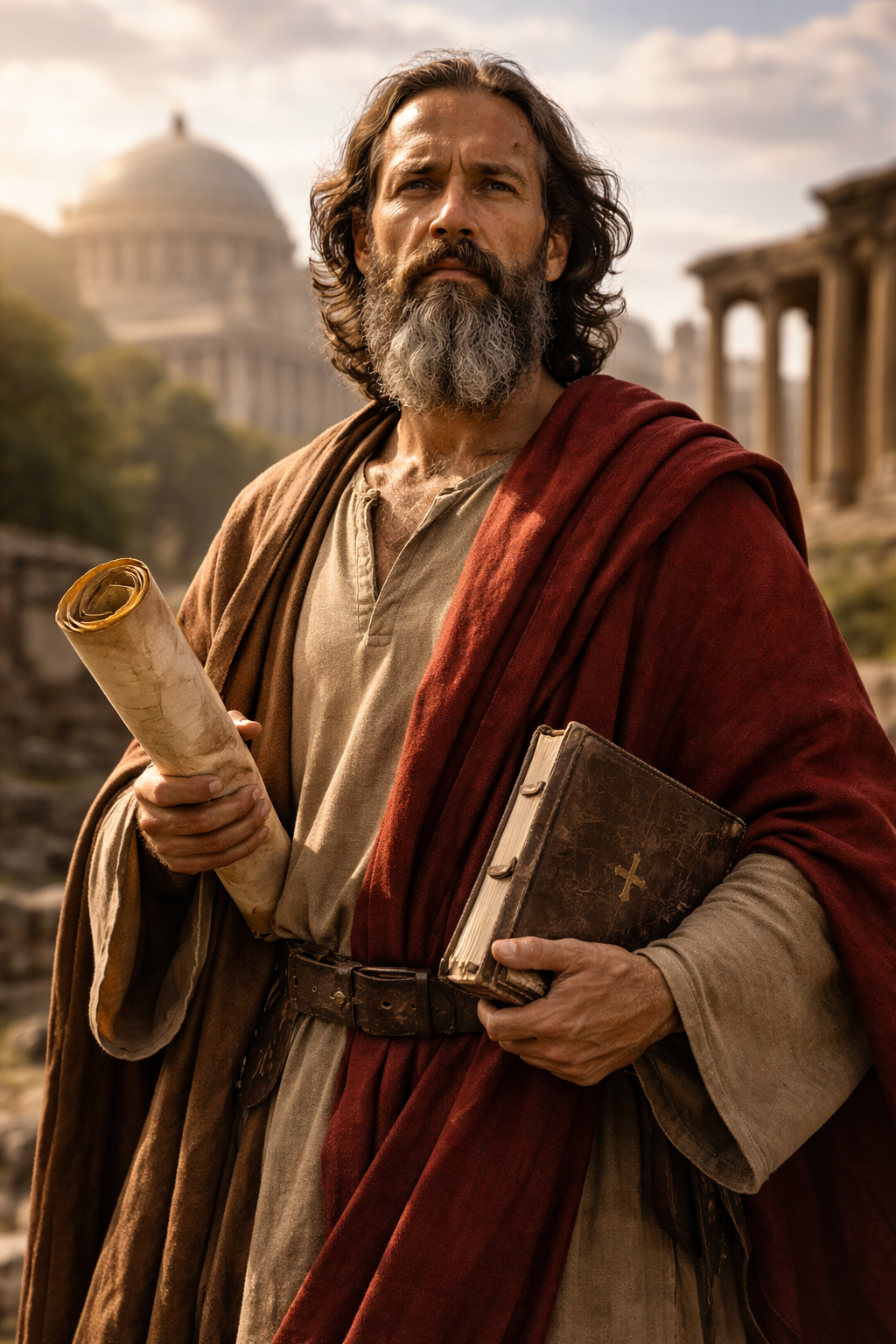
About Paul
Saint Paul the Apostle stands as one of the most influential figures in the history of Christianity, shaping its theology, expanding its reach beyond Jewish communities, and leaving a literary legacy that continues to guide Christian belief and practice. Born in the early first century in the city of Tarsus, in modern-day Turkey, Paul was originally named Saul. He was a Jew of the tribe of Benjamin, raised in a devout Pharisaic tradition, and educated in Jewish law under the respected teacher Gamaliel. In addition to his Jewish heritage, Paul possessed Roman citizenship, a status that later proved significant in his missionary journeys and legal trials.
Before becoming a follower of Christ, Paul was a fierce opponent of the early Christian movement. He viewed the followers of Jesus as a dangerous sect that threatened the integrity of Jewish law and tradition. Acting with zeal, he participated in the persecution of Christians, approving of their arrests and even their deaths. This period of his life underscores the dramatic nature of his later conversion, which would become one of the most pivotal moments in Christian history.
Paul’s life was transformed by his encounter with the risen Jesus on the road to Damascus. According to the Acts of the Apostles, this event involved a blinding light and the voice of Christ confronting Paul for persecuting his followers. Struck blind and deeply shaken, Paul was led into Damascus, where he regained his sight and was baptized. This conversion was not merely a change of belief but a complete redirection of his identity and mission. Saul became Paul, a servant and apostle of Jesus Christ, committed to proclaiming the Gospel he once opposed.
Following his conversion, Paul spent years in preparation, prayer, and early ministry before embarking on extensive missionary journeys throughout the Roman Empire. He traveled across Asia Minor, Greece, and the eastern Mediterranean, preaching in synagogues, marketplaces, and homes. Paul’s mission was distinctive in its focus on the Gentiles—non-Jews—whom he believed were fully included in God’s plan of salvation through faith in Christ. This conviction placed him at the center of early debates about whether Gentile converts were required to follow Jewish law, such as circumcision and dietary regulations. Paul argued passionately that salvation came through grace, not through adherence to the law, a position that helped define Christianity as a faith open to all peoples.
Paul’s missionary work was marked by extraordinary hardship. He endured long journeys by land and sea, frequent beatings, imprisonments, shipwrecks, hunger, and rejection. Despite these trials, his letters reveal a man of deep conviction, joy, and pastoral concern. He founded and nurtured numerous Christian communities, maintaining close relationships with them through correspondence and visits. His letters, known as epistles, were written to address real challenges faced by early Christians, including divisions within communities, moral questions, persecution, and misunderstandings about faith and freedom.
The epistles of Paul form a substantial portion of the New Testament and are among the most influential theological writings in Christian history. In them, Paul articulated key doctrines such as justification by faith, the centrality of Christ’s death and resurrection, the work of the Holy Spirit, and the nature of the Church as the Body of Christ. His writing blends profound theology with practical instruction, urging believers to live lives marked by love, humility, unity, and hope. Paul’s famous reflections on love, suffering, and perseverance continue to resonate deeply with readers across cultures and centuries.
Paul’s personality emerges vividly in his writings. He was intellectually rigorous, emotionally expressive, and spiritually passionate. He could be bold and confrontational when defending the truth of the Gospel, yet tender and compassionate toward those under his care. He often referred to himself as weak and unworthy, emphasizing that his strength came not from himself but from God’s grace. This humility, combined with his tireless dedication, made him a compelling witness to the transformative power of faith.
In the final years of his life, Paul traveled to Rome, where he lived under house arrest and continued to preach and write. Tradition holds that he was eventually executed during the persecution of Christians under Emperor Nero, likely by beheading, a method consistent with his Roman citizenship. His martyrdom sealed a life of complete devotion to Christ and solidified his legacy as a faithful apostle.
Saint Paul’s influence on Christianity is immeasurable. He helped define its theology, shaped its mission to the world, and demonstrated through his life the radical power of conversion and grace. Revered as the “Apostle to the Gentiles,” Paul remains a towering figure whose words and example continue to inspire faith, courage, and commitment in believers around the world.