Saint profile
Lucy
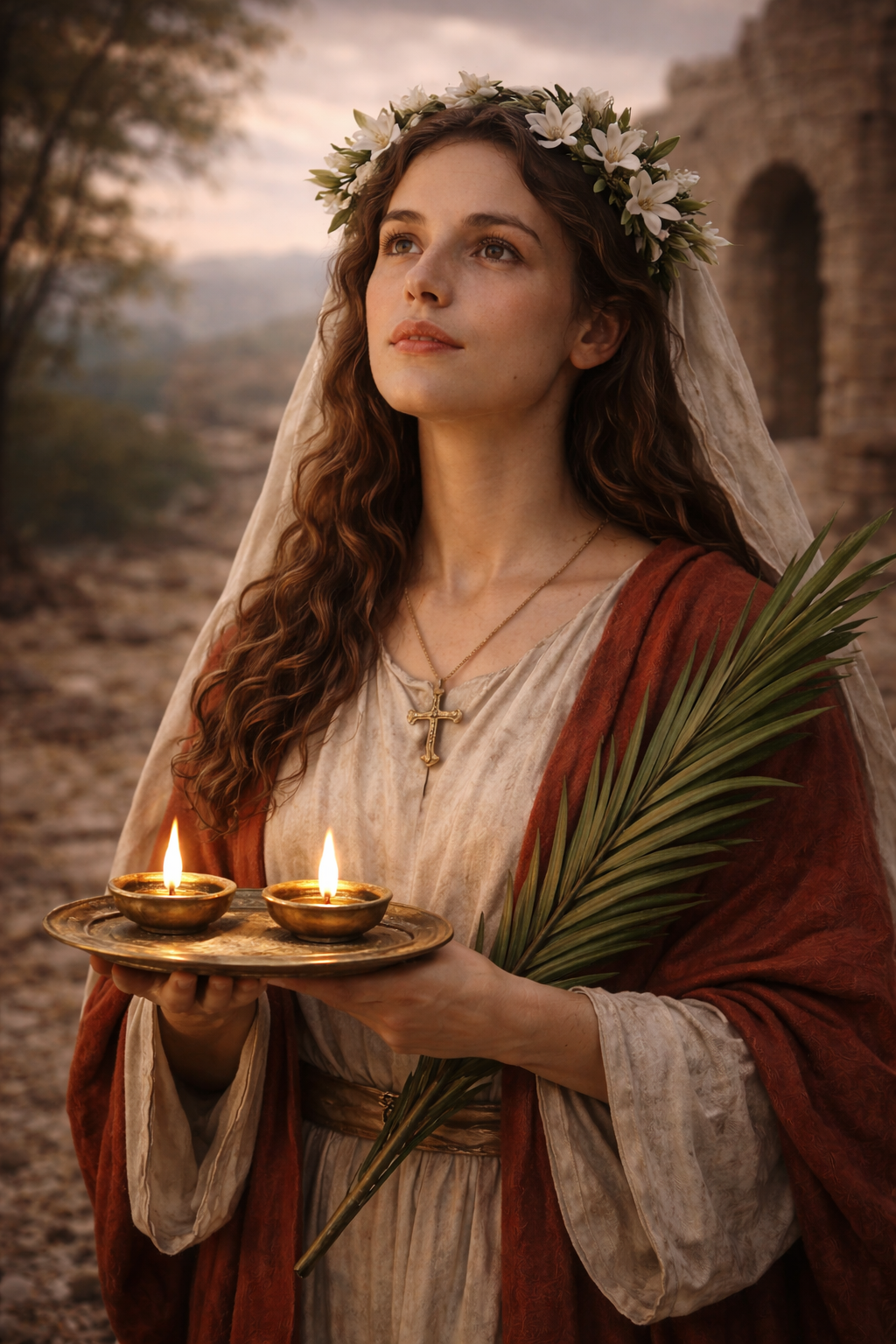
About Lucy
Lucy (Lucia) was a young Christian woman from a wealthy family in Syracuse, Sicily, martyred during Diocletian's persecution in 304 AD. Her name derives from "lux" (light), and she has been associated with light and sight throughout Christian tradition, often depicted carrying a lamp or with eyes on a plate.
According to her passio, Lucy's mother Eutychia suffered from a hemorrhagic condition. Lucy convinced her to visit the tomb of Saint Agatha in Catania to pray for healing. At the tomb, Lucy had a vision of Agatha who told her that her mother would be healed and that Lucy herself would be the glory of Syracuse as Agatha was of Catania.
Her mother was indeed healed, and in gratitude and devotion to Christ, Lucy persuaded her mother to distribute her dowry to the poor. Lucy had secretly consecrated her virginity to God, and when her betrothed learned that her dowry was being given away, he denounced her as a Christian to the governor Paschasius.
Lucy was arrested during the Diocletian persecution. Paschasius tried to force her to sacrifice to the emperor's image. When she refused, he threatened to send her to a brothel. Lucy replied that the body cannot be defiled without the consent of the will: "If you have me violated, my chastity will be doubled for my crown." According to tradition, guards attempted to drag her away, but she became immovable—even a team of oxen could not budge her.
Frustrated, Paschasius ordered her killed where she stood. Various accounts describe attempts to burn her (the flames would not harm her) and finally her being stabbed in the throat with a sword. According to tradition, even as she was dying, she prophesied the end of the persecution and the fall of Diocletian, and received communion before dying.
The tradition of her eyes being gouged out (though not in earliest accounts) led to her patronage of those with eye problems. Her feast day on December 13 was the shortest day of the year in the old Julian calendar, connecting her name ("light") with the returning of light after the winter solstice. She is especially celebrated in Scandinavia and Sicily.