Saint profile
Athanasius of Alexandria
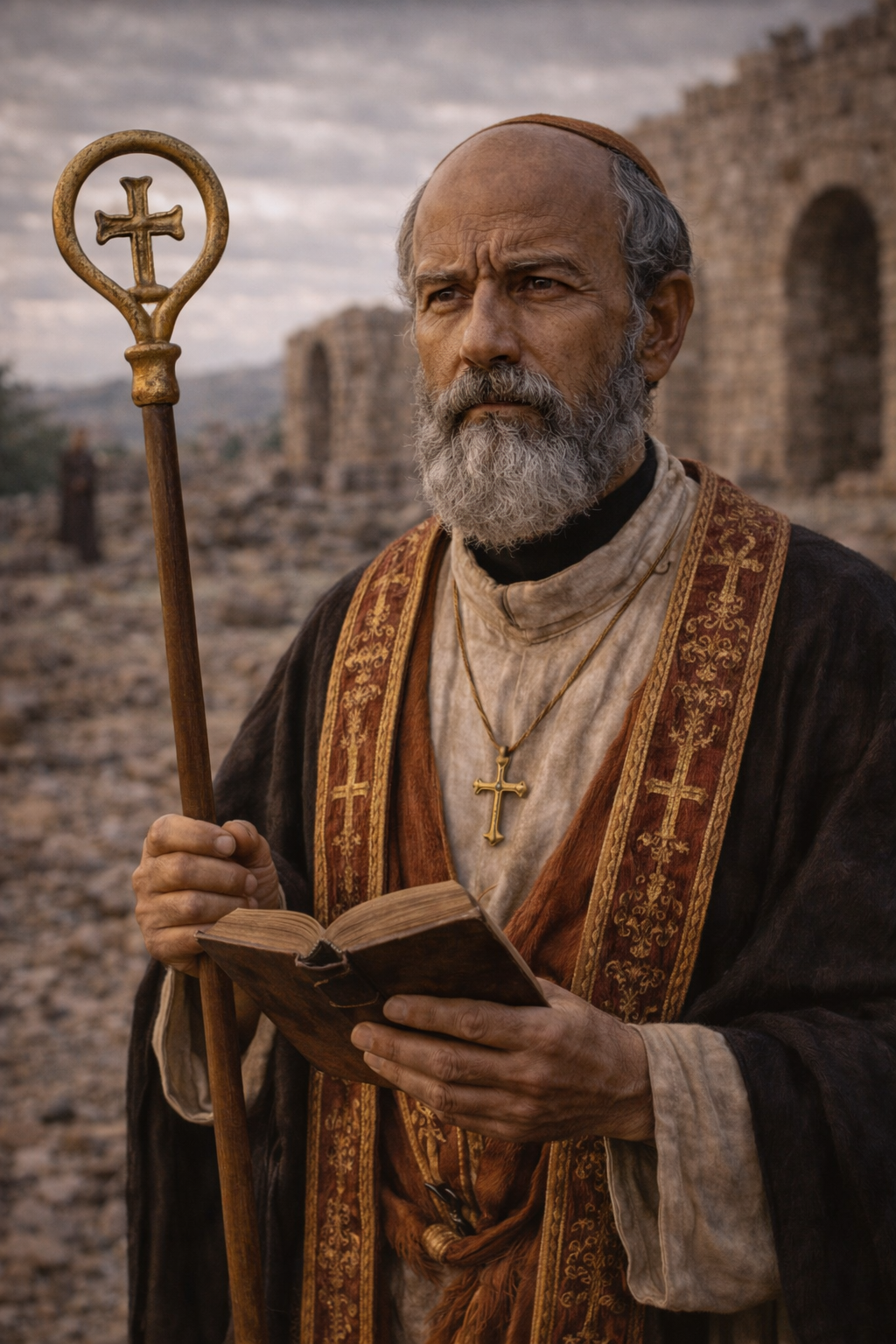
About Athanasius of Alexandria
Athanasius, called "the Great" and "the Father of Orthodoxy," was the champion of Trinitarian theology against the Arian heresy. Born in Alexandria, Egypt, he was educated in Scripture, theology, and classical learning. As a young deacon, he accompanied Bishop Alexander to the Council of Nicaea in 325 AD, where he helped articulate the orthodox position that Christ is "of one substance" (homoousios) with the Father.
In 328 AD, Athanasius succeeded Alexander as Patriarch of Alexandria. His long episcopacy (46 years) was marked by fierce controversy and repeated exiles—five times he was driven from his see by political and ecclesiastical opponents, spending 17 of his 46 years as bishop in exile. Emperors, rival bishops, and Arian factions conspired against him, yet he never wavered in defending Nicene orthodoxy.
The Arian controversy centered on whether Christ was truly divine or merely the highest created being. Arians taught that "there was when he was not," making Christ subordinate to the Father. Athanasius insisted that only if Christ is truly God can He save humanity—salvation requires that the divine nature unite with human nature in Christ. His slogan became: "God became man that man might become god" (meaning partake of the divine nature).
During his exiles, Athanasius lived with monks in the Egyptian desert, wrote important theological works including "On the Incarnation" and letters defending Nicene faith, and his "Life of Antony" popularized monasticism throughout Christianity. His experiences with desert monasticism profoundly shaped his spirituality and resistance to imperial pressure.
Athanasius's opponents controlled imperial power and church councils, repeatedly condemning and exiling him. Yet he maintained support from Rome, from the Egyptian people who loved him, and from monks who sheltered him. His saying "Athanasius contra mundum" (Athanasius against the world) reflected his solitary stand for truth against overwhelming opposition.
In his final years, after Emperor Valens persecuted orthodox bishops, the Nicene faith gradually prevailed. Athanasius died peacefully in Alexandria in 373, having ensured the triumph of orthodox Christology. His theological clarity, pastoral courage, and unshakable faith in Christ's full divinity shaped Christian doctrine forever.