Saint profile
Jerome
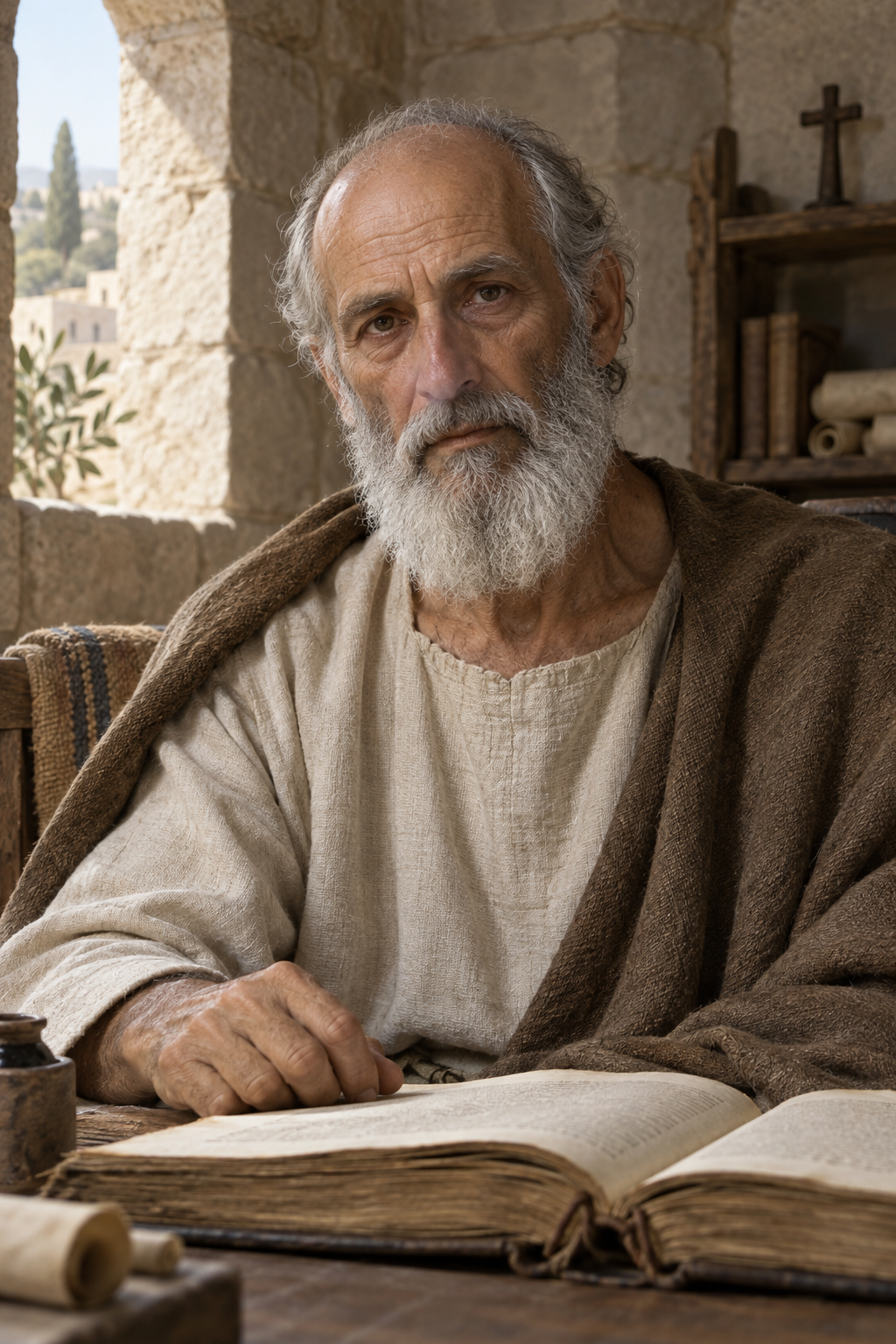
About Jerome
Jerome, one of the four great Latin Doctors of the Church, is best known for translating the Bible into Latin (the Vulgate), which became the Catholic Church's official Latin text for over 1,500 years. Born in Stridon (Dalmatia, near modern Croatia-Slovenia border) to Christian parents, Jerome received an excellent classical education in Rome, studying grammar, rhetoric, and philosophy.
After his education, Jerome traveled extensively—Gaul, Aquileia, Antioch, and the Syrian desert, where he lived as a hermit for several years, learning Hebrew from a Jewish convert. During a severe illness in the desert, he experienced a vivid dream where he stood before Christ's judgment seat and was accused: "You are a Ciceronian, not a Christian"—because he valued classical literature more than Scripture. This dream profoundly affected him.
Jerome was ordained a priest in Antioch and studied under Gregory of Nazianzus in Constantinople. In 382, he became secretary to Pope Damasus in Rome, who commissioned him to revise the existing Latin translations of Scripture. Jerome began with the Gospels, then the Psalms, but eventually undertook translating the entire Old Testament directly from Hebrew—a controversial decision since most Christians used the Greek Septuagint.
In Rome, Jerome also became spiritual director to a circle of aristocratic Christian women dedicated to asceticism and Scripture study, including Paula and her daughter Eustochium. After Pope Damasus died in 385, and facing criticism for his severe asceticism and sharp tongue, Jerome left Rome permanently.
In 386, Jerome settled in Bethlehem, where Paula built monasteries for men and women, plus a hospice for pilgrims. For the next 34 years until his death, Jerome lived there, translating, writing biblical commentaries, engaging in theological controversies, and corresponding with Christians throughout the empire.
Jerome's translation methodology was advanced for his time. He consulted Hebrew and Greek manuscripts, studied Jewish interpretation, and traveled to biblical sites. His Vulgate combined literary quality with scholarly accuracy. His biblical commentaries demonstrated deep knowledge of languages, history, and geography.
Jerome's personality was complex—brilliant, learned, devoted to Scripture and asceticism, but also irritable, sarcastic, and prone to bitter disputes with theological opponents. His controversies with Rufinus, Jovinian, Vigilantius, and others revealed both his passionate defense of orthodoxy and his combative temperament.
Jerome died in Bethlehem on September 30, 420. His gift of Scripture in accessible Latin profoundly shaped Western Christianity and culture. He is typically depicted with a lion (from a legend), a cardinal's hat (anachronistic), and books or scrolls, symbolizing his scholarly life.