Saint profile
Aaron
About Aaron
Aaron was the older brother of Moses and Miriam, born in Egypt during the time of Israelite slavery. He was from the tribe of Levi and would become the first High Priest of Israel, establishing the priestly line that would serve in the Tabernacle and later the Temple.
When God called Moses from the burning bush to lead the Israelites out of Egypt, Moses protested that he was not eloquent and asked God to send someone else. God, though angered by Moses’ reluctance, appointed Aaron to be Moses’ spokesman, saying that Aaron could speak well and would speak to the people on Moses’ behalf. Aaron met Moses at the mountain of God, and together they returned to Egypt to confront Pharaoh.
Aaron performed miraculous signs before Pharaoh, including turning his staff into a serpent and turning the Nile to blood. Throughout the plagues, Aaron stood with Moses as God’s representatives, demanding the release of His people.
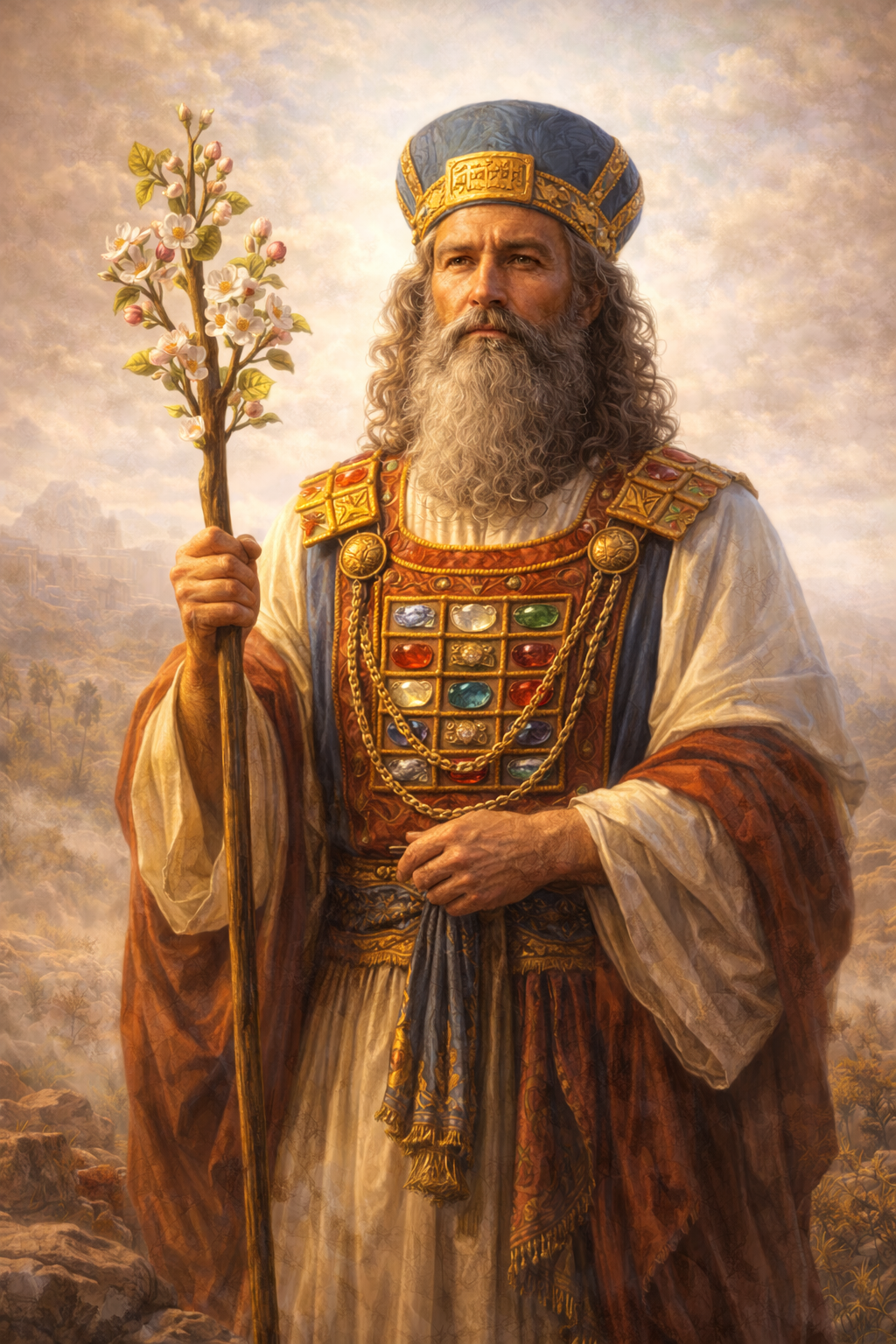
After the Exodus, Aaron was consecrated as the first High Priest in an elaborate ceremony described in Leviticus. He and his sons—Nadab, Abihu, Eleazar, and Ithamar—were set apart to serve as priests. Aaron wore special garments, including a breastplate with twelve precious stones representing the twelve tribes, an ephod, a robe, and a turban with a gold plate inscribed “Holy to the Lord.” His role was to offer sacrifices, burn incense, enter the Holy of Holies on the Day of Atonement, and intercede for the people before God.
However, Aaron’s service was marked by both faithfulness and serious failures. When Moses was on Mount Sinai receiving the Law, the people grew restless and demanded that Aaron make them gods to lead them. Tragically, Aaron complied, collecting their gold jewelry and fashioning a golden calf, declaring a festival to the Lord. When Moses returned and saw the idolatry, he was furious. Aaron made excuses, but the incident resulted in the deaths of three thousand men.
Later, Aaron’s sons Nadab and Abihu offered unauthorized fire before the Lord and were consumed by fire from the Lord’s presence, a sobering reminder of the holiness required of those who serve God. Aaron was forbidden to mourn publicly for his sons, demonstrating that God’s glory took precedence over personal grief.
On another occasion, Aaron and Miriam spoke against Moses because of his Cushite wife and questioned whether the Lord spoke only through Moses. God called all three to the Tent of Meeting and rebuked Aaron and Miriam, striking Miriam with leprosy. Aaron confessed their sin and begged Moses to intercede, which he did, and Miriam was healed after seven days.
Despite these failures, Aaron served faithfully as High Priest for many years. When the people complained about the leadership of Moses and Aaron, God caused Aaron’s staff to miraculously bud, blossom, and produce almonds overnight, confirming his priestly authority.
Near the end of the wilderness journey, Aaron died on Mount Hor at the age of 123. Before his death, God instructed Moses to take Aaron and his son Eleazar up the mountain, where Moses transferred Aaron’s priestly garments to Eleazar, signifying the transfer of the high priesthood. Aaron died on the mountain, and the entire house of Israel mourned for him for thirty days.
Aaron’s legacy as the first High Priest established the priesthood that would serve Israel for centuries, ultimately pointing forward to Christ, our eternal High Priest who perfectly fulfills the role that Aaron inaugurated.