Saint profile
Basil the Great
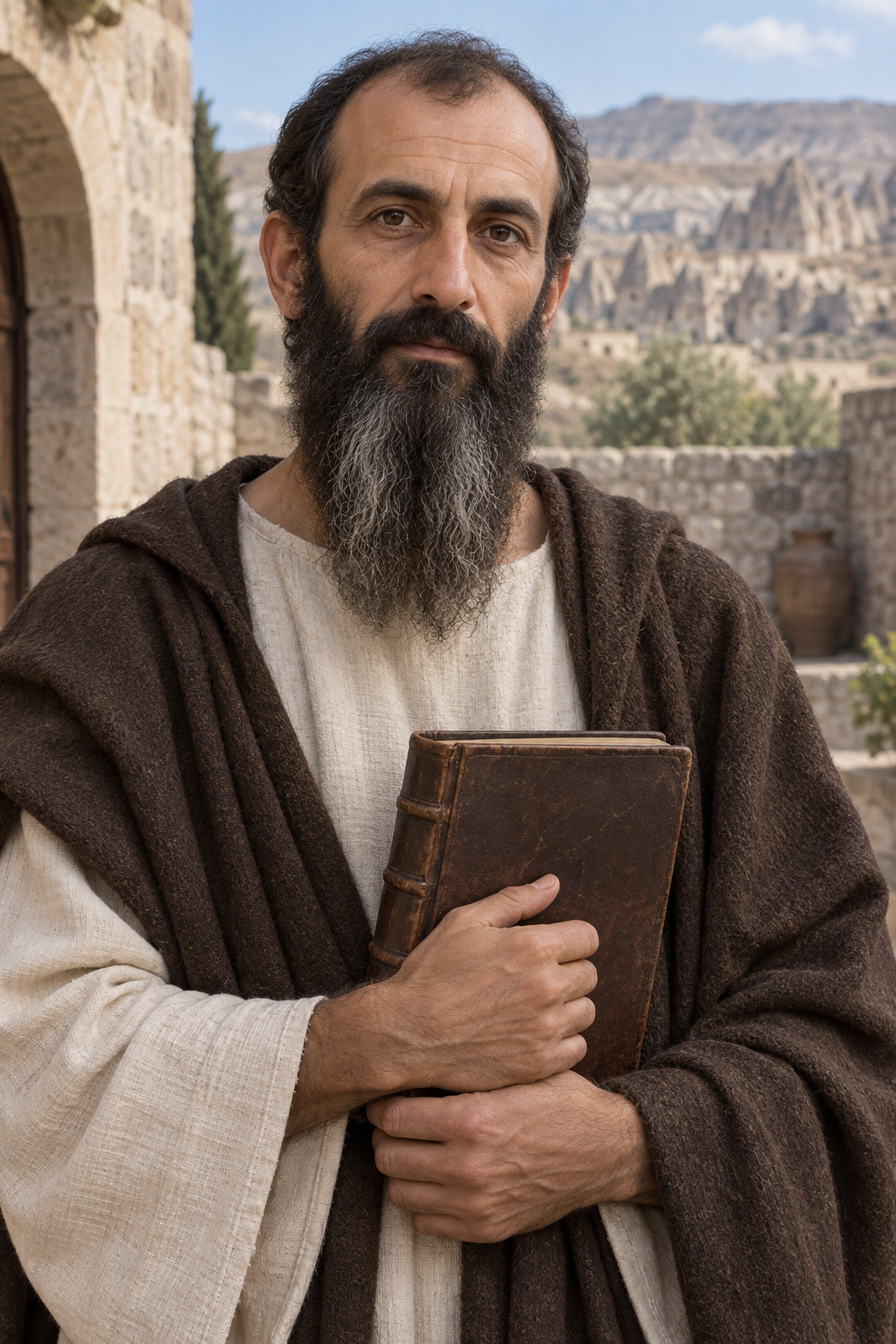
About Basil the Great
Basil, called "the Great," was one of the three Cappadocian Fathers (with his brother Gregory of Nyssa and friend Gregory of Nazianzus) who defended Nicene orthodoxy and developed Trinitarian theology. Born into an extraordinarily holy family in Caesarea, Cappadocia—his grandmother Macrina, parents, sister (Macrina the Younger), and two brothers (Gregory of Nyssa and Peter of Sebaste) are all saints.
Basil received the finest education available, studying in Caesarea, Constantinople, and Athens, where he became lifelong friends with Gregory of Nazianzus. After completing his education, he briefly taught rhetoric but felt drawn to ascetic life. He visited monasteries in Egypt, Syria, and Palestine, studying monastic practices.
Around 358, Basil established a monastic community in Pontus and wrote two sets of monastic rules (the "Longer Rules" and "Shorter Rules") that organized communal monastic life, emphasizing obedience, poverty, prayer, and manual labor. His rules became the foundation for Eastern monasticism, as Benedict's would for the West.
In 370, Basil was chosen Archbishop of Caesarea, making him metropolitan of Cappadocia. His episcopacy coincided with the Arian controversy's final phase. Emperor Valens supported Arianism and pressured Basil to compromise. When the prefect Modestus threatened exile, confiscation, and death, Basil replied that these meant nothing to one who possessed nothing, whose body was already half-dead from asceticism, and who longed for God. Impressed, Valens left him in peace.
Basil's theological contribution was crucial. In "On the Holy Spirit," he articulated the divinity of the Holy Spirit and clarified Trinitarian terminology—distinguishing "ousia" (essence) and "hypostasis" (person), helping resolve confusion that had prolonged the controversy. His formulation "one ousia in three hypostases" became standard orthodox teaching.
Beyond theology, Basil demonstrated practical Christianity by establishing what may be the first hospital, a vast complex called the "Basilias" providing medical care, food, and lodging for the poor, elderly, and sick. He preached against wealth inequality and challenged the rich to share with the poor.
Worn out by ascetic practices, administrative burdens, and theological battles, Basil died on January 1, 379, at only 49 years old. The Council of Constantinople (381) vindicated his theology. He is honored as a Doctor of the Church and one of the greatest theologians in Christian history.