Saint profile
Benedict of Nursia
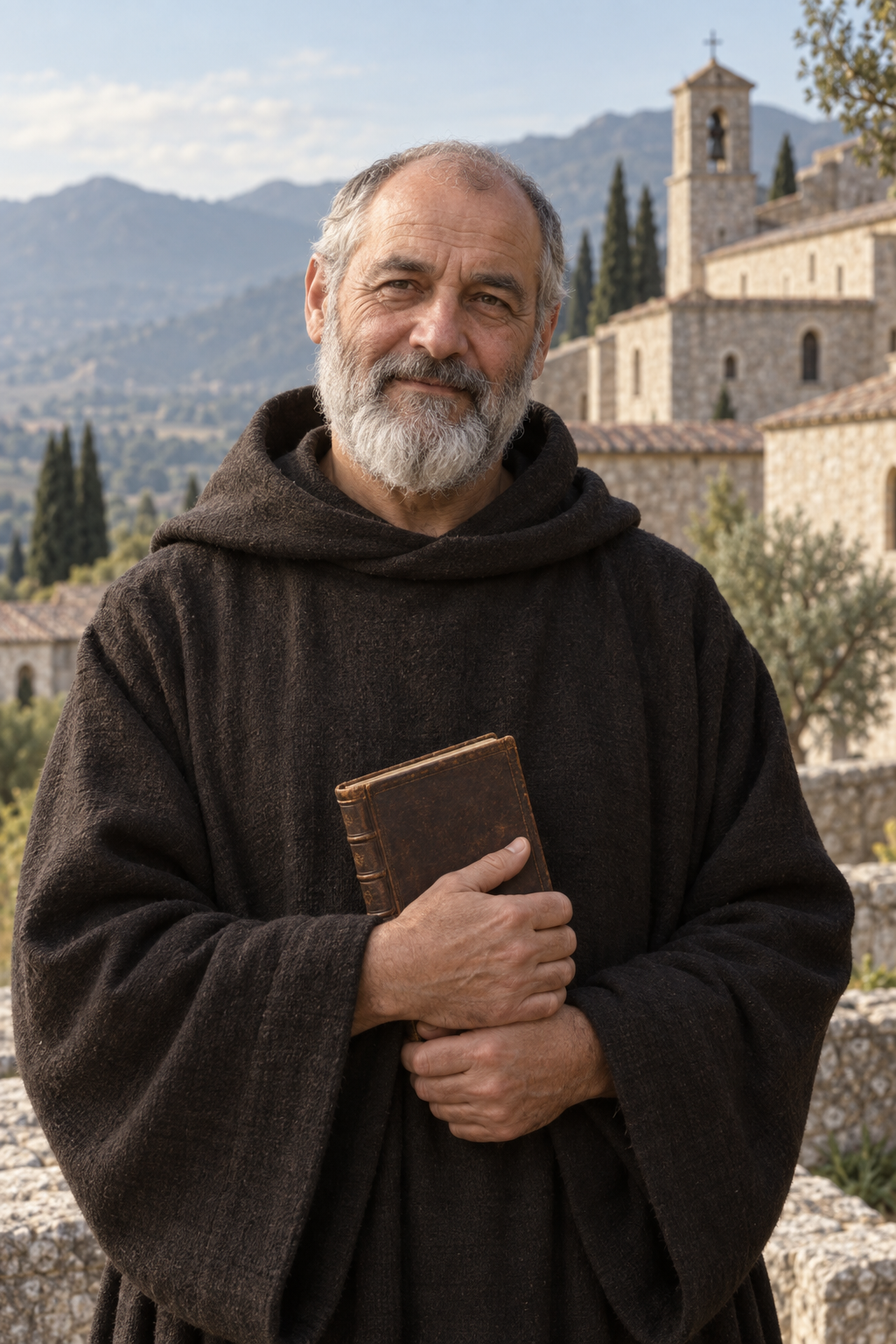
About Benedict of Nursia
Benedict of Nursia is the father of Western monasticism and the author of the Rule of Saint Benedict, which became the foundation for monastic life in the West. Born into a wealthy family in Nursia, Italy, Benedict was sent to Rome for education but was appalled by the city's immorality and withdrew to live as a hermit in a cave at Subiaco around age 20.
His holiness attracted disciples, and he eventually organized them into twelve small monasteries. After conflicts with a jealous local priest, Benedict moved with a small group to Monte Cassino around 529, where he destroyed a pagan temple and established the monastery that would become the mother house of Western monasticism.
At Monte Cassino, Benedict wrote his famous Rule—a moderate, balanced guide for monastic life emphasizing prayer (the Divine Office), manual labor, study, and communal living under an abbot. The Rule's genius lies in its wisdom, flexibility, and understanding of human nature. It mandates "ora et labora" (prayer and work), creating stable communities centered on worship, hospitality, and self-sufficiency.
Benedict's Rule spread throughout Europe, and Benedictine monasteries became centers of learning, agriculture, and civilization during the Dark Ages. Monks preserved classical and Christian texts, developed agriculture, and provided hospitality, education, and charity. Benedict's influence on European culture is incalculable.
Gregory the Great wrote Benedict's biography (though historically imprecise), including miracles and his spiritual wisdom. Benedict's twin sister Scholastica also founded a monastery nearby. Benedict died at Monte Cassino around 547, standing in prayer, supported by his disciples. He was declared patron saint of Europe by Pope Paul VI in 1964.