Saint profile
Boniface of Mainz
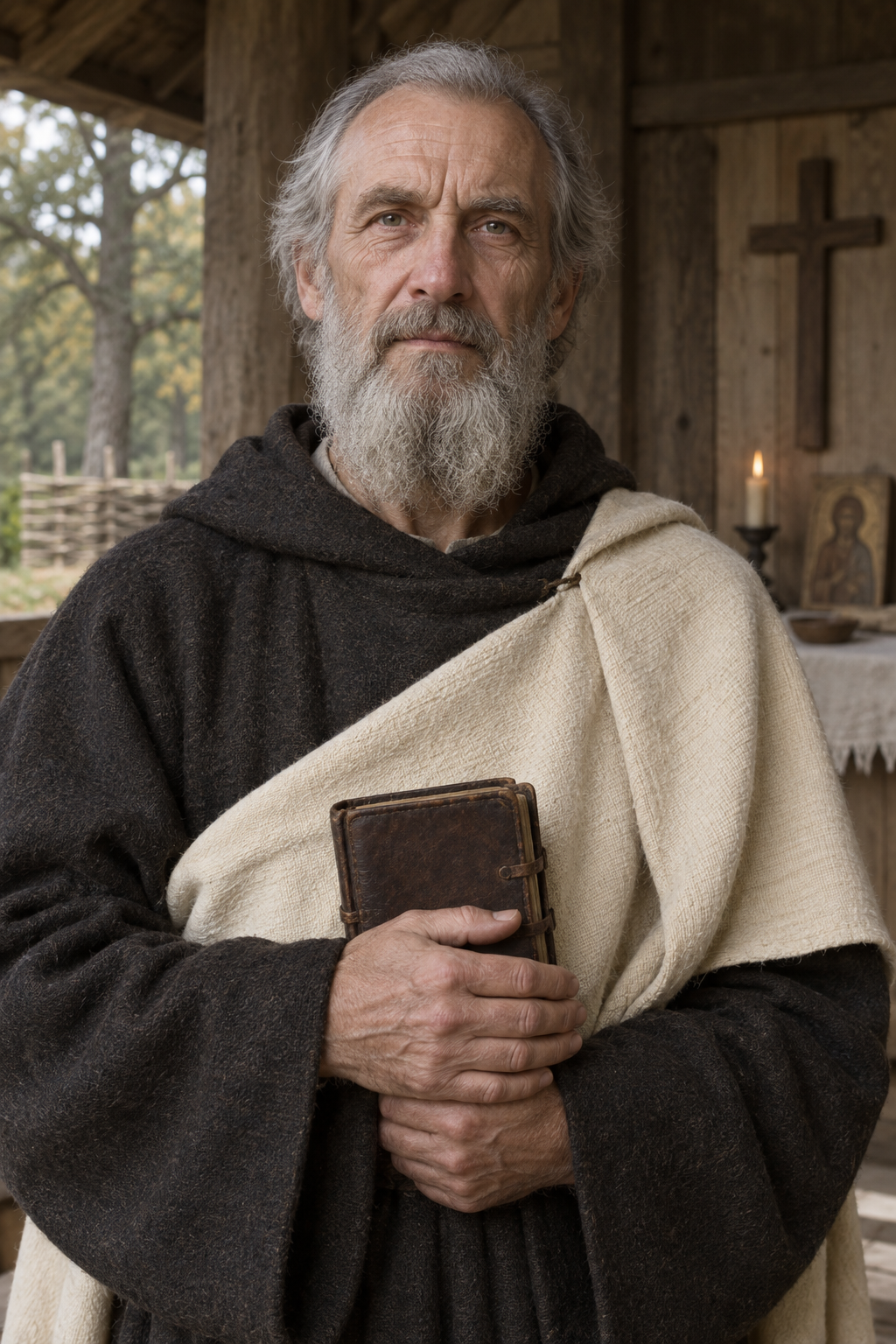
About Boniface of Mainz
Boniface, born Winfrid in Devon, England, became known as the "Apostle of the Germans" for his missionary work in Germanic lands. Educated in Benedictine monasteries, he became a scholarly monk and priest, but felt called to missionary work among the pagan Germanic tribes.
After an unsuccessful first mission to Frisia (716), Boniface traveled to Rome in 719, where Pope Gregory II commissioned him to evangelize Germania, gave him the name Boniface, and granted him extraordinary authority. Thus began his life's work of converting, organizing, and reforming the German church.
Boniface's most famous act occurred at Geismar, where he cut down Thor's Oak, a sacred tree central to Germanic paganism. When no divine retribution followed, many pagans converted, and Boniface used the oak's wood to build a chapel dedicated to St. Peter. This dramatic confrontation exemplified his bold approach to evangelization.
Beyond conversions, Boniface established monasteries, organized dioceses, appointed bishops, reformed clergy, and strengthened ties between the Germanic church and Rome. He founded the monastery at Fulda, which became a major center of learning and mission. He also worked to reform the Frankish church, convening synods to address clerical discipline and doctrinal purity.
In 722, Boniface was consecrated bishop; in 732, archbishop. Despite administrative success, he longed to return to missionary work. In 754, at age 79, he resigned his see and returned to Frisia with a small band of companions to evangelize pagans. On June 5, 754, while preparing to confirm new converts, his camp was attacked by a pagan band. Boniface reportedly held up a Gospel book to shield himself and was martyred along with 52 companions.
His martyrdom and decades of work established Christianity firmly in Germany. Boniface is buried at Fulda, and his legacy as organizer, reformer, and martyr profoundly shaped medieval European Christianity.