Saint profile
Clare of Assisi
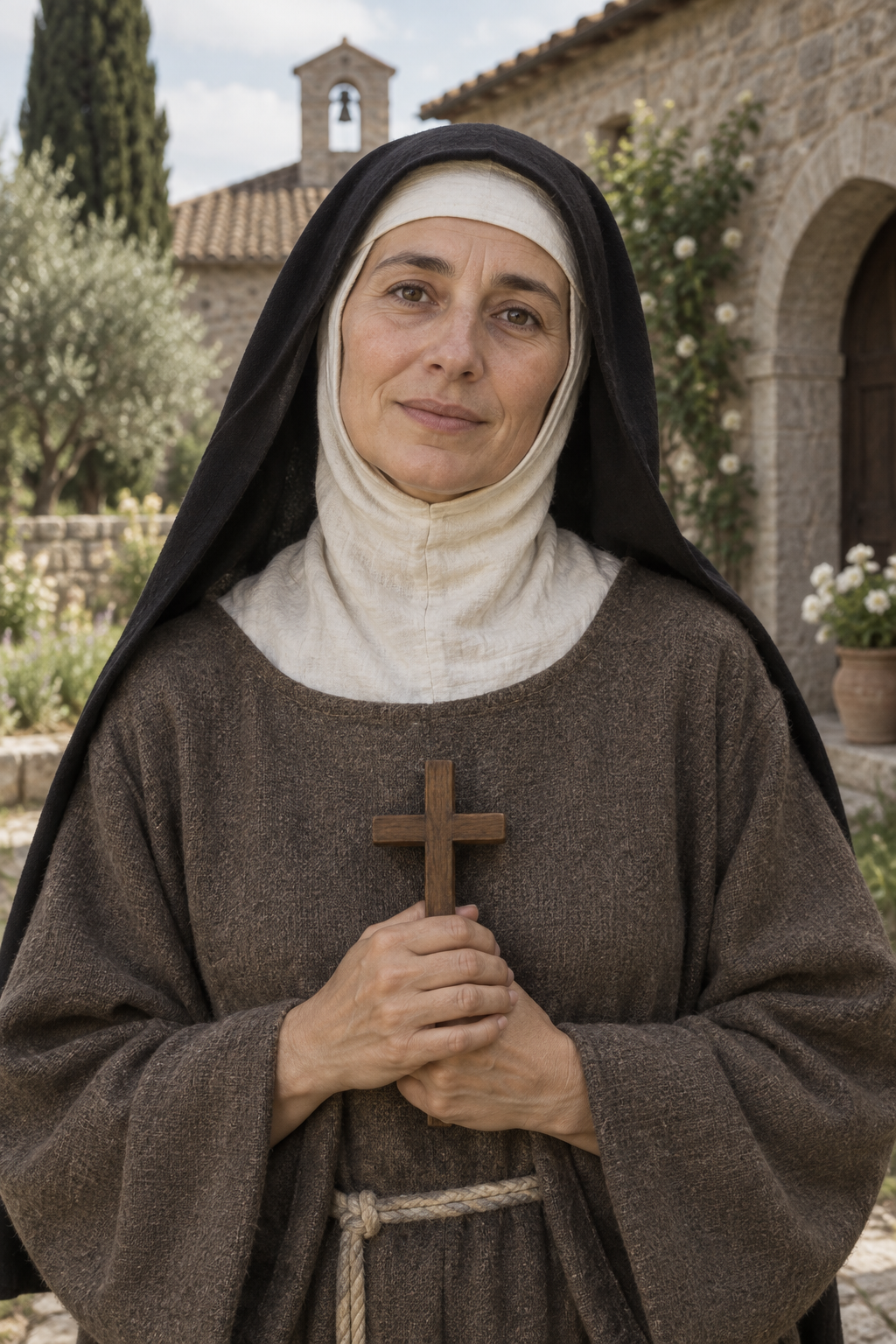
About Clare of Assisi
Clare of Assisi was the founder of the Poor Clares and the first woman to write a monastic rule. Born into a wealthy noble family in Assisi, Clare heard Francis of Assisi preach during Lent in 1212. Deeply moved, the 18-year-old Clare met with Francis, who recognized her genuine calling to religious life.
On Palm Sunday 1212, Clare fled her family home and went to Francis at the Porziuncola chapel, where he cut her hair and gave her a rough habit. She took vows of poverty, dedicating herself to God. Her family tried forcibly to retrieve her, but Clare clung to the altar, revealing her shorn head, and refused to leave.
Francis established Clare and her companions at San Damiano, the church he had restored. Clare's mother and sisters (including St. Agnes of Assisi) soon joined her. Clare became abbess and led the community for 41 years, never leaving San Damiano's enclosure.
Clare embraced radical poverty more strictly than most contemporaries thought appropriate for women. She fought for decades—negotiating with four popes—to secure the "Privilege of Poverty," guaranteeing her community could own no property and live entirely on alms. She finally obtained approval shortly before her death.
Clare's rule, approved in 1253, was the first monastic rule written by a woman for women. It emphasized poverty, contemplation, penance, and mutual charity. Despite enclosure, Clare's influence extended beyond the cloister through her letters (especially to Agnes of Prague), her example, and her communities' spread throughout Europe.
Clare experienced mystical visions, including reportedly seeing and hearing Mass when too ill to attend—leading to her patronage of television. She twice miraculously defended Assisi: repelling Saracen attackers and saving the city from siege, according to tradition, through her prayers and displaying the Blessed Sacrament.
Clare died in 1253 after a long illness, surrounded by her sisters and visited by the Pope. She was canonized just two years later. The Poor Clares continue her legacy of contemplative poverty worldwide.