Saint profile
Columban of Luxeuil
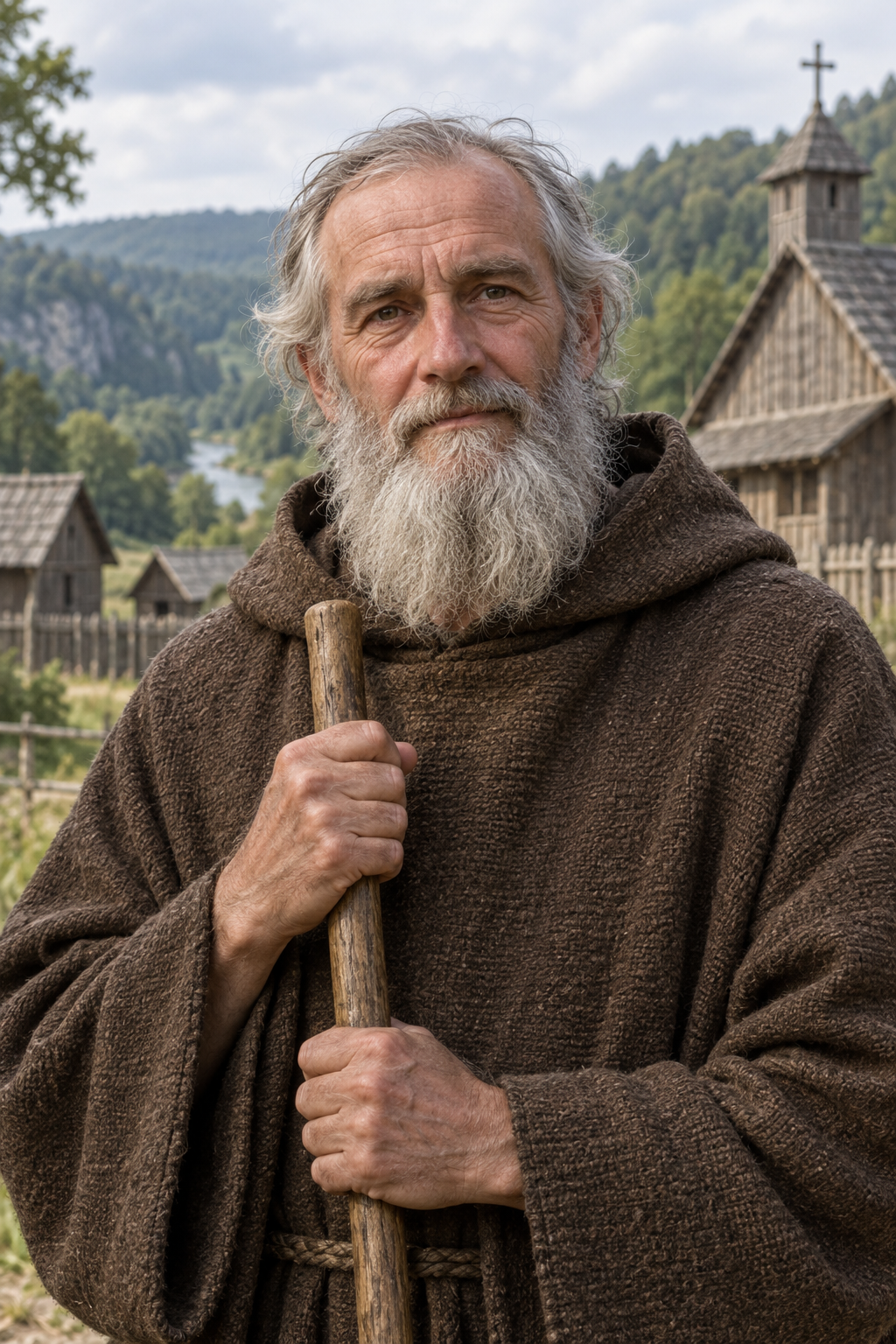
About Columban of Luxeuil
Columban was an Irish missionary who founded monasteries across Europe and helped revive Christianity and learning after the fall of Rome. Born in Leinster, Ireland, Columban was educated at Bangor under Abbot Comgall, becoming a learned monk and priest.
Around 590, at age 47, Columban left Ireland with twelve companions to evangelize the continent. They traveled through Gaul (France), where Christianity had declined under Merovingian kings. Columban founded monasteries at Annegray, Luxeuil, and Fontaine, which became centers of learning, missionary activity, and monastic discipline.
Columban introduced the strict Irish penitential system and monastic rule, emphasizing rigorous asceticism, learning, and missionary zeal. His rule was eventually superseded by Benedict's, but his monasteries profoundly influenced European Christianity. Luxeuil alone produced over 100 missionary monks who founded monasteries throughout Europe.
Columban was fearless in reproving sin, even confronting King Theuderic of Burgundy for his immorality. This led to his expulsion from Burgundy around 610. Undeterred, Columban and his companions traveled up the Rhine, evangelizing pagans in what is now Switzerland and Germany, founding a monastery at Bregenz.
Further conflicts led Columban to cross the Alps into Italy, where the Lombard king Agilulf welcomed him. At age 72, Columban founded his final monastery at Bobbio in northern Italy, which became a great center of learning, preserving classical and Christian manuscripts.
Columban was a brilliant scholar, writing poems, sermons, monastic rules, and letters. His letters to popes demonstrate his learning and boldness in defending Irish customs regarding Easter dating and tonsure styles. Though some positions were later proven incorrect, his devotion to truth and church unity was genuine.
Columban died at Bobbio in 615. His missionary work, monastic foundations, and educational legacy helped rebuild Christian civilization in post-Roman Europe. Over 200 monasteries can trace their origin to him or his disciples.