Saint profile
Dominic de Guzmán
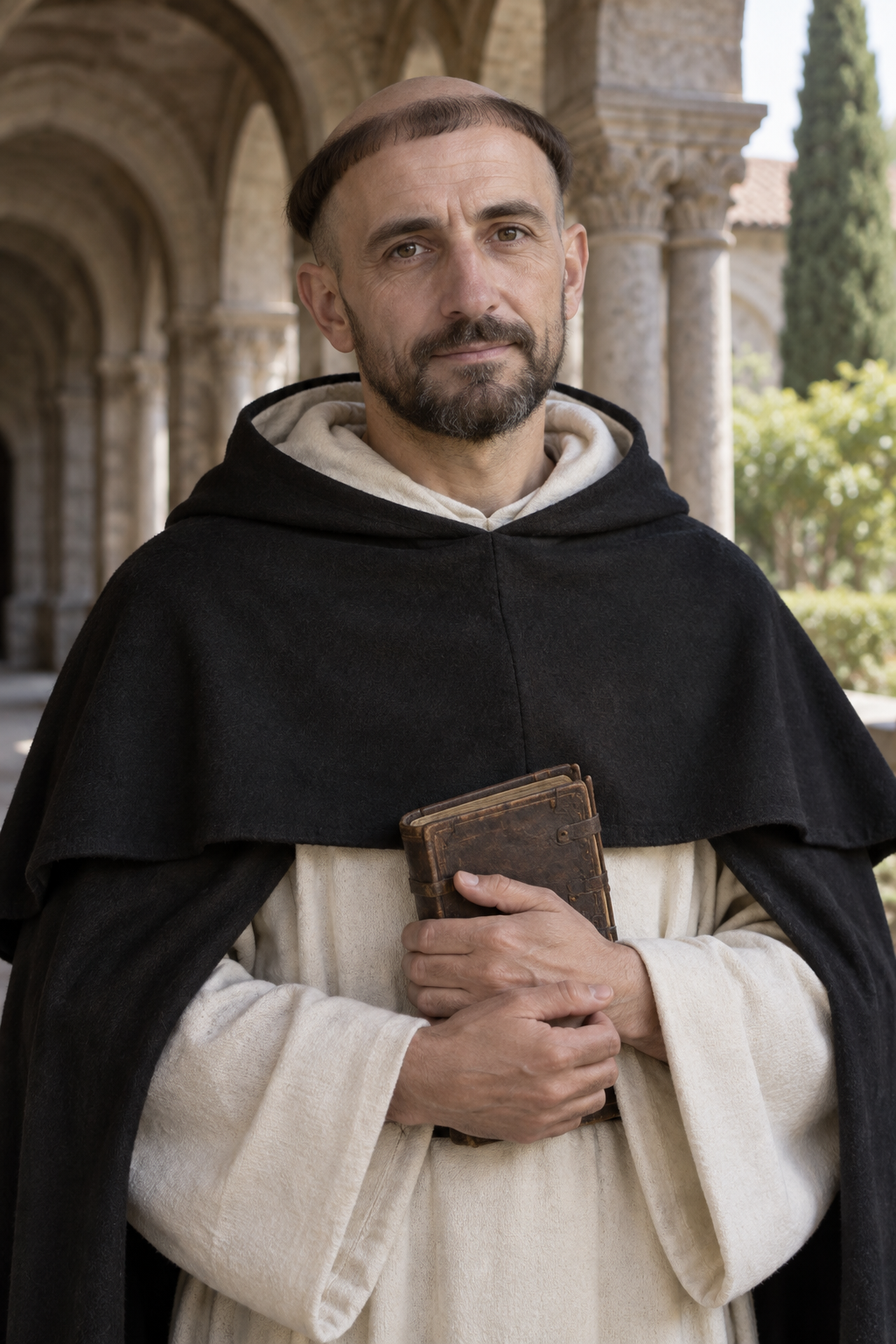
About Dominic de Guzmán
Dominic de Guzmán founded the Order of Preachers (Dominicans), dedicated to combating heresy through preaching, teaching, and scholarship. Born to Spanish nobility in Caleruega, Dominic studied theology at Palencia, where he distinguished himself by selling his books to feed the poor during famine and even offering to sell himself to ransom captives.
Ordained around 1195, Dominic became a canon at the Cathedral of Osma, living according to the Augustinian rule. In 1203, accompanying his bishop on a diplomatic mission, Dominic encountered the Albigensian (Cathar) heresy in southern France—a dualistic belief system that rejected material creation and Catholic sacraments.
Dominic recognized that the Cathars' appeal came partly from their ascetic lifestyle contrasting with worldly clergy. He adopted apostolic poverty, walking barefoot and preaching with compelling simplicity and learning. For nine years, Dominic preached in Languedoc, making converts through gentle persuasion and debate, though ultimately the Albigensian Crusade violently suppressed the heresy.
In 1215, Dominic gathered followers and sought papal approval for a new order dedicated to preaching. Pope Honorius III approved the Order of Preachers in 1216. Unlike traditional monks who remained in monasteries, Dominicans were mendicant friars—owning nothing, begging for sustenance, and traveling to preach and teach.
Dominic's vision was revolutionary: highly educated friars living in poverty, studying theology, and preaching sound doctrine to combat heresy and educate the faithful. He established houses in university cities, making theology accessible and producing great scholars like Albertus Magnus and Thomas Aquinas.
Dominic governed his order with wisdom, emphasizing study, contemplation, and democratic governance. He walked thousands of miles establishing Dominican houses across Europe. Tradition credits him with promoting the Rosary, though this is historically uncertain.
Dominic died exhausted in Bologna in 1221, at age 51. His order rapidly spread, profoundly influencing medieval theology, philosophy, and church life. Dominicans became the "hounds of the Lord" (a pun on "Domini canes"), zealous defenders and teachers of the faith.