Saint profile
Gregory the Great
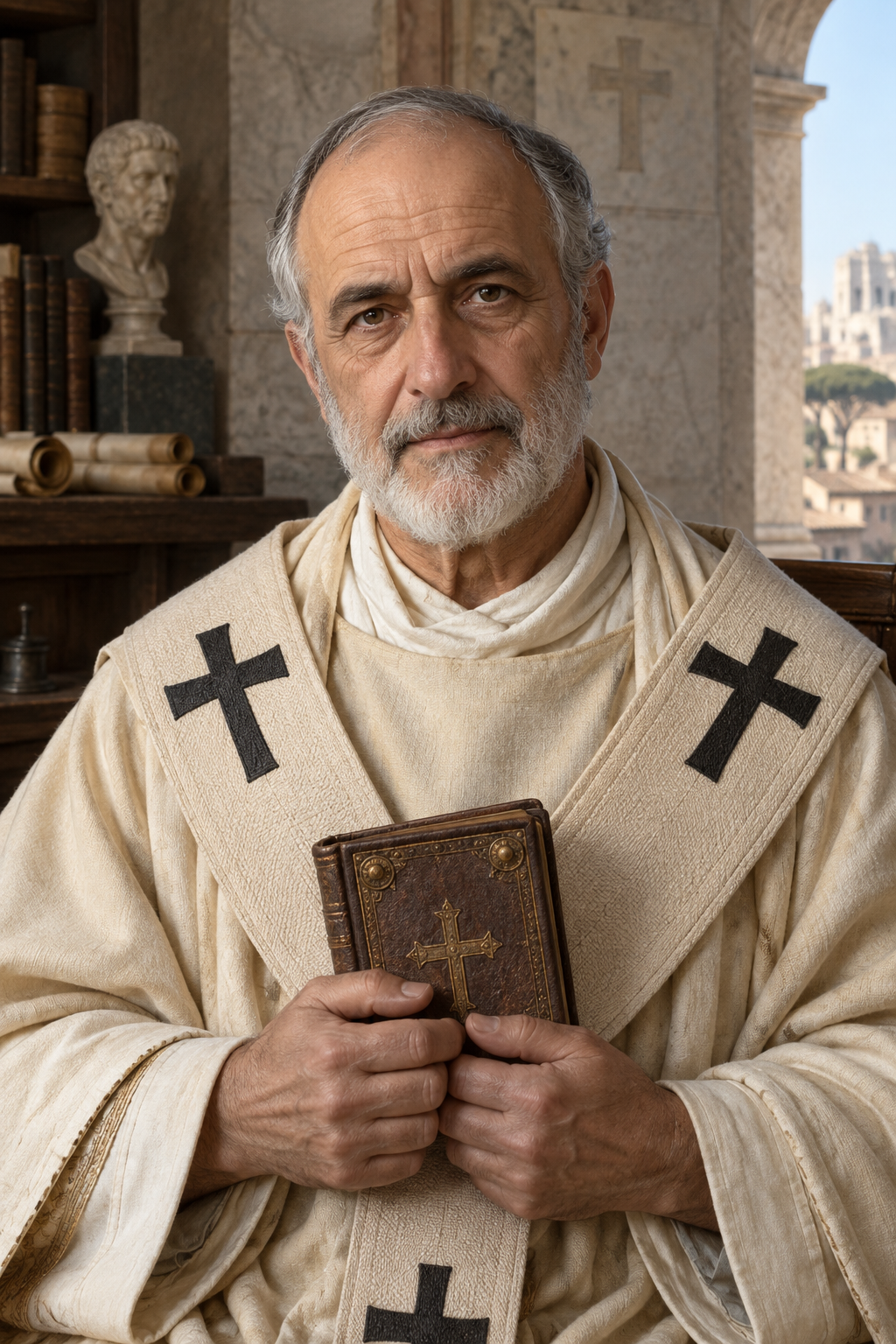
About Gregory the Great
Gregory the Great was one of the most important popes in history and the last of the traditional Latin Doctors of the Church. Born into a wealthy Roman senatorial family, Gregory received an excellent education and became Prefect of Rome around 573—the city's highest civil office—despite being only in his early thirties.
After his father's death, Gregory converted his family palace into a monastery and devoted his wealth to founding six monasteries in Sicily and one in Rome (St. Andrew's). He became a monk, living in ascetic simplicity and contemplation, which remained his preference throughout life.
Pope Pelagius II made Gregory a deacon and sent him as papal representative (apocrisiarius) to Constantinople (579-586), where Gregory engaged with Eastern theology and politics. Reluctantly recalled to Rome, he became abbot of St. Andrew's, longing for monastic peace.
When plague killed Pope Pelagius II in 590, Gregory was unanimously elected pope despite his protests and attempts to flee. He accepted as God's will and took the title "Servant of the Servants of God," still used by popes today.
Gregory's fourteen-year pontificate was extraordinarily productive. He administered Rome and surrounding territories (the Papal States), feeding the poor during famine, negotiating with Lombard invaders to protect Rome, and establishing efficient church administration. His pastoral care earned him "the Great."
As a theologian and writer, Gregory produced works still influential today: "Pastoral Care" (a handbook for bishops), extensive biblical commentaries, the "Dialogues" (including Benedict's biography), and homilies. He reformed the liturgy and encouraged music (Gregorian chant bears his name, though its direct connection to him is debated).
Gregory sent Augustine of Canterbury to evangelize England in 596, beginning England's conversion. His letters (over 850 survive) show his involvement in church affairs throughout Europe and Africa, strengthening papal authority.
Gregory died exhausted in 604, having transformed the papacy into a major spiritual and temporal power. His combination of administrative genius, pastoral sensitivity, theological depth, and personal humility made him one of the most influential figures in Christian history.