Saint profile
Helena of Constantinople
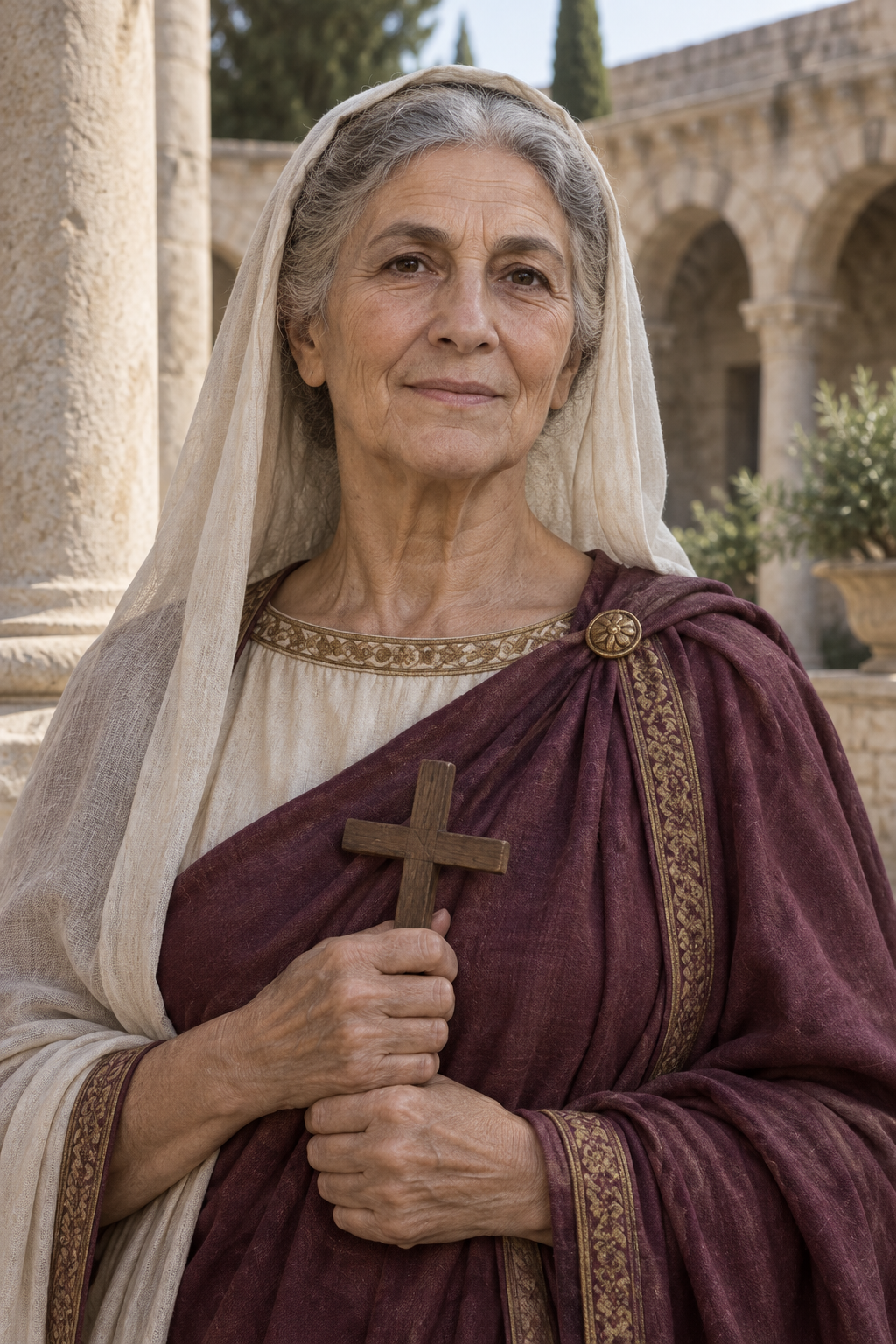
About Helena of Constantinople
Helena was the mother of Constantine the Great and played a crucial role in Christianity's transformation from persecuted sect to imperial religion. Born of humble origins (possibly an innkeeper's daughter), Helena became the consort of Roman general Constantius Chlorus around 270, bearing him a son, Constantine, around 272.
When Constantius became Caesar in 293, he divorced Helena to make a politically advantageous marriage to Theodora, stepdaughter of Emperor Maximian. Helena lived in obscurity for twenty years while her son advanced militarily and politically.
After Constantine became emperor in 306, he honored his mother, giving her the title "Augusta" and unlimited access to the imperial treasury. When Constantine legalized Christianity (Edict of Milan, 313) and began favoring the church, Helena converted—likely influenced by her son but with genuine devotion. She was probably baptized around age 63.
Helena's most famous achievement was her pilgrimage to the Holy Land around 326-328, at age 78-80. She supervised construction of churches on holy sites (Church of the Nativity in Bethlehem, Church on the Mount of Olives) and according to tradition, discovered the True Cross in Jerusalem.
The story of the True Cross's discovery appears in later sources: Helena ordered excavation near Calvary, finding three crosses. To identify Christ's cross, a sick woman touched each; one healed her, confirming it as the True Cross. While historical details are uncertain, Helena's pilgrimage and church-building are well-documented.
Helena used her wealth generously, building churches, caring for the poor, freeing prisoners, and patronizing Christian communities. Her pilgrimage established the tradition of Holy Land pilgrimage and made Jerusalem a Christian center.
Helena died around 330 in Nicomedia. Her genuine piety, generosity to the poor, and role in establishing Christianity in the Holy Land made her widely venerated. She is often depicted holding the True Cross, and her influence on Constantine's Christian policies was significant, though often debated by historians.