Saint profile
Ignatius of Loyola
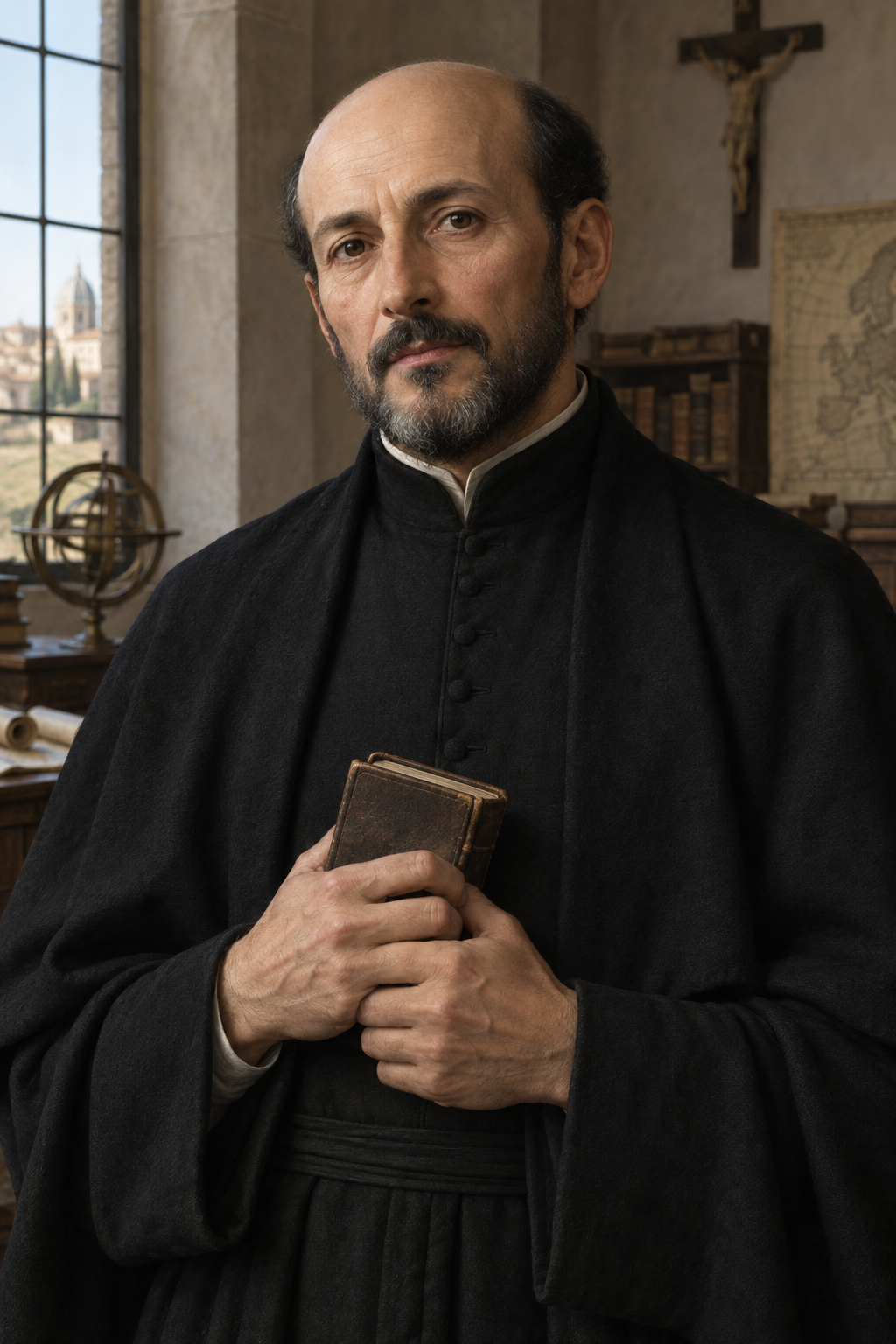
About Ignatius of Loyola
Ignatius of Loyola founded the Society of Jesus (Jesuits), which became the Catholic Church's largest religious order and a major force in the Counter-Reformation. Born Íñigo López into Basque nobility, Ignatius served as a courtier and soldier, dreaming of military glory and romantic adventures.
In 1521, at age 30, a cannonball shattered Ignatius's leg during the defense of Pamplona. During his long, painful recovery at Loyola castle, Ignatius asked for chivalric romances to pass the time. Only religious books were available: a life of Christ and lives of the saints. Reading these, Ignatius noticed that worldly fantasies left him empty, while thoughts of serving God brought lasting peace and joy.
This discernment of spirits became central to Ignatian spirituality. After recovery, Ignatius hung up his sword at Montserrat, gave away his fine clothes, and spent nearly a year in a cave at Manresa, praying intensely. There he experienced profound mystical visions and began developing what would become the "Spiritual Exercises"—a systematic method of prayer, meditation, and discernment.
Ignatius began theological studies, eventually studying in Paris (1528-1535), where he gathered companions including Francis Xavier. In 1534, Ignatius and six companions vowed poverty, chastity, and service to the Pope. Unable to reach Jerusalem as planned, they went to Rome and offered their services to Pope Paul III.
In 1540, the Pope approved the Society of Jesus. Unlike traditional orders, Jesuits took a fourth vow of special obedience to the Pope regarding missions, were highly educated, and combined contemplation with active ministry—teaching, preaching, spiritual direction, and missionary work. They established schools and universities, becoming influential educators.
Ignatius served as Superior General from Rome, directing the order's rapid expansion while writing the Jesuit Constitutions and directing thousands of letters. His "Spiritual Exercises," a four-week retreat program guiding prayer and life decisions, became one of Christianity's most influential spiritual works.
Ignatius suffered from chronic health problems, likely from his rigorous penances at Manresa. He died in Rome in 1556, having seen the Jesuits grow to about 1,000 members in over 100 communities. He was canonized with Francis Xavier in 1622. The Jesuit order became a major force in Catholic education, missions, and renewal, with the motto "Ad Maiorem Dei Gloriam" (For the Greater Glory of God).