Biography
Abdon
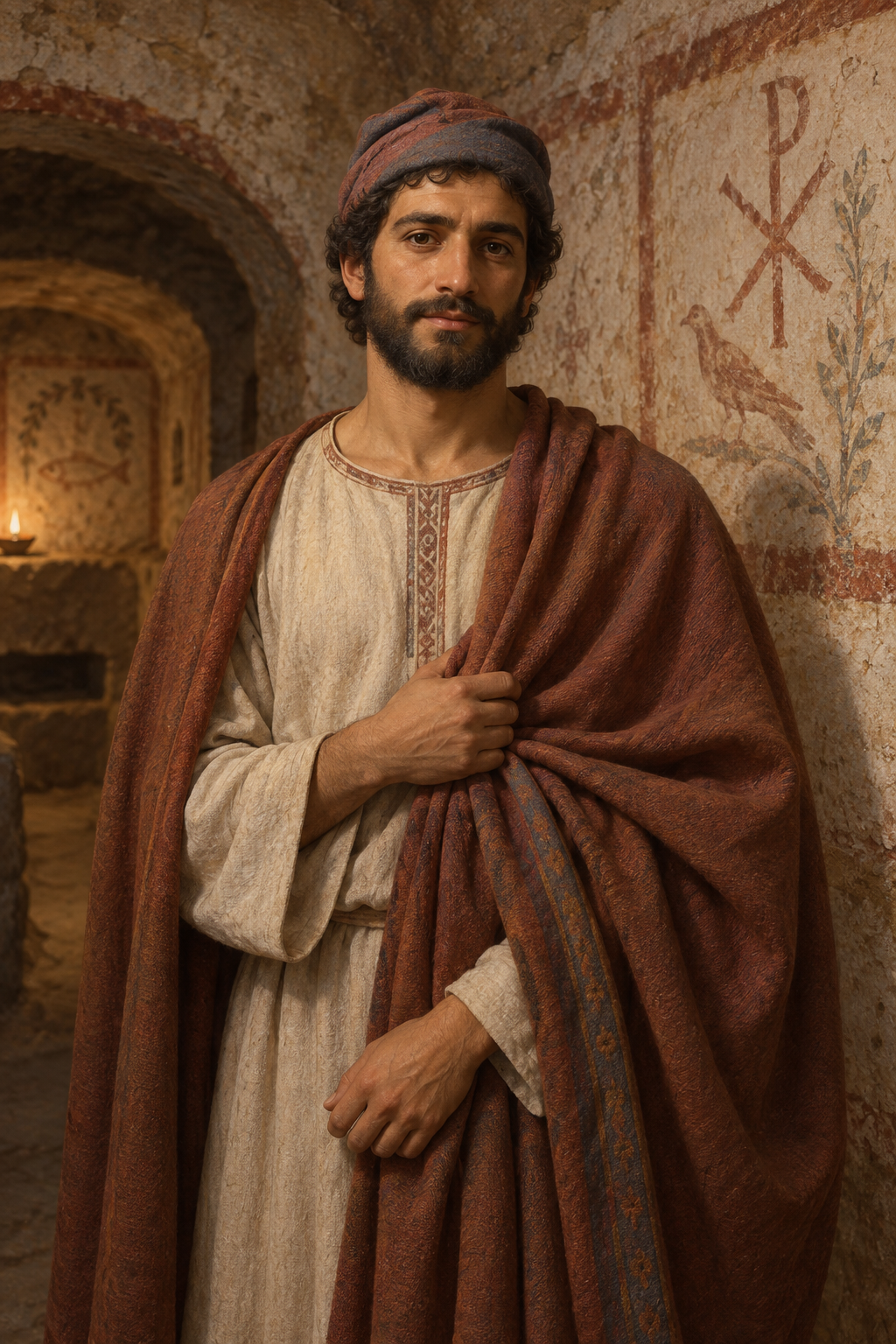
About Abdon
Abdon is remembered together with Sennen among Rome's early martyrs. Their names survive in the Roman calendar known as the *Depositio martyrum*, copied in the Chronography of 354. It places their anniversary on July 30 at the cemetery of Pontianus. This is unusually early evidence for their commemoration, though it says almost nothing about either man's life. It names the pair and their place of remembrance, not their births, social standing, arrest, or death. For Abdon, the distinction matters: the earliest secure record is a community's observance rather than a narrative written by someone who knew him.
The Pontian cemetery lay on the road toward Porto outside ancient Rome. Later guides to Roman martyrs' tombs also located the pair there. These references show a Roman tradition centered on a burial site, but do not establish Abdon's final days or earlier home. A commemoration recorded in 354 also does not determine the year of martyrdom. Assigning a precise year by counting backward from the calendar would mistake the date of the record for the date of the event it remembered. The site anchors a public cult; Abdon's private history remains largely inaccessible.
A painting in the Pontian catacomb gives the two martyrs visible names. Its inscriptions identify Abdon and Sennen, while the image represents Christ giving crowns to them. The crowns express the Christian hope attached to martyrdom. The figures wear garments interpreted by scholars as eastern in style, but the painting was made centuries after the men lived. It cannot serve as a portrait taken from life or as independent proof that Abdon came from Persia. Even the painting's date has been placed across a broad span. Its firm contribution is evidence that later Christians recognized and honored the same named pair at this Roman site.
Accounts written much later supplied the detailed story that the early calendar leaves untold. In those Acts, Abdon and Sennen become Persian nobles brought to Rome and killed during an imperial persecution. The story also describes the treatment and transfer of their bodies. The *Catholic Encyclopedia* notes that the Acts contain fictitious statements about their arrival and sufferings; Treccani judges the Latin *Passio* to have no historical value. Such texts are evidence for the way communities imagined the martyrs and taught devotion to them, but they cannot be used to fill Abdon's missing birthplace, profession, exact death year, or means of execution.
The pair's memory continued beyond the late antique cemetery. Treccani records a church built above the Pontian burial area and restored during the pontificate of Adrian I. Other churches later claimed relics of Abdon and Sennen, and a medieval account described a transfer to Arles-sur-Tech. Treccani cautions that the transfer story is fantastic. These developments belong to the history of the saints' cult rather than a recoverable itinerary of Abdon's body. They show how communities across centuries preserved and reshaped devotion to a pair whose individual experiences were already beyond detailed historical recovery.
July 30 remains the day attached to Abdon and Sennen in the Roman Martyrology, and Vatican News presents the two together on that date. The older catalog value of April 22 does not match this pair's observance and is corrected here. A feast day is a day of remembrance; it should not be converted without evidence into an exact death date. Abdon's historical importance lies in the unusually early record of his name and a long Roman tradition of honoring him with Sennen. The record supports a modest account: two named martyrs, an ancient July commemoration, and a cemetery cult. It does not support a richly dated individual life.
Wondering how to weigh the stories and sources? Learn how to read a saint biography.