Biography
Abraham
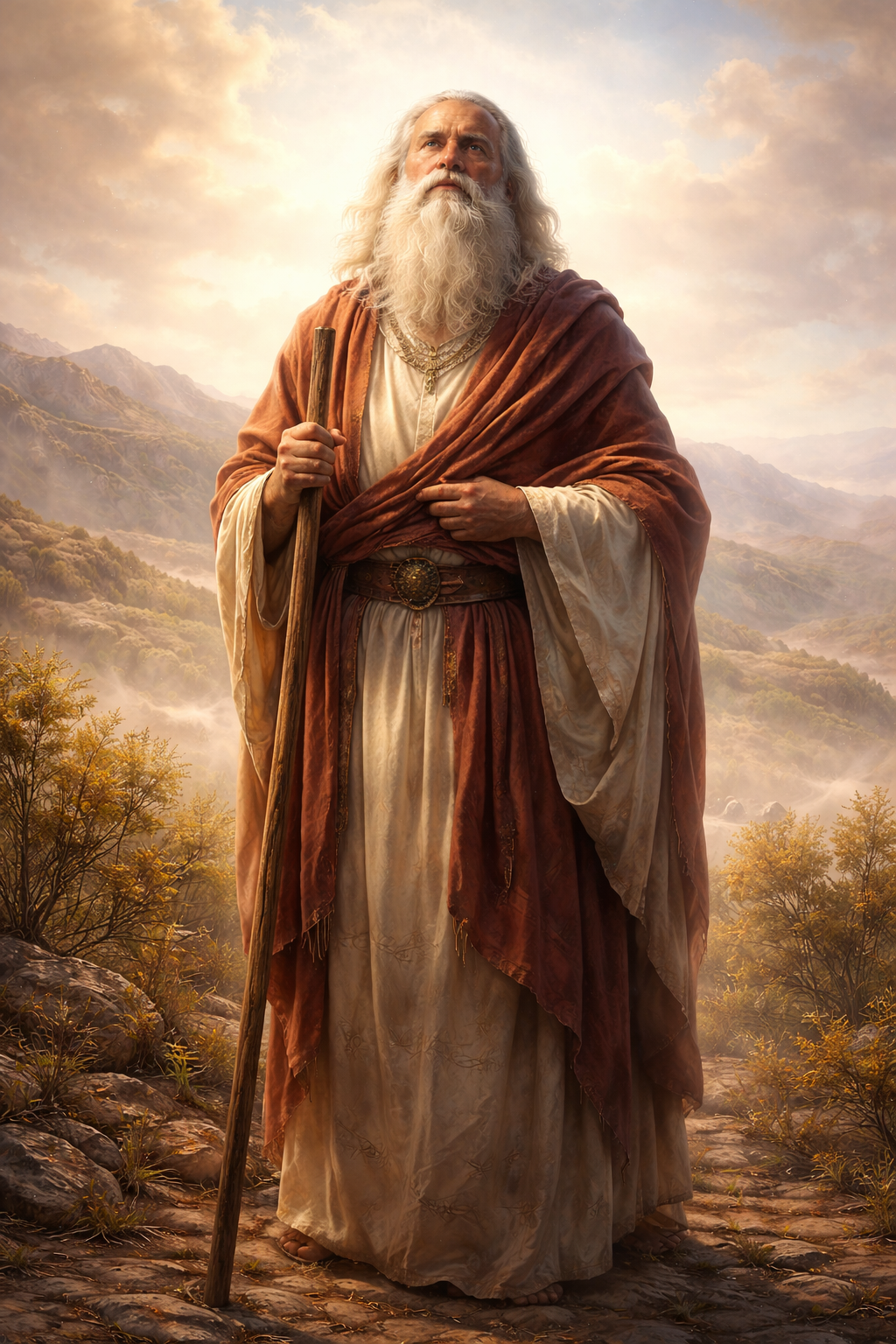
About Abraham
Genesis introduces Abram within Terah's family and locates the household first at Ur of the Chaldeans and then at Haran. The text names Sarai as Abram's wife and Lot as his nephew, while also saying that Sarai had no child. These are claims made by the biblical narrative, not facts independently confirmed by contemporary records. The USCCB introduction treats Genesis 11:27–25:18 as the Abraham and Sarah cycle and notes that decisive evidence for patriarchal chronology is lacking. A responsible biography can therefore follow the received story closely without assigning Abraham a verified birth year or reconstructing a historical route.
Genesis 12 begins with a call that asks Abram to leave land, kin, and household for an unnamed destination. The promise joins descendants, a great name, and blessing for all families of the earth. Abram departs from Haran with Sarai, Lot, their possessions, and members of the household, then enters Canaan and reaches Shechem. He builds altars at Shechem and east of Bethel before famine drives the household toward Egypt. The narrative also preserves a serious failure: Abram presents Sarai as his sister, exposing her to Pharaoh's household and profiting until Pharaoh sends them away. This episode prevents a smooth portrait of flawless courage or conduct.
After returning from Egypt, Abram and Lot can no longer keep their large herds together without conflict. Abram offers Lot the first choice of land, and Lot chooses the Jordan plain while Abram remains in Canaan. Genesis then places Abram by the terebinths of Mamre near Hebron, where he builds another altar. The action supports a virtue of peacemaking because Abram accepts material disadvantage to end strife within the household. The location is useful for a narrative map, but the text does not provide a recoverable campsite or coordinates.
Genesis 15 turns from movement to uncertainty about the promise. Abram speaks plainly about having no child, and the narrative answers with the image of stars and a renewed assurance of descendants. It then says Abram trusted the Lord and that this was credited to him as righteousness. Romans 4 later makes that sentence central to Paul's Christian account of faith, while Hebrews remembers Abraham as one who departed without knowing his destination. Those later writings document Christian reception; they do not independently date the events in Genesis.
The family story includes Hagar and Ishmael and should not be told only as a path toward Isaac. Genesis 16 places Hagar, an enslaved Egyptian woman, under Sarai's authority and says Sarai gives her to Abram after years of childlessness. Conflict follows Hagar's pregnancy, and Hagar flees after harsh treatment before returning and bearing Ishmael. Genesis 17 then changes Abram's name to Abraham and Sarai's to Sarah, establishes circumcision as the covenant sign, and promises futures for both Isaac and Ishmael. The chapter's ages and the explanation of Abraham as father of a multitude belong to the scriptural presentation; they are not a basis for exact modern chronology.
At Mamre, Genesis depicts Abraham receiving three visitors in the heat of the day. He runs to meet them, offers water, rest, bread, and a meal, and involves Sarah and a servant in preparing generous hospitality. The visitors announce that Sarah will have a son. The scene then shifts toward Sodom, where Abraham repeatedly asks whether the judge of all the earth will spare the city for the sake of righteous people within it. His welcome of strangers and persistent appeal for others became enduring examples of hospitality and intercession in Christian teaching.
Genesis 21 narrates Isaac's birth and Sarah's demand that Hagar and Ishmael be driven away. Abraham is distressed because Ishmael is also his son, yet the expulsion proceeds, with provisions placed on Hagar before she enters the wilderness. The narrative says God hears the boy and renews the promise that Ishmael will become a great nation. This painful account resists a sentimental biography: Abraham's household contains promise and joy, but also hierarchy, conflict, displacement, and harm. Remembering Hagar and Ishmael by name is necessary to report the text honestly.
Genesis 22 presents its next episode explicitly as a test. Abraham is told to take Isaac to the land of Moriah and offer him there. He travels with Isaac and servants, binds his son, and raises the knife before a messenger stops him; a ram is offered instead. Jewish and Christian traditions have interpreted this difficult story in many ways, but the narrative itself makes the halted sacrifice and renewed promise its conclusion. Because the land of Moriah is not a precise mappable point in the passage, the event should carry only regional, traditional geography and no invented route.
When Sarah dies, Genesis 23 places Abraham at Kiriath-arba, identified in the text as Hebron. Abraham negotiates publicly with Ephron and purchases the field and cave of Machpelah as a burial holding. Genesis 25 later reports Abraham's death and says Isaac and Ishmael bury him there beside Sarah. The account gives Abraham an age of 175, but no independent evidence permits that number to be converted into a secure death year. The shared burial action also preserves a final relationship between the two sons whom earlier chapters placed in tension.
Abraham's significance extends far beyond an attempted reconstruction of one ancient life. Romans calls him father of all who believe, Hebrews presents his departure and testing as examples of faith, and the Catholic catechism links his actions with obedience, hospitality, and intercession. Eastern Orthodox calendars commemorate the Righteous Forefather Abraham on October 9 and again among Christ's ancestors during the season of the Holy Forefathers. These are documented forms of later reception. The lasting portrait is therefore both influential and morally complex: a foundational ancestor remembered for trust, movement, hospitality, and prayer, whose received story also requires candor about Sarai in Egypt, Hagar's treatment, and Isaac's binding.
Wondering how to weigh the stories and sources? Learn how to read a saint biography.
Prayers for Abraham
Abraham's intercession excerpt
Will you sweep away the innocent with the guilty?