Biography
Abraham of Rostov
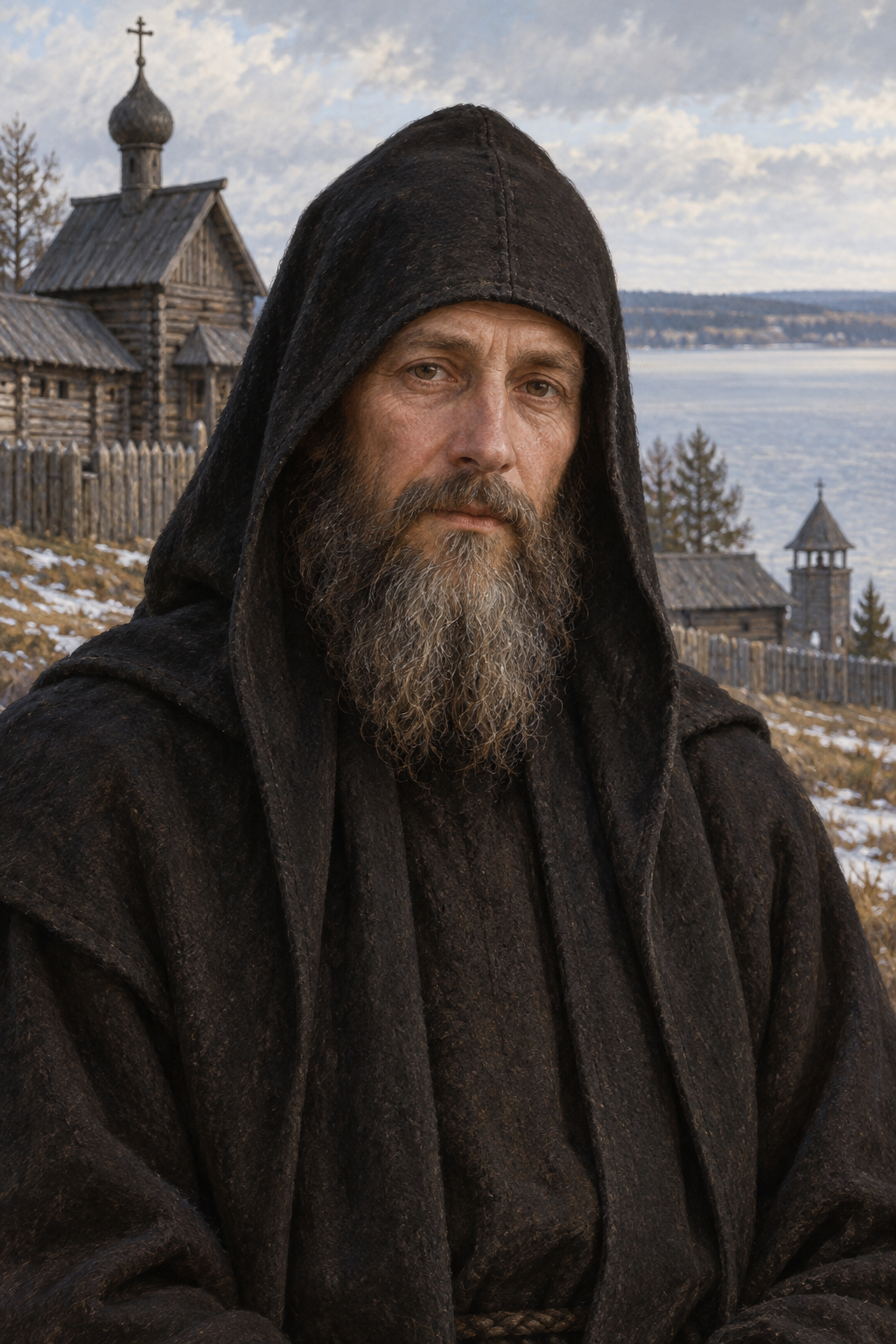
About Abraham of Rostov
Abraham of Rostov is remembered in Russian Orthodox tradition as a monk linked with the Theophany monastery at Rostov. The Orthodox Church in America commemorates him on October 29. Its account describes a life of prayer, teaching, and monastic leadership, but much of its dramatic sequence comes from a Vita written long after the period it claims to describe. A modern account can identify the saint and his enduring Rostov cult without presenting every scene of that Vita as an independently witnessed event. The exact century of Abraham's life remains disputed, so neither a birth nor a death year is secure for this record.
The familiar story says Abraham received a staff in a vision of John the Theologian and used it to break an idol associated with Veles. It then links a church and monastery to that place. These are meaningful features of the Orthodox narrative, not verified episodes that can be dated or mapped with confidence. A. P. Kadlubovsky's critical study finds the surviving Life late, filled with conventional motifs, and chronologically difficult. The account also cannot establish when Abraham first came to Rostov or which parts of the monastery's earliest history belong to him personally. Treating the staff and idol story as tradition protects the distinction between devotional memory and reconstructable life.
Later retellings introduced another problem: some material associated with Abraham of Chukhlomsky was attached to the Rostov saint. Rostov Museum scholarship identifies that confusion while studying the tradition surrounding Abraham's cross. It would therefore be misleading to give Rostov's Abraham a Chukhlomsky birthplace or to infer a dated journey between the two places. What can still be said is specific: Rostov's Orthodox community preserves a named monastic saint whose remembrance became bound to the Theophany monastery and to stories about the spread of Christianity in the region. His historical life cannot be reconstructed at the level those stories offer, but the continuing commemoration and its textual history are real parts of his legacy.
Wondering how to weigh the stories and sources? Learn how to read a saint biography.