Biography
Abraham of Smolensk
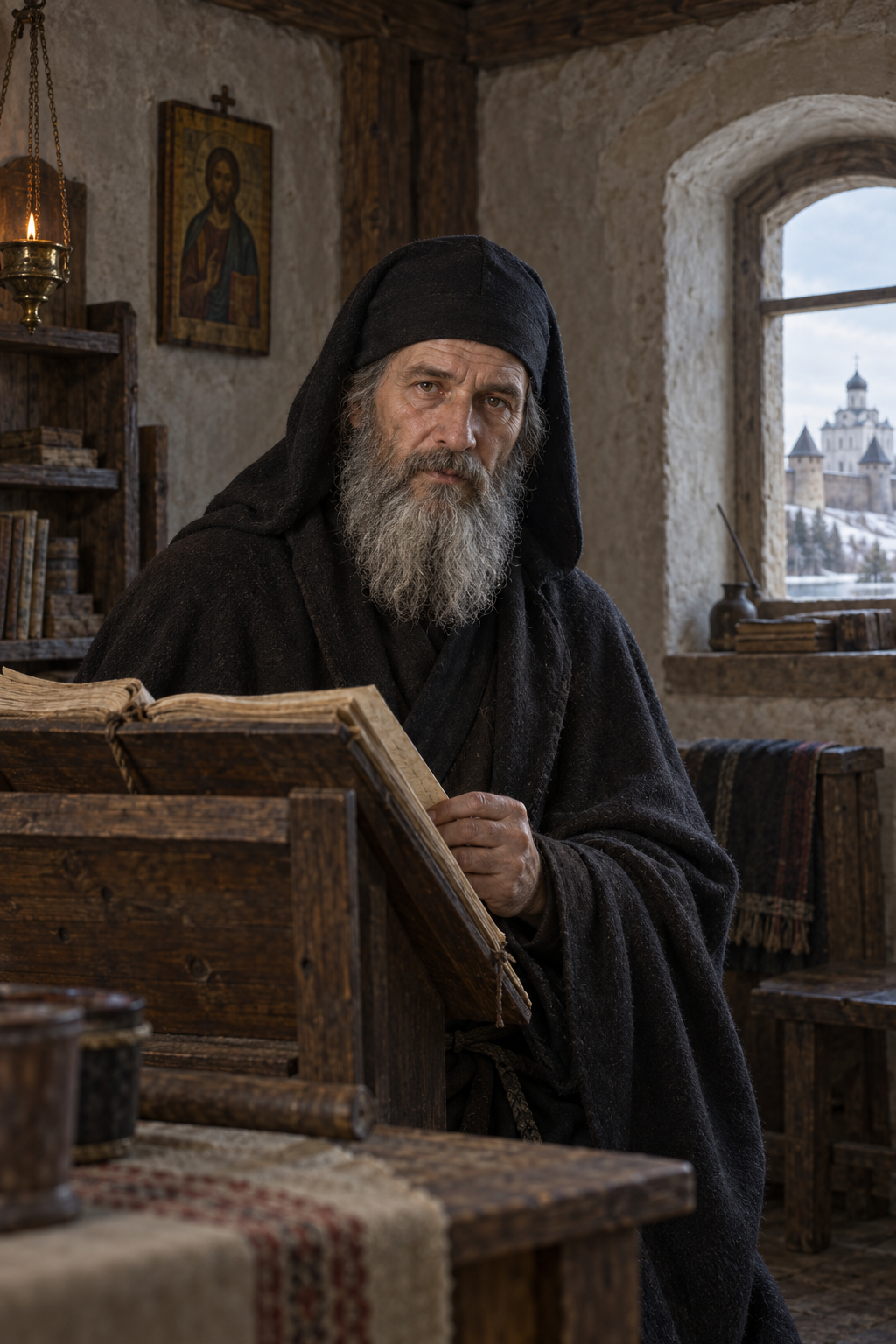
About Abraham of Smolensk
Abraham of Smolensk was a monk, priest, reader, and preacher in the Smolensk region around the turn of the thirteenth century. Nearly everything known about his life comes from a single work, a Life written by his disciple Ephrem. That witness is unusually close to its subject, but it is also a defense of a teacher who had faced serious accusations. The critical edition observes that Ephrem's account is interwoven with phrases and scenes from older holy Lives. It should therefore be read as testimony about Abraham and as a literary work with its own purpose. Abraham's significance begins in that combination: a local religious figure whose teaching provoked both devotion and conflict.
Ephrem places Abraham's birth in Smolensk and describes a family with means. He says Abraham chose a monastic path after his parents died and entered the Dormition monastery at Selishche outside the city. The account gives a clear outline of vocation but no verifiable birth year or sequence of childhood dates. Later retellings turn its early scenes into a smooth biography. That would hide a crucial gap: the surviving narrative was composed to remember a monk's spiritual struggle, not to provide a modern register of his early life. What can be said is that Abraham entered a monastic community near Smolensk and spent a long period there before public preaching made him widely known.
Books were central to Abraham's monastic life. Ephrem depicts him reading scripture, theological writings, and earlier Lives, and copying books by hand. T. V. Chumakova's study notes that the Vita is the one biographical source for this work, while its picture of an intensely literate monk fits the religious culture of the city. Copying a book required sustained labor and access to a monastery's collection; it was a way to preserve and circulate texts before printing. Abraham's reading also shaped the subjects he addressed as a preacher. His story is valuable partly because it shows study and public instruction joined in a medieval Rus monastery, where a monk's words could reach people outside its walls.
According to Ephrem, Abraham's superior eventually urged him to become a priest. The Vita places the ordination during the rule of Prince Mstislav Romanovich in Smolensk, an anchor for a broad period rather than a secure day or year. As a priest, Abraham celebrated liturgy and preached to monks and townspeople. The Orthodox Encyclopedia characterizes his preaching as strongly ascetic and attentive to repentance and judgment. These subjects explain why the tradition remembers him as more than an administrator. They also help explain why some of his hearers were unsettled. Nothing in the evidence permits a transcript of a particular sermon, and no surviving manuscript can simply be labeled his autograph. The account supports his role and themes without furnishing every detail of his voice.
The Vita associates Abraham with two images, one on the Last Judgment and another on the testing of the soul. The pictures themselves do not survive. Their subjects fit the concerns attributed to his sermons, but an absent object cannot be inspected to confirm style, authorship, or exact imagery. Scholarship on the Vita's intertexts also cautions that Ephrem framed Abraham through earlier models of learned and persecuted holy people. The images remain part of what the disciple said about his teacher; they do not prove that every complaint against Abraham arose from a specific painting. The distinction matters because the visual and spoken teaching in the Life belong to a larger argument about how demanding religious instruction should be received.
The dispute became more than private unease. Ephrem says Abraham moved to a monastery of the Exaltation of the Cross in Smolensk and continued to preach, while clergy and other opponents pressed accusations against him. A hearing took place before Bishop Ignatius. The prince and lay people, in the Vita's account, did not find the charges persuasive, but Abraham was forbidden to serve as a priest and was sent back toward his earlier community. The charges included improper teaching and reading books considered suspect. G. Podskalsky reads the scene as part of a larger conflict over preaching and religious learning. The record is one-sided, so its portrait of every opponent's motives should not be repeated as settled history. The hearing and suspension, however, are central and distinct phases in the surviving account.
Ephrem then tells of a drought, a request for Abraham's prayers, rainfall, and restoration to ministry. Orthodox tradition remembers this sequence as a sign of his holiness. A historical account can report the tradition without treating the weather or its cause as independently verified. The more firmly traceable outcome in the Vita is a changed relationship with Bishop Ignatius. Abraham was able to resume service, and Ignatius eventually entrusted him with leadership of a monastery dedicated to the placing of the Virgin Mary's robe. The account presents reconciliation after a prolonged public dispute; it does not give a reliable date for each step. The emphasis on Abraham's patience in this stretch belongs to Ephrem's testimony and to the Life's defense of his teacher.
As head of the new monastery, Abraham guided a small group rather than a large institution. Ephrem was among the disciples who remembered him. The Orthodox Encyclopedia says that Abraham scrutinized prospective monks closely and that the Vita treats these quieter years briefly. This imbalance is revealing. The writer spent more space on accusations and endurance than on a calendar of ordinary administration, so a modern biography cannot fill those years with imagined routines. Abraham's reputation as a reader and preacher nevertheless remained tied to the community he led. Ephrem later became a bearer of that memory through the Life itself. The monastery's history and the text's transmission show how one disciple's account could preserve a local teacher's standing far beyond the years he could personally be remembered.
Abraham's death year is not established. Some modern profiles give 1221; the Orthodox Church in America's account instead says after 1224. The Orthodox Encyclopedia explicitly leaves the year unknown, while maintaining the August 21 Orthodox commemoration. These should remain separate facts: an observance is not proof of a dated death. The same reference says local veneration followed relatively soon after his life and that a Russian church council in 1549 extended his celebration more broadly. This is a history of Orthodox recognition, not a Roman Catholic canonization record. It also shows why Abraham remains known: his disciple's account preserved the contest over preaching and the patient leadership that followed, and Orthodox communities continued to remember that life in worship.
Wondering how to weigh the stories and sources? Learn how to read a saint biography.