Biography
Adelaide Teague Case
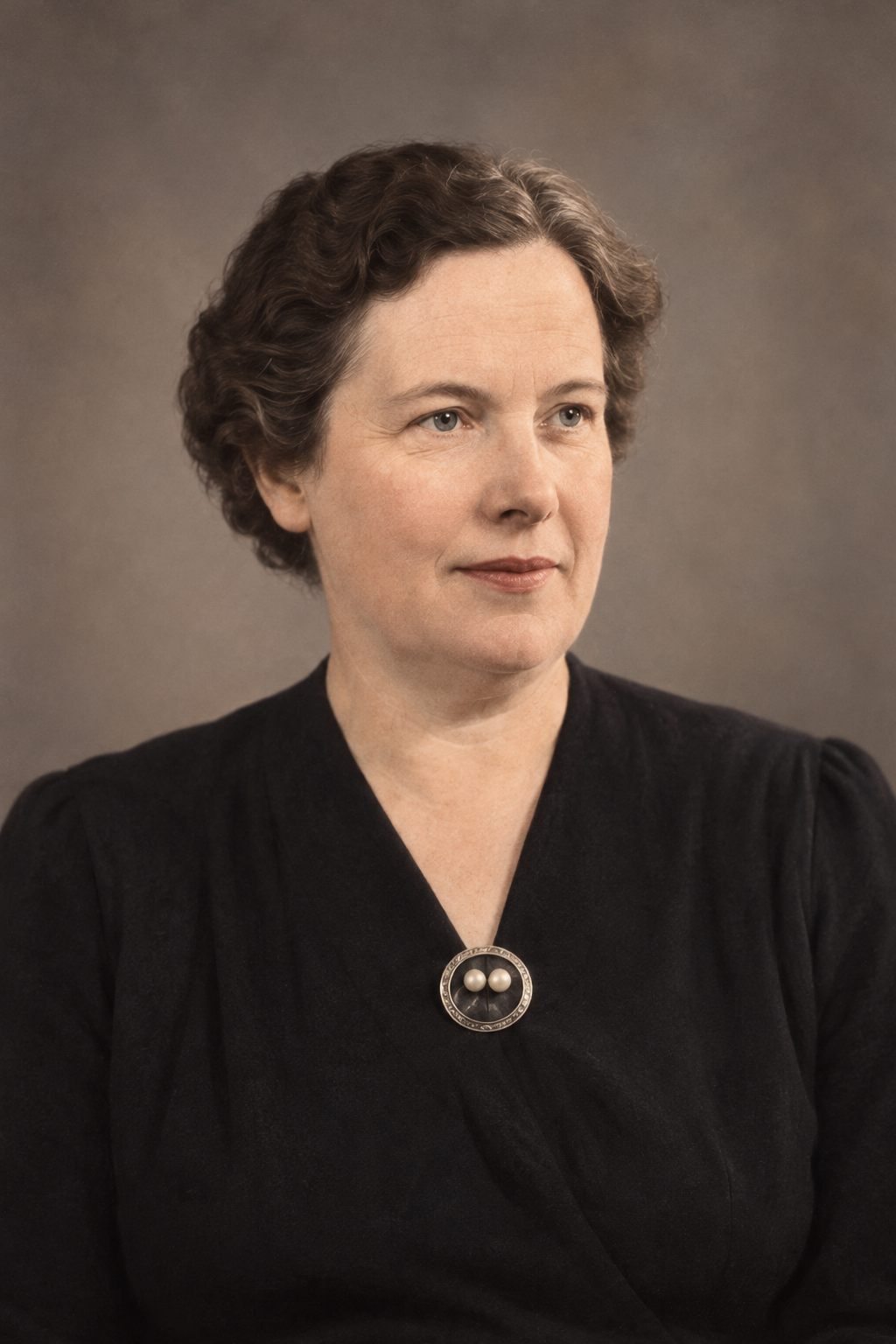
About Adelaide Teague Case
Adelaide Teague Case made religious education her life’s work, teaching children’s teachers, university students, and future clergy. Born in St. Louis, Missouri, on January 10, 1887, she grew up in New York. She graduated from Bryn Mawr College in 1908. Recurrent tuberculosis interrupted her early graduate studies, and illness continued to affect her life. After working as a church librarian, she resumed study at Columbia, earning her doctorate in 1924. She became a full professor and department chair at Teachers College in 1935.
In 1941 she moved to the Episcopal Theological School in Cambridge. The Episcopal Archives account credits Catherine Plumley, a Sunday school teacher, with recommending her to Dean Angus Dun. Case accepted a lower salary to take the position. Some male students initially dismissed her course, but she became known for demanding, engaging teaching. She also pressed the school to admit women and taught women who could not formally enter its degree programs. Her appointment brought a woman into the full professorial rank while the institution still restricted other women’s access to education.
Case’s educational thought joined attention to society with a strong commitment to worship. In her essay The Faith and Education, she argued that schools were already shaped by their surrounding communities, often absorbing nationalism, ambition, and racial or religious superiority without recognizing those influences. She wanted educators to examine those purposes consciously. The Christian community, in her account, offered a vision of shared life that could give education a moral direction.
That emphasis on community did not erase the individual. She argued that a person’s value before God survived differences in social position or physical ability. She also considered the tension between inherited tradition and creative expression: the past could supply material for present learning instead of merely limiting it. Her account was sharply critical of routine Anglican teaching. Repeated catechism answers, ritual drills, and long lectures were inadequate expressions of the possibilities she saw in the church’s sacramental life.
She developed that criticism in A Forward Movement for Children, published in 1935. A better textbook, she argued, could not by itself overcome the differences between parishes or substitute for a thoughtful teacher. Large classes repeating answers together offered little opportunity for personal understanding or action. Nor was hiring a specialist sufficient if that teacher remained detached from parish life. Religious education required sustained cooperation among the rector, parents, teachers, and congregation.
The article offered concrete examples of what such cooperation could look like. Case described children exploring their parish building and visiting its janitor, a Sunday school studying Jewish neighbors, and young people campaigning against a proposal to shorten their school year. She also described children preparing materials for a quiet day in church. These were examples she reported, rather than activities she claimed to have organized herself. Together they connected learning with worship, observation, relationships, and public responsibility. Children could participate in the life around them while learning to judge it.
Her own religious commitments included the Society of the Companions of the Holy Cross. In a later account based on its archives, Jacqueline Schmitt describes a 1918 letter in which Case recommended books about church unity to another Companion. She had consulted the president of Union Theological Seminary before making those recommendations. The letter shows an educator sharing resources across institutional boundaries by sharing reading suggestions within her community.
Schmitt also recalls Case’s hospitality during the years of wartime internment: she invited a Japanese American couple to live with her. She later received criticism for welcoming a Black family into her home. These recollections connect her concern for reconciliation with choices about whom to receive and support, not only with classroom ideas.
Case was the first woman to hold full professorial rank in an Episcopal or Anglican seminary; women had taught seminarians before her. She remained at the school until her death in Boston on June 19, 1948.
A memorial fund continued her educational work. A 1949 notice in The Witness reported gifts ranging from small donations to several thousand dollars, many from clergy, women church workers, and volunteers. The fund was administered by the Episcopal Theological School and shared with Union Theological Seminary and Windham House. It could support graduate study for women or men, as well as lectures and seminars in Christian education. The memorial thus provided resources for further learning rather than simply marking her name.
Her reputation also became entangled in politics after her death. In 1954, The Witness reported that an accusation during a Senate campaign had confused her with another Adelaide Case, the candidate’s sister. Seminary leaders publicly defended the professor. Their statement denied that she had been a Communist and described her defense of people she believed had been treated unjustly as an expression of Christian conviction. This contemporary defense should be distinguished from the accusation it answered.
The Episcopal Church remembers Case on June 19.
Wondering how to weigh the stories and sources? Learn how to read a saint biography.