Biography
Afra
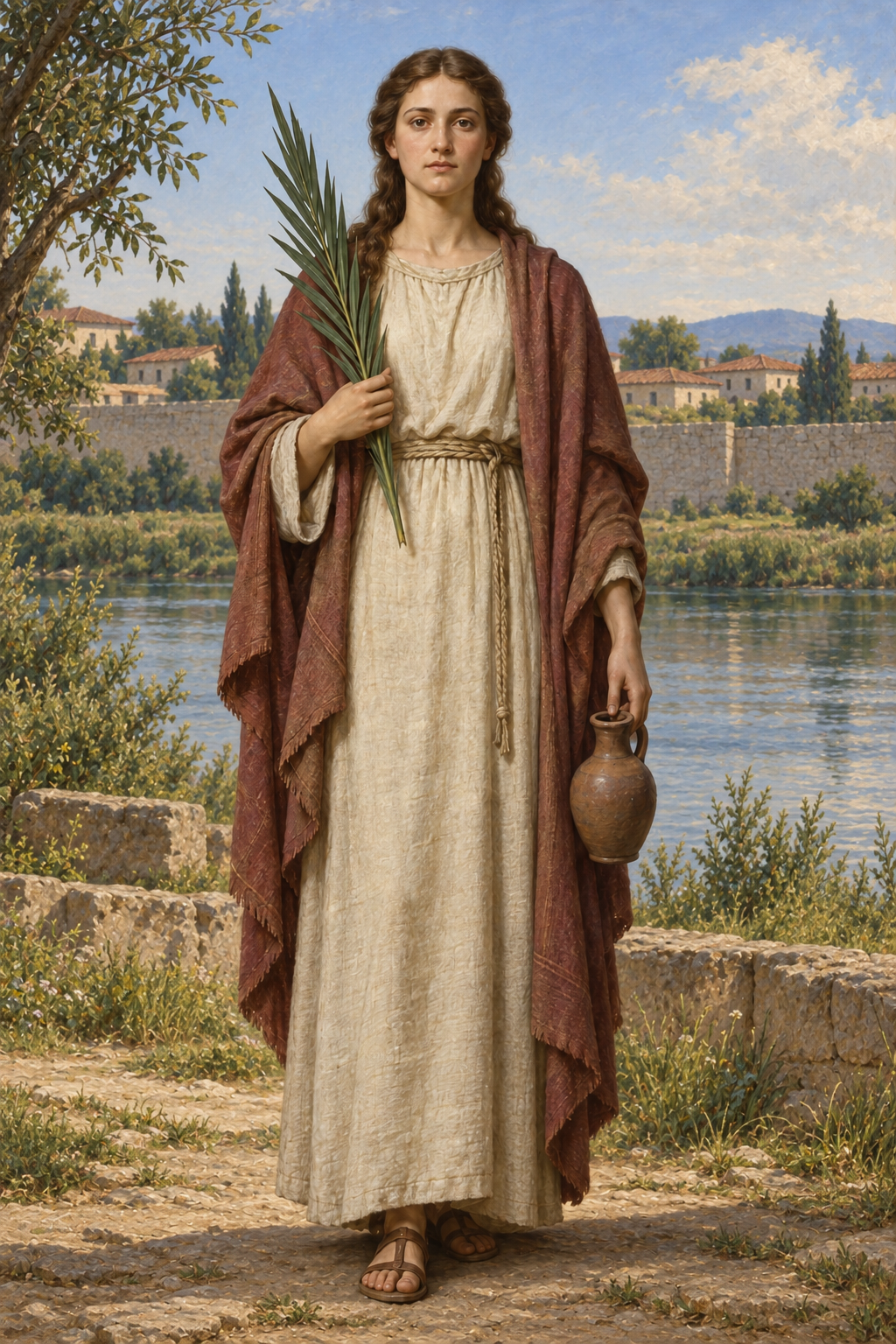
About Afra
Afra is honored as an early Christian martyr at Augsburg, the city the Romans called Augusta Vindelicum. The clearest early testimony is not a trial record but a reference to her cult. In his sixth-century verse life of Martin of Tours, Venantius Fortunatus directs a traveler through Augsburg to venerate Afra's remains. The verse shows that a martyr of her name had a recognized place in the city's religious landscape by Fortunatus's time. It does not say where she was born, how she lived, or the precise year she died.
The *Martyrologium Hieronymianum* also contains Afra's name, but its evidence is less tidy than a modern calendar entry suggests. The surviving manuscripts disagree, and entries near August 7 mention another Afra or an Afer in settings that can be confused with Augsburg. One manuscript clearly associates the martyr with the Swabian city; others leave more room for uncertainty. Scholars differ on the compilation's date and place of origin, so it should not be described as an eyewitness notice from Afra's lifetime. The liturgical record strengthens the case for an old cult while refusing a neat date or personal itinerary.
Archaeology gives the written references a setting. Beneath and near the later basilica of Saints Ulrich and Afra, excavators have identified a Christian cemetery whose earliest burials reach back into the fourth century. Graves grouped around a focal area and a later foundation interpreted as a memorial church are consistent with long devotion at the site. They cannot, by themselves, label any particular set of remains as Afra's. The evidence is strongest for a community that gathered around a martyr's memory; the passage from that finding to a detailed individual life needs more than the excavation provides.
Medieval writers supplied the vivid narrative missing from the early witnesses. In versions of a *Passio* and *Conversio*, Afra is described as a woman who left prostitution after meeting Bishop Narcissus, then died by fire for refusing to abandon Christianity. The Diocese of Augsburg explicitly describes this conversion and suffering story as a pious legend rather than established history. A calendar name, Veneria, may have been misread as a label for Afra's occupation, helping to form the plot. The story mattered to later readers as a pattern of repentance and fidelity, but it cannot determine Afra's profession or the manner of her death.
The story continued to change after its first composition. The Augsburg city lexicon traces an early *Passio*, a later conversion story, and another expanded version around 1200. Their differences show a developing literary tradition, not several independent reports of the same trial. Later accounts add a mother named Hilaria, companions, and precise dramatic speeches. They can illuminate medieval devotion and its interests, but the earlier testimony does not independently verify those people or words in Afra's life. A responsible portrait therefore marks the received tale as tradition and leaves her individual chronology open.
The memory attached to Afra became a major part of Augsburg's church. The city lexicon follows the church over the remembered burial area through medieval rebuilding. These episodes describe what successive communities did in her name; they cannot establish an unbroken chain of individually authenticated remains from the Roman period.
Local liturgies varied in their early dates. Augsburg now observes Afra on August 7, and the diocese presents her as one of its patrons. That observance corrects the May 24 date carried by the older index, but the feast itself should not become a coded day of death.
The oldest secure outline is modest: a martyr named Afra was venerated in Augsburg by the sixth century, with a cult rooted near the later basilica. The evidence does not support a dated childhood, a known occupation, a documented conversation with Narcissus, or the precise circumstances of death. The Augsburg diocese's commemoration remains an expression of that durable memory. Reading the early sources beside later legend allows Afra to be presented as a real object of Christian devotion without repeating each literary episode as though it were a contemporary record.
Wondering how to weigh the stories and sources? Learn how to read a saint biography.