Biography
Agabus
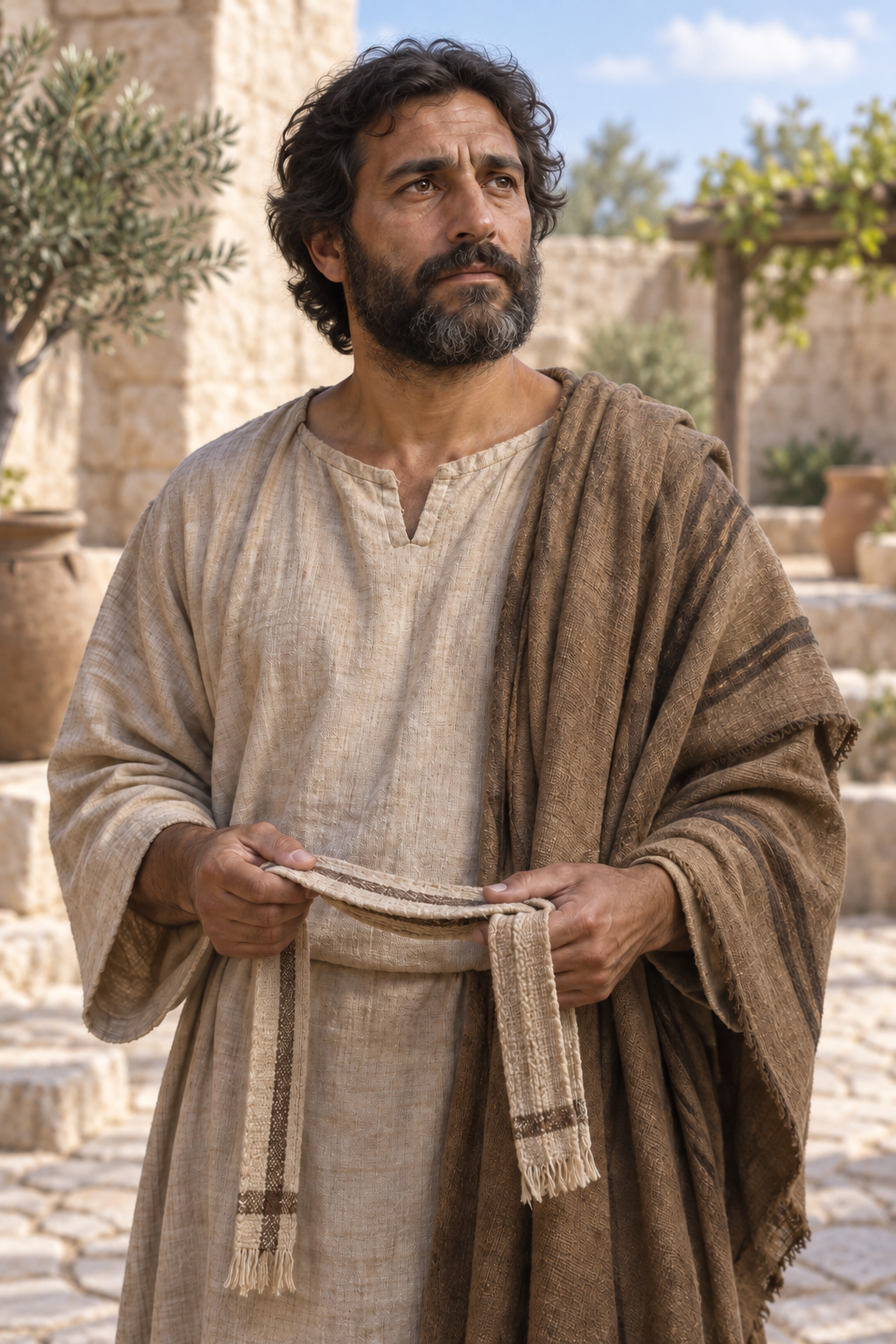
About Agabus
Agabus appears in the *Acts of the Apostles* as a prophet in the first generations of Christianity. Acts tells two episodes in which he speaks to communities facing an uncertain future. It supplies no family history or account of his birth and death. A later identification of him as one of the Seventy disciples is not established by these passages. His surviving story is therefore brief, but the two scenes are unusually clear about what he did and how others responded.
The first scene takes place in Antioch. Acts describes prophets arriving from Jerusalem, one of whom was Agabus. He stood before the gathered believers and announced that a severe famine was coming. The narrator attributes the warning to the Spirit and says a famine did occur during the reign of Claudius. The passage does not date the warning precisely or provide the words of a longer address. It names Agabus for this prophetic action, not as the organizer of a separate famine-relief mission.
The Antioch disciples responded by deciding to send help to fellow believers in Judea, each according to ability. Barnabas and Saul carried their gift to the elders. That response matters to Agabus's story, even though Acts assigns the decision and delivery to others. The warning was heard in a community that treated threatened hunger as a reason to share resources across distance. It would be inaccurate to credit Agabus with collecting the money himself, or to turn the collection into another personal episode.
A Jewish historian, Josephus, also records a severe shortage in Judea during Claudius's reign. In his account, Queen Helena of Adiabene obtained food for people in need. That independent witness helps place famine relief in the period, but Josephus does not mention Agabus or the Antioch Christians. The evidence therefore supports historical context, not a claim that Josephus confirms Agabus's exact words or every geographical part of Acts's description. The narrative's broad language should not become a modern map of a single empire-wide food crisis.
Acts next names Agabus much later in its account of Paul's journey toward Jerusalem. At Caesarea, he came from Judea to the house where Paul and his companions were staying. He took Paul's belt and bound his own hands and feet. With that visible action he warned that the belt's owner would be bound in Jerusalem and handed over to Gentiles. The sign made an otherwise distant danger immediate to the people watching. Acts does not state that Agabus himself traveled onward with Paul.
The US bishops' study notes compare this kind of symbolic act with the actions of earlier biblical prophets. The belt is therefore a sign in a narrated warning, not evidence for a special costume or a permanent personal emblem. The art accompanying this draft shows a simple woven belt because the object appears in Acts; it does not claim to reproduce the belt or Agabus's appearance. His role in the scene is to convey a warning, while the choice about the journey belongs to Paul and his companions.
Paul's companions urged him not to continue to Jerusalem after hearing the warning. Paul said he was prepared for imprisonment and even death, and the group eventually stopped trying to persuade him. Scholars continue to examine the tension between warnings attributed to the Spirit and Paul's decision to proceed. Kylie Crabbe's study treats that tension as a question about how the narrative presents prophecy and its reception, rather than a biographical detail that can be settled by inventing further conversations with Agabus. The episode ends with Paul's decision; Acts gives no later account of Agabus's own life.
Agabus remains significant as one of the few early Christian prophets named in the New Testament. Acts remembers him twice: first when a warning about hunger was followed by shared aid, and later when a physical sign made the danger of Paul's journey visible. These are the limits of the reliable personal record. A responsible account can preserve both scenes without assigning him a birthplace, a death date, a martyrdom, or membership among Jesus' Seventy disciples.
Wondering how to weigh the stories and sources? Learn how to read a saint biography.