Biography
Albertina Berkenbrock
About Albertina Berkenbrock
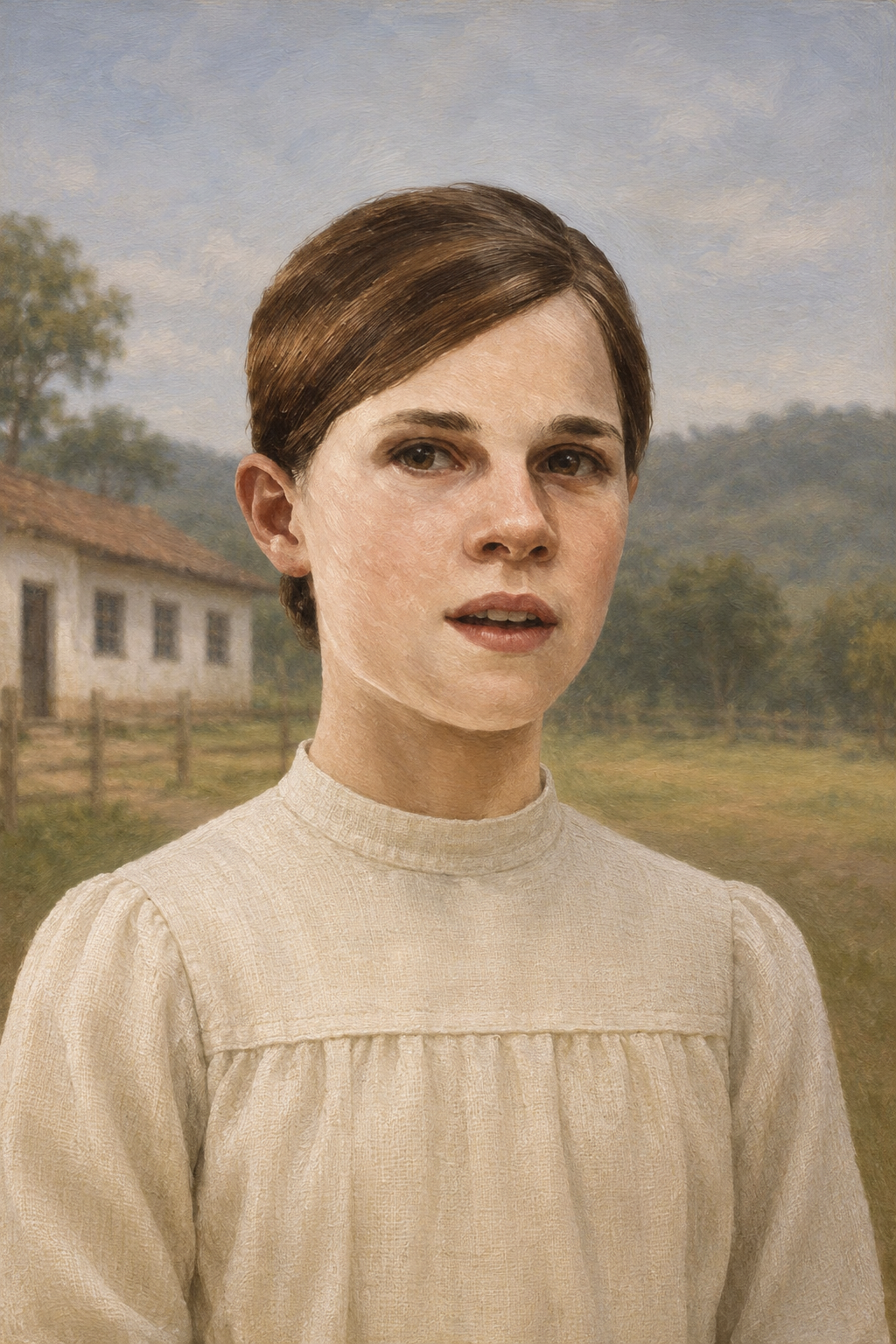
Albertina Berkenbrock grew up in the farming community of São Luís, in Imaruí, Santa Catarina. Born on 11 April 1919, she belonged to a Catholic family and helped her parents both at home and on the land. The Holy See’s biography remembers a child attentive to school and catechism, willing to play with poorer children and share the bread she brought from home. These ordinary activities form an important part of her story, alongside the violent death that later made her widely known.
Bishop João Francisco Salm’s account gives further detail about the household’s religious life. The family prayed the rosary after the evening meal and kept a small wooden oratory with a crucifix and an image of Mary. They attended Mass and novenas at the local chapel of Saint Aloysius Gonzaga. Albertina helped her mother care for the church and its altars. Salm also remembers her helping younger children and sharing food at school, placing kindness toward others within the same daily life as prayer.
Her preparation for Communion was an important part of that upbringing. She received her First Communion on 16 August 1928. Bishop Jacinto Bergmann’s pastoral account emphasizes her diligence in learning the catechism and her continuing participation in worship. It also describes affection for Mary and the community’s patron, Aloysius Gonzaga. The account draws on later testimony about her childhood, remembering a girl who studied, worked and took her religious commitments seriously. It does not supply a diary-like record of every year of her short life.
Albertina was twelve when she was killed on 15 June 1931 during an attempted sexual assault. The church biography identifies the attacker as a man employed by her father. Its account says she was searching for a missing animal when he directed her toward an isolated place. The violence ended her life before she could grow into adulthood. Her remembrance belongs to a child with a family, classmates and a community; the attack is part of that history, rather than the measure of everything she was.
Her reputation for holiness spread after her death, and a formal cause followed. Historian Kelly Caroline Noll da Silva examines how the Catholic newspaper O Apóstolo reported that cause during the 1950s. The paper carried notices about the investigation, invited prayer and support, and presented Albertina as an example for its readers. Silva’s study distinguishes the remembered child from the public model constructed through repeated descriptions of her as a virgin, heroine and martyr. It asks how ideas about gender and the female body shaped that portrayal.
The Catholic Church beatified Albertina at Tubarão on 20 October 2007. In the ceremony’s homily, Cardinal José Saraiva Martins recalled both her sacramental upbringing and the ordinary surroundings of her family. His religious interpretation connected her witness with baptism, prayer and perseverance in Christian life. The homily therefore recalled more than the circumstances of her death: it located her faith in the household, worship and teaching through which a child learned to live it.
The story continues to be remembered in Santa Catarina. Writing during the centenary commemorations in 2020, Salm described the place of pilgrimage and a film about her life involving local people and relatives. His article presented mercy, simplicity and care for people in need as part of her continuing significance. Those themes return attention to the child who shared food, helped at home and participated in her community’s religious life.
Wondering how to weigh the stories and sources? Learn how to read a saint biography.