Biography
Amator
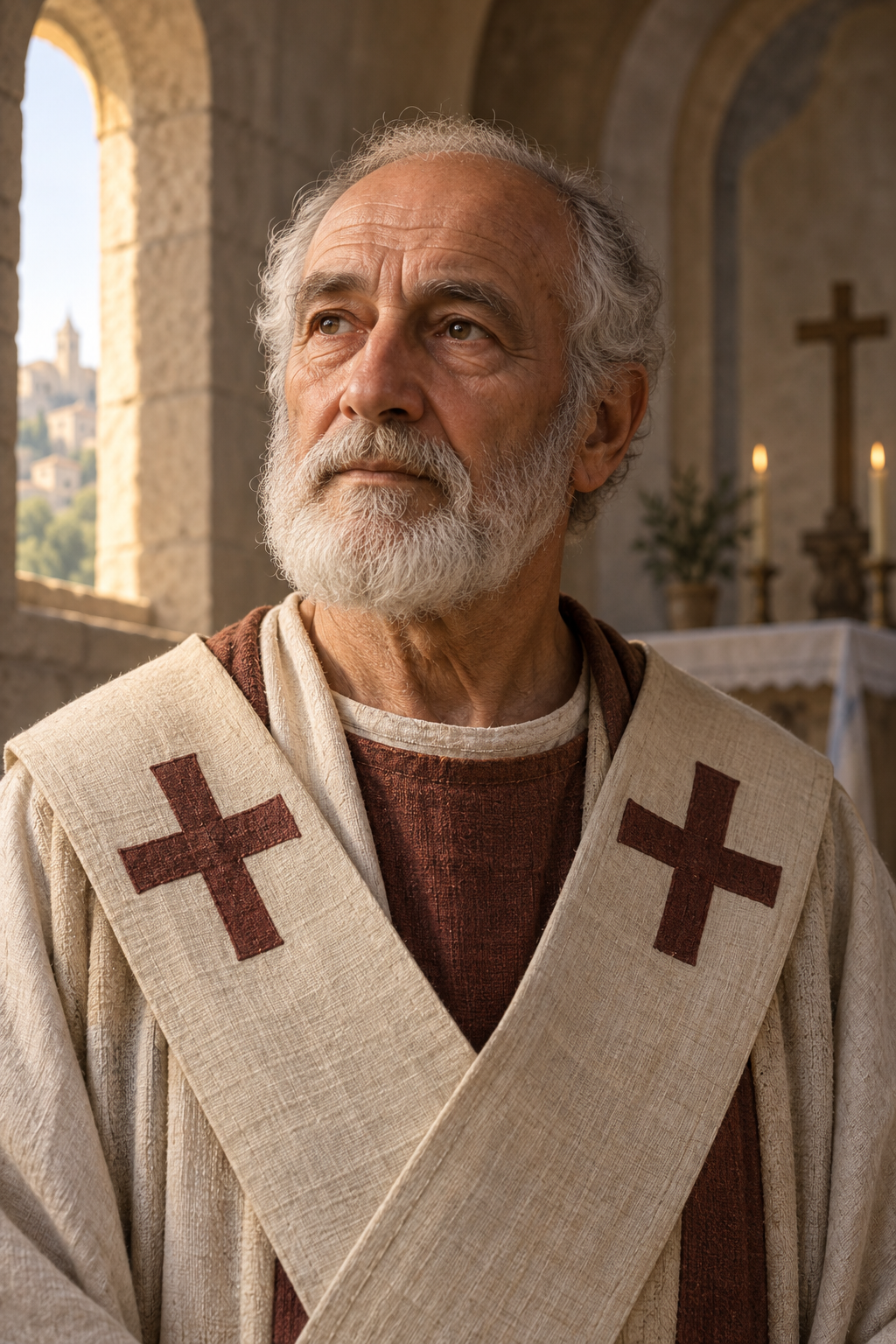
About Amator
Amator served as bishop of Auxerre while the city belonged to the late Roman world. He is also called Amatre in French sources. He was a historical holder of the see, but there is no contemporary diary or administrative record that lets a biographer follow him from childhood through his ministry. The New Catholic Encyclopedia explicitly separates confidence in his episcopacy from confidence in the picturesque episodes of his later life. That distinction is the starting point for his biography.
The clearest point in the sequence is at its end. Germanus became bishop of Auxerre in 418, after Amator. A French Ministry of Culture account connects Amatre with the change of bishops, while cautioning that the material about Germanus derives largely from hagiography. The year 418 therefore anchors Amator's place in the local succession; it does not establish the day or circumstances of his death. Auxerre remembered both men together because one episcopate led into the other.
A later life of Amator, associated with the priest Stephanus, supplies a much fuller story. It presents him as a married man before his clerical vocation and gives his wife the name Martha. It also describes his confrontation with Germanus and his decision that Germanus should follow him as bishop. These scenes can be told as the tradition of the Auxerre church, but the elapsed time between Amator's lifetime and the composition of the life prevents treating every conversation and motive as documented fact.
The tradition of Amator and Germanus had a purpose beyond recalling two individual lives. It showed a continuous episcopal line and explained why Germanus, later remembered as Auxerre's most celebrated bishop, belonged to that line. A later episcopal collection retold the succession story, including the dramatic presentation of Germanus to the church. That is valuable evidence for what subsequent Christians in Auxerre believed and taught about their past. It cannot independently confirm the precise gestures or words attributed to Amator.
Amator's memory also became part of the sacred geography of the city. Historian Jean-Charles Picard identifies him with the cathedral in Auxerre's remembered pattern of early church building, while Germanus was associated with other churches. Picard does not simply read those building stories as an architectural ledger. He investigates how graves, shrines, and stories were arranged into a local Christian landscape. The attribution shows the importance of Amator's name to that landscape even where a building campaign cannot be dated securely from surviving evidence.
The church commemorates Amator on 1 May. Picard notes that the opening days of May held a cluster of commemorations for Auxerre's early clergy and warns that this pattern was at least partly shaped by liturgical construction. For that reason, a feast entry should not be converted into a precise death date.
The index's former 30 April date belongs to a different Amator, the priest and martyr of Córdoba. Keeping those identities apart protects the history of both men.
The surviving record supports a modest conclusion. Amator was an early bishop of Auxerre, and Germanus succeeded him in 418. The marriage narrative, the confrontation, and other vivid details remain attributed traditions, while the local calendar and sacred places show how his community preserved his name. His significance rests both in his real place in the episcopal succession and in the care needed when later memory is used to describe an ancient life.
## Featured Events
Zero featured events: the only securely dated transition is Germanus's succession, which is about his successor, and the later vita's personal episodes are insufficiently corroborated as distinct historical events.
## Structured Updates
- `date_of_death`: +0418
Wondering how to weigh the stories and sources? Learn how to read a saint biography.