Biography
Amelia Bloomer
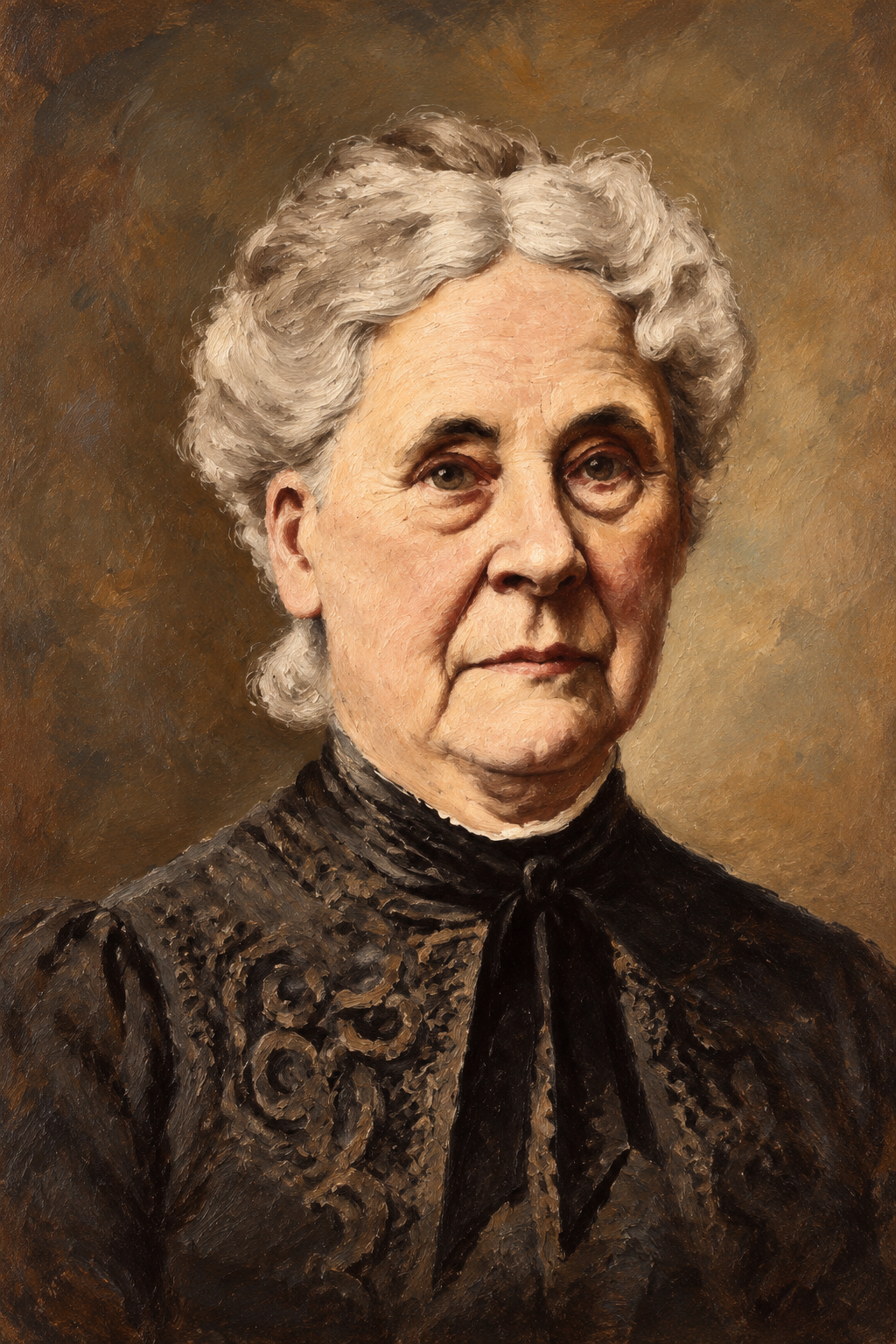
About Amelia Bloomer
Amelia Bloomer made a newspaper into a place where women could argue about the conditions of their lives. The Lily began in Seneca Falls in 1849 as a temperance journal. When the local women’s society withdrew from the undertaking, Bloomer took responsibility for editing and publishing it. Its concern with the damage caused by alcohol gradually widened to include education, employment, marriage laws, and voting. Elizabeth Cady Stanton contributed articles and helped draw the paper toward an explicit defense of women’s rights.
Born Amelia Jenks in Homer, New York, on May 27, 1818, she grew up with limited formal schooling and a Presbyterian mother’s religious instruction. Her husband, Dexter Bloomer, later recalled that they joined the Episcopal Church in Seneca Falls during the early 1840s. He described her continuing involvement in parish organizations and her conviction that biblical passages about women had often been interpreted unfairly. For her, Christian teaching supported women’s participation in the work of the world rather than requiring their exclusion from it.
Before her marriage, she taught briefly in a local district school and later worked as a governess near Waterloo. These were forms of employment available to her before journalism became her principal public work. She married Dexter in 1840; his memoir records her satisfaction that the ceremony omitted the promise to obey.
Her name became attached to a change in clothing, although she did not claim to have invented it. After Elizabeth Smith Miller appeared in a short dress over trousers, Bloomer adopted the outfit and publicized it in The Lily. Women wrote asking for information and patterns. The resulting attention increased the paper’s reach, but it also made her appearance a subject of public argument.
The newspaper’s practical arrangements mattered as much as its editorials. Historian Lorle Ann Porter reconstructs a dispute during Bloomer’s residence in Mount Vernon, Ohio. In 1854 she employed a woman to set type for The Lily, with training and eventual journeyman’s wages promised. Male printers refused to provide instruction and resisted working alongside her. The dispute interrupted production and spread into rival newspapers. Bloomer defended the appointment; the office eventually employed women and men together.
Porter treats the episode as a test of women’s access to paid work, not simply a quarrel over manners. She also places Bloomer within the changing politics of the period. Temperance remained Bloomer’s priority, even as opposition to the expansion of slavery became more influential in the emerging political coalition. Her causes did not advance together at the same pace. The Ohio experience shows both her determination to open employment to women and the limits of her political judgment about which issues would command public support.
There were also disagreements among reformers who shared some of her aims. In the National Archives’ account, Elizabeth Cady Stanton criticized Bloomer’s caution, and Susan B. Anthony complained that she would not challenge the Fugitive Slave Law or the church’s uncertain position on temperance. Such criticism belongs to the history of the movement. Bloomer’s growth as an advocate did not mean that she embraced every demand made by her colleagues, or that religious loyalty and reform were always easy companions.
After settling in Council Bluffs, she continued working for suffrage and community organizations. She became president of the Iowa Woman Suffrage Society in 1871. In 1878 she petitioned Congress, asking either for relief from taxation or for the removal of her political disabilities. The request brought the question of representation into a concrete dispute: women were subject to public obligations while denied a corresponding voice in government. Her work extended beyond the newspaper years into sustained efforts to change the laws under which women lived.
Her faith remained part of that work. In a memorial sermon preached at St. Paul’s Church in Council Bluffs, Eugene J. Babcock remembered her insistence that women were men’s intellectual, moral, and spiritual equals. He connected her understanding of women’s dignity with the Incarnation. His account is a pastor’s tribute, not a detached assessment, but it records how her public advocacy could be understood within the Christian community to which she belonged.
Babcock also emphasized the personal cost of speaking publicly under ridicule. He portrayed her willingness to keep promises and accept responsibility as central to her character. His praise should be read as remembrance shaped by grief and admiration. It nevertheless preserves an important part of her reception: a parish priest could honor her struggle for women’s wider participation as an expression of religious duty.
Dexter’s memoir describes her regular worship and Communion as long as health allowed. It also records her late interest in Christian Science, while stating that she did not adopt its doctrines. She died at home in Council Bluffs on December 30, 1894.
The Episcopal Church’s records identify her with the July 20 commemoration of women reformers.
Wondering how to weigh the stories and sources? Learn how to read a saint biography.