Biography
Amos
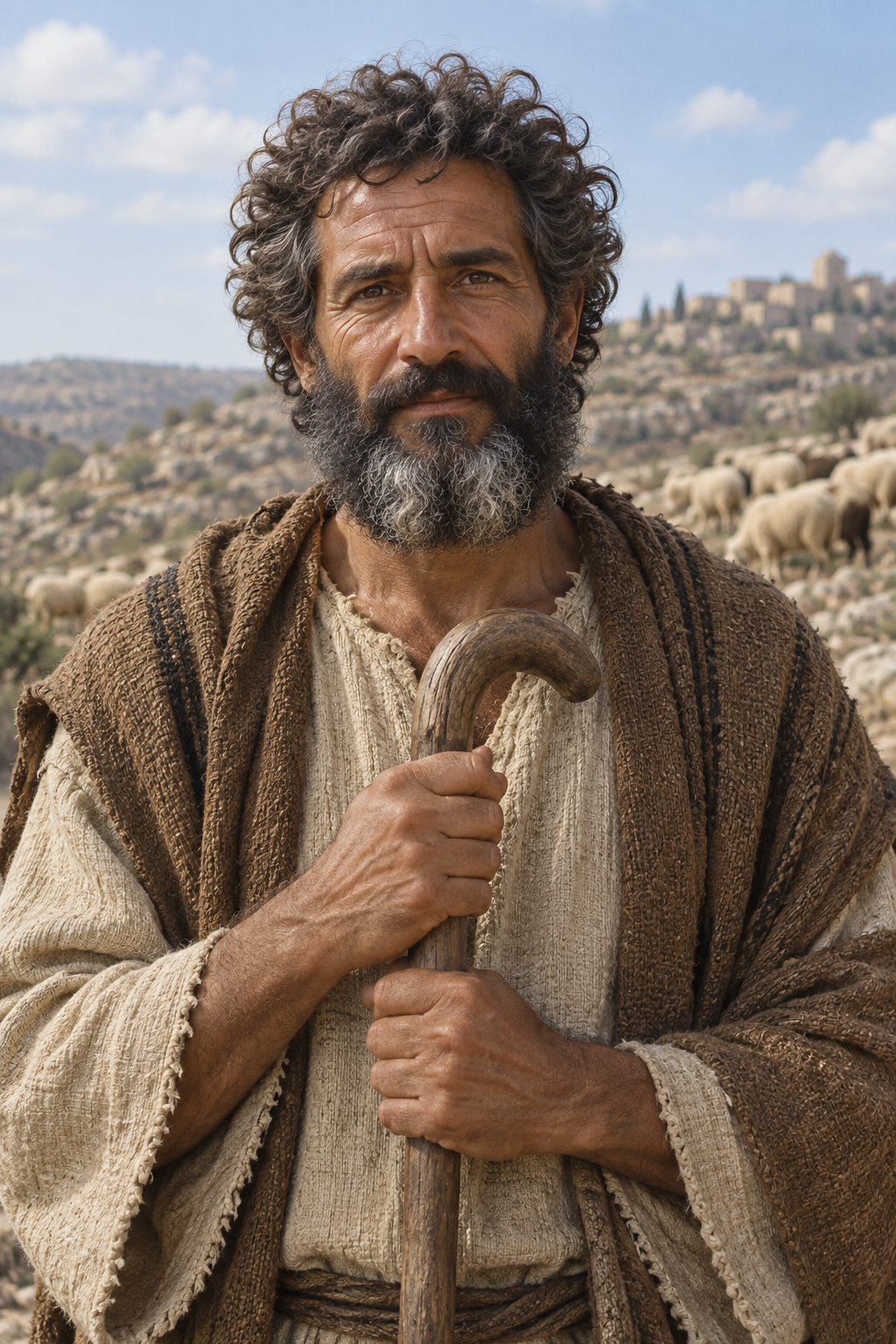
About Amos
Amos was a prophet from Tekoa in Judah who spoke in the northern kingdom of Israel during the reign of Jeroboam II. The book bearing his name also places his activity in the reign of Uzziah of Judah and dates its opening words two years before an earthquake. These synchronisms point to the prosperous middle decades of the eighth century BCE, but they do not supply exact birth and death years. The legacy dates of 785 and 742 BCE are therefore removed. Amos belongs to a well-defined political setting, yet most knowledge of him comes from the prophetic book rather than an independently preserved biography.
Tekoa lay south of Jerusalem in Judah. Amos describes his work with livestock and sycamore trees. When Amaziah, priest of the royal sanctuary at Bethel, tells him to earn his bread by prophesying elsewhere, Amos rejects the suggestion that he is a prophet-for-hire or a member of a professional prophetic company. He says that he was following the flock when God commissioned him to prophesy to Israel. His answer grounds his vocation in a call that interrupted ordinary work. It does not support later embellishments about formal schooling, poverty, or a detailed childhood among shepherds.
The book opens with judgments against neighboring peoples before turning its sharpest accusation toward Israel. Amos condemns selling vulnerable people for debt, trampling the poor, corrupting worship, and ignoring obligations created by Israel's covenant. His method prevents his northern audience from treating judgment as a message only for outsiders. The prophet names concrete systems: dishonest commerce, luxury built beside deprivation, courts that fail the weak, and religious gatherings detached from justice. His criticism is moral and social, but also theological. In the book's argument, mistreatment of neighbors contradicts worship of the God who rescued Israel.
Amos's best-known appeal occurs in a lament over Israel. He urges the people to seek good rather than evil, establish justice at the gate, and reject confidence in a coming Day of the Lord. That day, he warns, will be darkness for a community expecting automatic vindication. The same passage presents God refusing festivals, offerings, and songs while justice is absent. Amos is not opposing worship as such; he is opposing worship used to cover exploitation. His imagery of justice flowing like water gives the book an enduring public vocabulary, but the surrounding warning should not be reduced to a detached slogan.
The visions in chapter seven show that Amos's message was not delivered without compassion. When shown locusts consuming the land and then a devastating fire, he pleads for Jacob because the people are small. In the narrative, the threatened disasters are withdrawn. A third vision uses a plummet to portray a structure too far out of line to remain. The sequence holds intercession and judgment together: Amos speaks against wrongdoing while also pleading for those who will suffer. His courage is therefore not mere harshness, and his concern for Israel is visible even when his words provoke resistance.
Resistance becomes personal at Bethel. Amaziah reports Amos to Jeroboam II as a conspirator and says the land cannot endure his words. He then orders Amos to return to Judah and never prophesy again at the royal sanctuary. Amos answers by recounting his occupation and call, then delivers another oracle of exile and loss. The text does not say what happened immediately afterward or provide a travel diary back to Tekoa. It does show a provincial worker confronting an official religious center tied to royal power. Bethel can be mapped at settlement level for this encounter, without claiming an exact sanctuary coordinate.
Chapter eight returns to economic injustice through the vision of a basket of summer fruit. Amos addresses merchants impatient for holy days to end so they can resume trading. He accuses them of manipulating measures, raising prices, and reducing poor people to debt. The vision announces that such practices cannot be forgotten. These accusations reveal the practical content of justice in Amos: honest measures, protection of people with little power, and refusal to make profit from another person's desperation. They also explain why his words remain relevant beyond the monarchy that first heard them.
The book's final chapter combines severe judgment with hope. After announcing that privilege will not protect Israel from accountability, it ends with a promise to raise David's fallen shelter and restore a devastated people. The USCCB introduction identifies Amos 9:11–15 as a later appendix looking beyond judgment already fulfilled. That editorial history matters. The hopeful ending belongs to the canonical Book of Amos and shaped later Christian reading, but it need not be assigned automatically to Amos's own earliest preaching. The profile can honor the received book while distinguishing the prophet's activity from later composition and collection.
Christian tradition remembers Amos among the Twelve Minor Prophets, a label referring to the books' relative length rather than lesser importance. The Orthodox Church in America commemorates him on June 15. Its life also preserves a later story in which a son of Amaziah struck Amos, after which he died at Tekoa. The Book of Amos does not narrate that death, and the OCA itself introduces it as later tradition. This packet therefore records the feast as a documented observance but does not use the traditional death account to create a dated event or death field.
Amos remains significant for joining religious fidelity to observable treatment of other people. He leaves the flock, addresses a kingdom more powerful than his home settlement, intercedes during visions of disaster, and refuses pressure from Bethel's priest. His words test worship by justice at the gate and commerce by its effect on poor people. The evidence does not support a complete private life, exact lifespan, or historical portrait. It does support a coherent public vocation: a worker called to speak against exploitation and false security, whose book continued to challenge communities long after the northern kingdom fell.
Wondering how to weigh the stories and sources? Learn how to read a saint biography.