Biography
Ana de los Ángeles Monteagudo
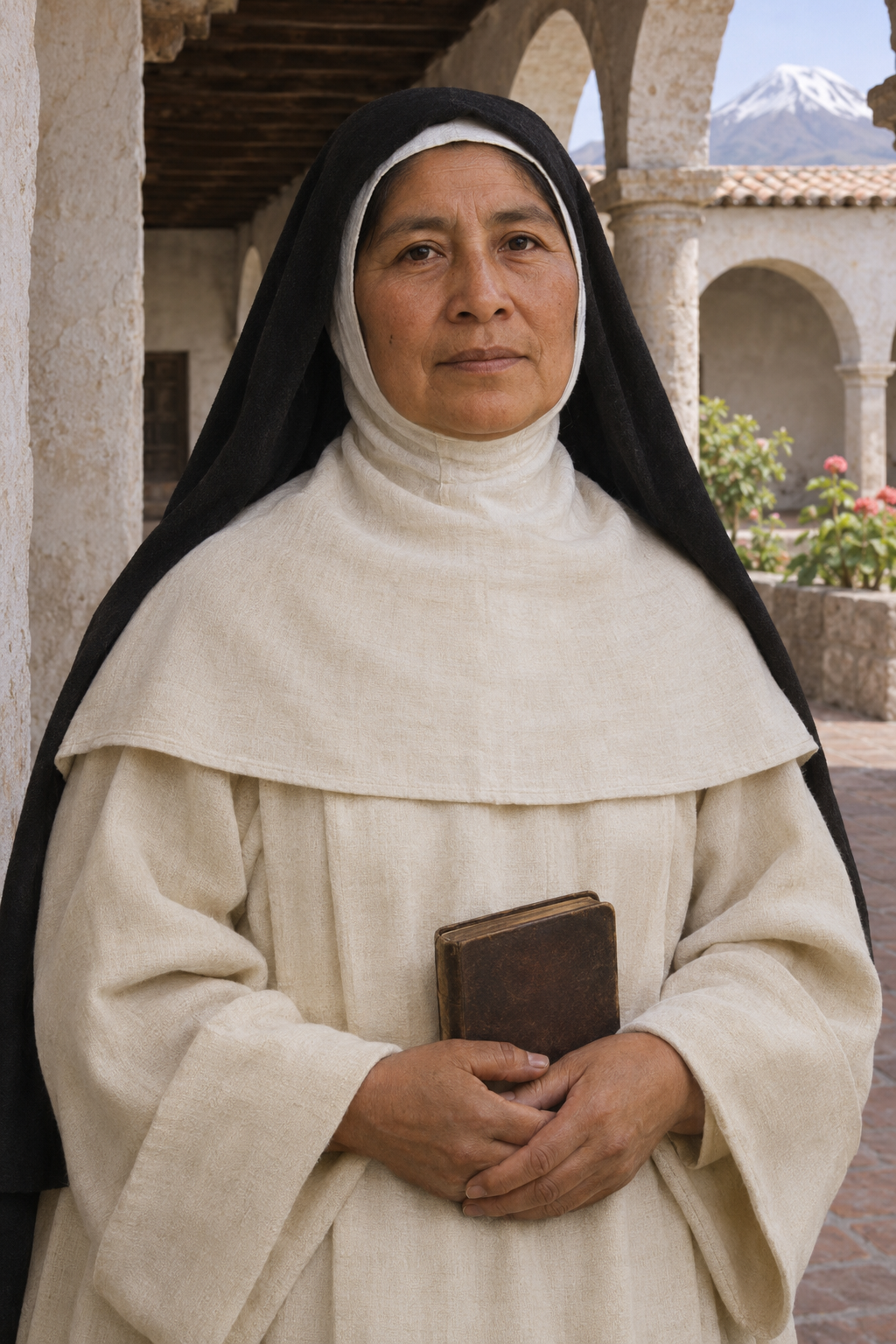
About Ana de los Ángeles Monteagudo
Ana de los Ángeles Monteagudo spent most of her life within the Dominican monastery of Santa Catalina in Arequipa, Peru. Born around 1602, she entered its circle first as a child receiving an education, long before she became a professed nun. The historian Alejandro Málaga Núñez-Zeballos places her childhood in a city marked by earthquakes and the eruption of Huaynaputina. Her father was a prosperous merchant, and the monastery educated daughters of families able to provide for their schooling. This setting gave Ana an early familiarity with the religious community in which she later chose to remain.
Her parents called her home and wished her to marry. She resisted that plan and continued to seek admission to religious life despite their objections. In 1618 she began her novitiate at Santa Catalina, taking the name Ana de los Ángeles. She later served as novice mistress and became prioress. The outline preserved in the New Catholic Encyclopedia emphasizes both her persistence in choosing that vocation and her later responsibility for guiding the community. Her life remained centered in Arequipa rather than developing through journeys to distant foundations.
Santa Catalina housed a more varied population than the word monastery alone might suggest. Julián de Cos describes a community that included nuns, girls being educated and women of means who lived within its walls, sometimes with servants. The arrangement created tensions between different expectations of life there. Ana's effort to strengthen religious observance took place within that setting. Her authority concerned a community whose residents did not all share the same vocation or daily circumstances, which helps explain why reform could produce resistance even when its aims seemed clear to the prioress.
Elected prioress late in 1647, she sought a stricter observance of the community's religious rules. De Cos stresses the limits of that attempt: resistance remained, and she was not reelected after the three-year term. His account does not present reform as an uncomplicated success. It also describes her later availability to people who sought counsel at the monastery. The end of a particular office did not end her role within the community or her relationship with people outside it. Advice and spiritual accompaniment continued without requiring the authority she had held as prioress.
The apostolic letter issued for her beatification remembers her willingness to perform humble domestic duties and her careful work in the chapel and sacristy. It also records her service in forming novices. Those responsibilities placed the practical maintenance of worship beside the guidance of people entering religious life. The same document describes opposition linked with her insistence on discipline, followed in later years by prolonged illness and blindness. These difficulties belong to the Church's account of her life. They are presented as part of a long monastic vocation, rather than a simple ascent through offices.
At her beatification, John Paul II emphasized the reach of that largely enclosed life. His homily recalled bishops and priests seeking her advice, travellers receiving her prayers and poor people finding a welcome. He connected these forms of attention with the Dominican relationship between contemplation and sharing its fruits. The account does not require imagining her as a travelling missionary. It locates her influence in prayer, counsel and the encounters possible within a contemplative community. In the pope's interpretation, her hidden life could still take account of needs beyond the monastery's walls.
Prayer for the dead held a particular place in her spirituality. John Paul II connected that devotion with Nicholas of Tolentino and the Catholic belief in purgatory. He recalled that Ana called the departed souls her friends and prayed for them. His portrait also included the living people who sought her help. Wealthy visitors encountered an invitation to conversion, sick people received relief, and those near death were accompanied by prayer. The pope placed these forms of care beside her fasting and almsgiving, interpreting them through the humility and charity associated with Catherine of Siena.
Ana died on January 10, 1686. Málaga describes the public response to her death and the early collection of evidence about her life. Bishop Antonio de León commissioned an inquiry that began in the same year, with material gathered over several years. The historian also identifies a later biography published by Elías Passarell in 1879. These records show how her remembrance passed through testimony, manuscripts and printed accounts over the centuries. They also explain why the surviving story combines information about her duties with devotional traditions reported by later writers.
John Paul II beatified Ana at Arequipa on February 2, 1985, during his visit to Peru. The apostolic letter authorized her celebration as blessed and specified January 10 for the observance in the places and manner permitted by Church law. The recognition gave a public place to a woman whose life had remained closely bound to one monastery and one city. Her significance rests in that long record of contemplative vocation, contested reform and counsel offered from within the community where she had first been educated.
Wondering how to weigh the stories and sources? Learn how to read a saint biography.