Biography
Anacleto González Flores
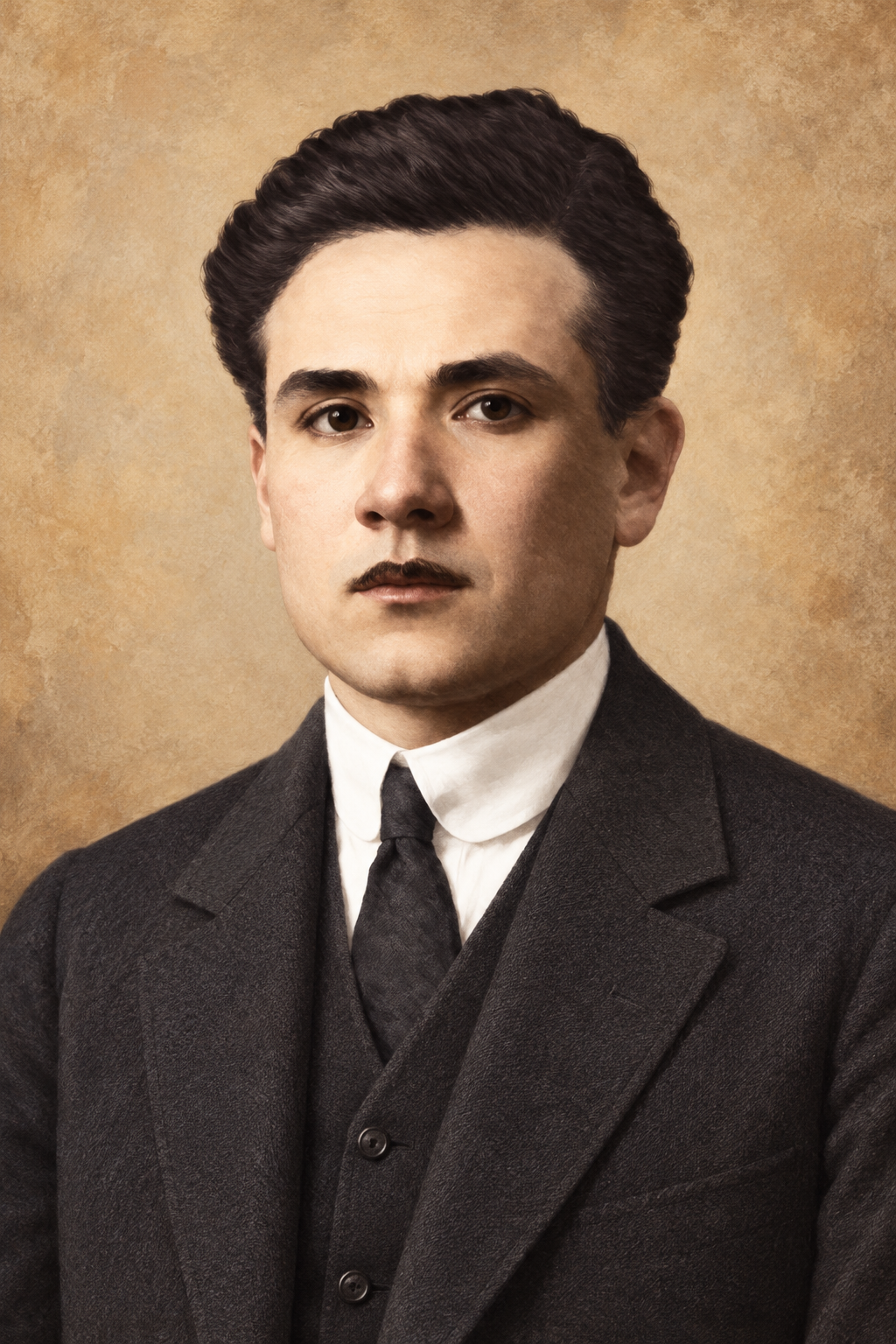
About Anacleto González Flores
Anacleto González Flores was a Mexican Catholic layman who combined family responsibilities with teaching, writing and public advocacy. Born in Tepatitlán, Jalisco, in 1888, he became active in the Catholic Association of Young Mexicans. He taught catechism, undertook charitable work and published books and articles. His family made and sold rebozos, the woven shawls in whose production he also worked.
He entered the seminary at San Juan de los Lagos in 1908, but later chose law rather than ordination. As a seminary student he lived outside the institution and sometimes substituted for absent teachers.
In Guadalajara he taught history and literature while continuing his studies. With Miguel Gómez Loza, he helped organize study circles that became a foundation for the local Catholic youth association. His work in the press included the weekly La Palabra.
His legal education was repeatedly interrupted. The university’s account explains that the government invalidated seminary studies, requiring him to pursue preparatory courses alongside law. He supported himself through manual work before teaching offered steadier employment. He finally presented his professional examination in February 1922. These difficulties placed education and earning a living alongside his public campaigns, rather than leaving advocacy as an occupation detached from ordinary responsibilities. He married María Concepción Guerrero in 1922.
The setting for this work was a wider struggle over Catholic participation in public life. In her review of Robert Curley’s history of revolutionary Jalisco, historian Julia G. Young describes Catholic organizations mobilizing petitions, boycotts, protests and marches after the Constitution of 1917. These campaigns involved women’s associations and workers’ organizations as well as young men. They sought a place for religious commitments within civic life, using forms of collective action that reached beyond church services. González Flores’s organizing belonged to this broader effort to act as both a citizen and a believer.
Young’s account of Curley’s argument also emphasizes the closing of that civic space. Under Governor José Guadalupe Zuno, Catholic schools, convents, seminaries, union offices and youth centers were shut down. The review presents those restrictions as part of the movement toward greater militancy. It also describes González Flores’s writings on social questions, religious liberty and martyrdom as helping shape a combative Catholic identity. This historical interpretation draws attention to the consequences of his rhetoric, alongside the courage and suffering emphasized in accounts of his death.
The Unión Popular grew from a defense committee formed in 1925. González Flores helped give it organization and statutes, and sent young members through Jalisco to extend its work. In 1926 he organized speakers to promote an economic boycott. His legal practice also served workers and people unable to pay for representation.
His early resistance to restrictions on Catholic life emphasized peaceful action. By late 1926 he supported the National League for the Defence of Religious Freedom. During the following months of armed conflict, he continued writing bulletins while moving between hiding places.
The Unión Popular linked members through neighborhood, district and parish organizers. Its newspaper, Gladium, gave the movement another means of reaching supporters. Historian Juan González Morfín describes González Flores as accepting the move toward armed resistance reluctantly, after pressure from the League and a consultation among the Unión Popular’s delegates. The change brought him doubts about the moral legitimacy of the course his organization had taken.
Police arrested him on April 1, 1927, while he was sheltered by the Vargas González family. He was interrogated and tortured, then killed in Guadalajara on the same day as Luis Padilla Gómez and the brothers Jorge and Ramón Vargas González. Accounts differ over the exact manner of his death: the archdiocesan narrative describes a bayonet wound, while noting that civil certificates recorded gunshot wounds.
The archdiocesan narrative says that the household offered no armed resistance. It describes interrogators demanding the names of supporters, sources of supplies and the whereabouts of Archbishop Francisco Orozco y Jiménez. It also reports that magistrate Francisco González obtained federal judicial protection for the prisoners, but that the killings went ahead. These details belong to the archdiocese’s retrospective account; the judicial order and underlying death records have not been independently examined here. They show the contrast between attempted legal protection and the violence the prisoners suffered.
His family’s grief appears in a letter his son Anacleto de Jesús wrote to his deceased father after his First Communion. Reproduced in González Morfín’s study, it remembers his mother and brother and expresses a wish for his father’s killers to change. Benedict XVI authorized his recognition as a Catholic blessed in the apostolic letter issued for the Mexican martyrs in November 2005.
In July 2019 the Mexican bishops announced his confirmation as patron of Mexican lay Catholics. Their notice reported a decree dated July 11, following the bishops’ request. This patronage gives a specific national scope to the Church’s remembrance of his life outside the clergy.
Wondering how to weigh the stories and sources? Learn how to read a saint biography.