Biography
Anastasius of Rome
About Anastasius of Rome
Anastasius of Rome is the label attached to this catalog record, but the person behind it has not been identified from a reliable historical or liturgical source. The inherited entry supplied no dates, narrative, relatives, office, community, or source. It classified him as a lay confessor and attached September 28 as a Roman Catholic feast. A review of accessible calendars and authoritative lives did not find that combination. This absence does not prove that no local commemorand ever bore the name. It means that the present record cannot responsibly turn its inherited metadata into a life story.
Several better-documented saints named Anastasius must be kept separate. Pope Anastasius I was bishop of Rome near the end of the fourth century and is commemorated on December 19 in the Vatican City State account. Anastasius the Persian was a seventh-century monk and martyr whose received life begins in Persia and whose Orthodox commemoration falls on January 22. Neither person matches an otherwise unidentified lay confessor assigned to September 28. Their biographies, dates, offices, deaths, and feast days cannot be borrowed merely because they share a personal name or a connection, in one case, with Rome.
The legacy feast also remains unverified. Vatican News's displayed saints for September 28 include Wenceslaus, Lorenzo Ruiz and companions, and Eustochium, but not an Anastasius of Rome. The Orthodox Church in America's collection for that day likewise provides no matching person. The broader September 28 inventory in the Ökumenisches Heiligenlexikon lists many commemorations and identifies their source traditions, yet it does not resolve this record. Calendars are not exhaustive evidence for every local cult, so their silence must be described narrowly. It is sufficient reason to withhold the inherited feast from publication until a traceable witness is found.
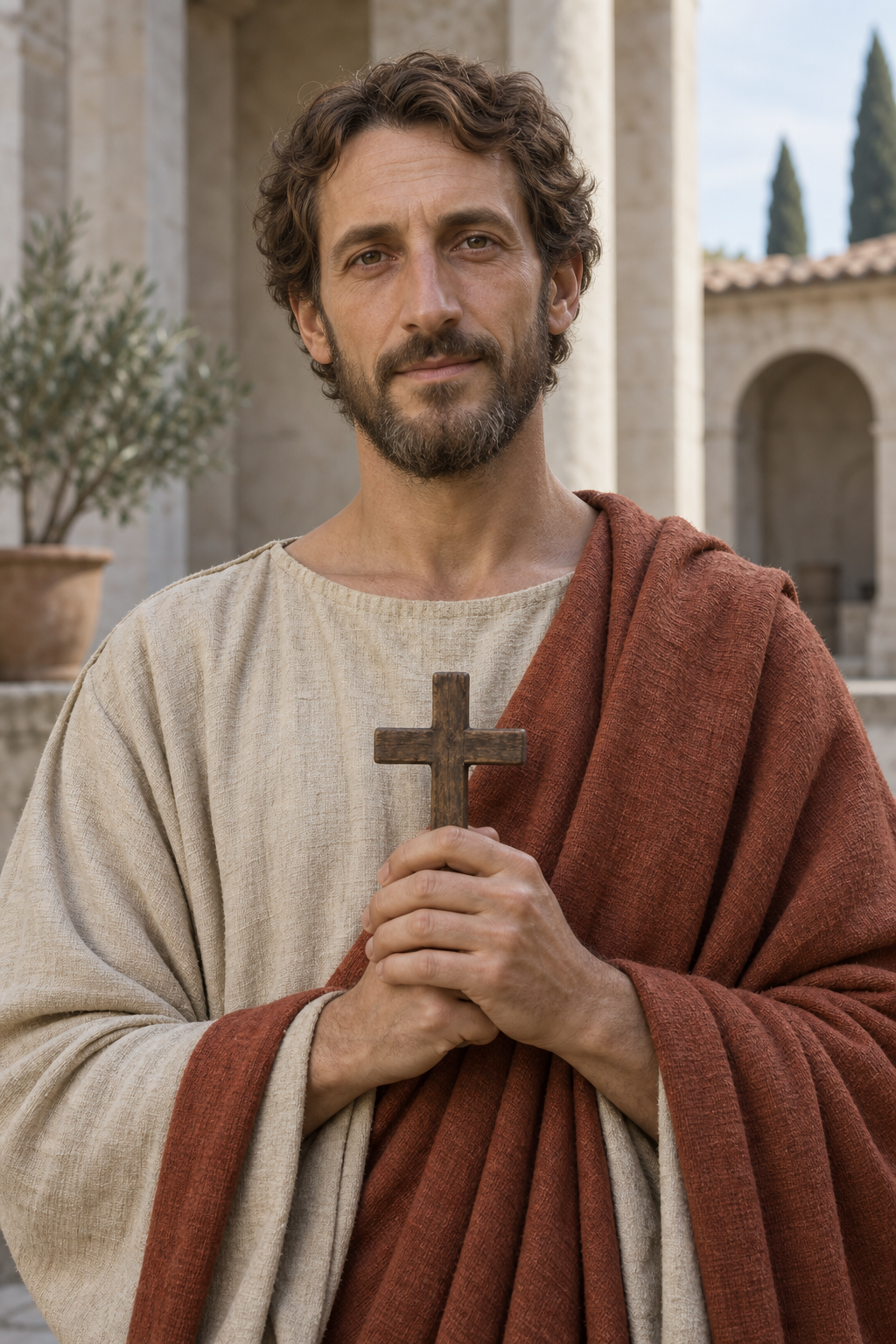
Nothing presently supports a birth or death date, Roman residence, lay vocation, status as a confessor, relationship, quotation, miracle, patronage, or traditional prayer. No map event can be plotted without first knowing which Anastasius is intended. Even a city-level marker for Rome would convert part of the editorial label into an unverified biographical claim. The responsible record therefore preserves the name only as an unresolved catalog identifier, clears the unsupported structured assertions, and leaves all life-event fields empty. The accompanying modern artwork represents the label imaginatively; it is not evidence for clothing, period, appearance, or identity.
This evidence-limited account is intentionally shorter than a normal publication biography. Additional length would require repetition or conflation with another Anastasius. The next useful step is not stylistic expansion but discovery of a primary martyrology, local calendar, manuscript, or scholarly prosopography that explicitly joins the name, Rome, the confessor designation, and a commemoration. Until then, readers should understand that ExploreSaints is documenting an unresolved inherited record rather than presenting a recovered ancient life. Historical care sometimes requires retaining uncertainty in public view, especially when a confident narrative would be more engaging but less truthful.
Wondering how to weigh the stories and sources? Learn how to read a saint biography.