Biography
Anastasius the Fuller
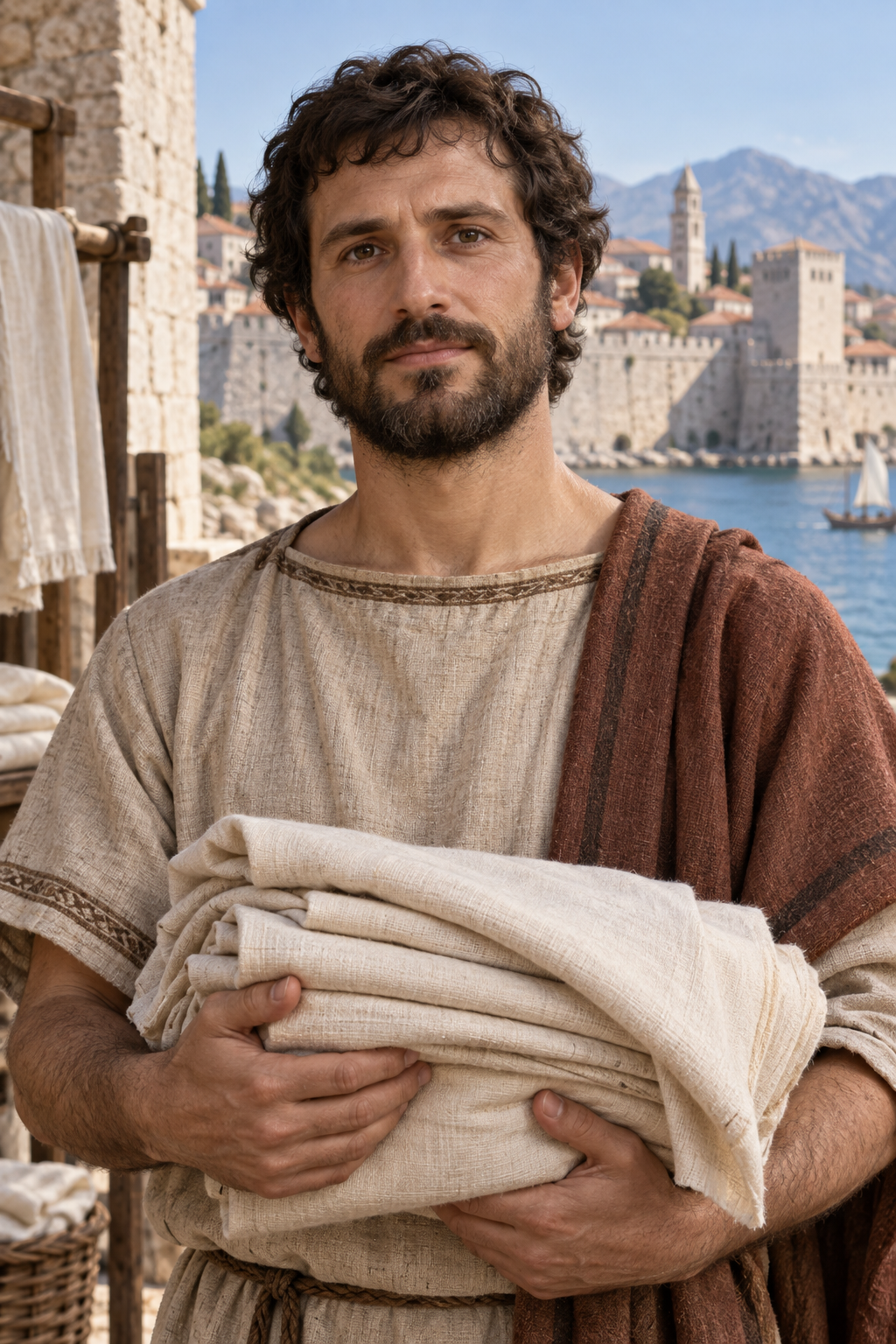
About Anastasius the Fuller
Anastasius is associated with Salona, the Roman city whose ruins stand near modern Solin in Dalmatia. He is known as the Fuller, a title suggesting work in preparing or finishing cloth. The historical record is thin: a critical Catholic account regards a Christian martyr named Anastasius at Salona as credible, while treating his occupation and the dramatic details of his death with more caution. It is safer to introduce him through the city and the martyr cult than to supply an exact year of birth, a family, or an itinerary.
The martyr's memory had a physical setting. An inscription found near his tomb at Salona refers to presbyters and belongs approximately to the later sixth or early seventh century. That record does not describe Anastasius's final hours. It does show a memorial place in the Christian landscape of Salona and helps distinguish a cult with early roots from a story preserved only in much later devotional retellings. The inscription and its location are evidence for remembrance, not proof of every episode attached to the saint.
An account called the *Passio sancti Anastasii martyris* circulated in the region. M. Jarak's study places its composition in the first half of the fifth century and examines it as an Aquileian text. Its relatively early date makes the passio valuable for studying how Christians near Salona remembered persecution. A martyr story, however, is a crafted religious narrative. Its age does not automatically confirm each conversation, object, or sequence of punishment it recounts.
In the received Orthodox account, Anastasius marks his doorway with a cross, refuses to abandon his Christian identity, and is drowned; Asclepia later retrieves and buries his body. These are meaningful parts of the tradition, but the sources do not permit their presentation as verified eyewitness facts. Even the often repeated exact year of martyrdom depends on harmonizing later accounts with a persecution setting. The profile therefore leaves his life dates empty and does not turn those scenes into featured historical events.
The calendars also require care. The modern Roman Martyrology places Anastasius of Salona on 26 August and calls him a fuller. Older lists sometimes confused him with another martyr named Anastasius. Eastern Orthodox remembrance is on 25 October. These are observance dates, not known dates of death. Maintaining the two distinct calendar traditions avoids presenting a single feast as universal and helps keep this Salona martyr separate from his namesakes.
Anastasius remains visible through the intersection of a place, an early martyr text, and ongoing worship. The passio preserves the religious meaning that later Christians gave his witness, even as its literary form cautions against turning every scene into documented biography. His name endured beyond Salona. The responsible account gives readers that early literary record while leaving the unsolved particulars of his death unsolved.
Wondering how to weigh the stories and sources? Learn how to read a saint biography.