Biography
Andrew of Crete
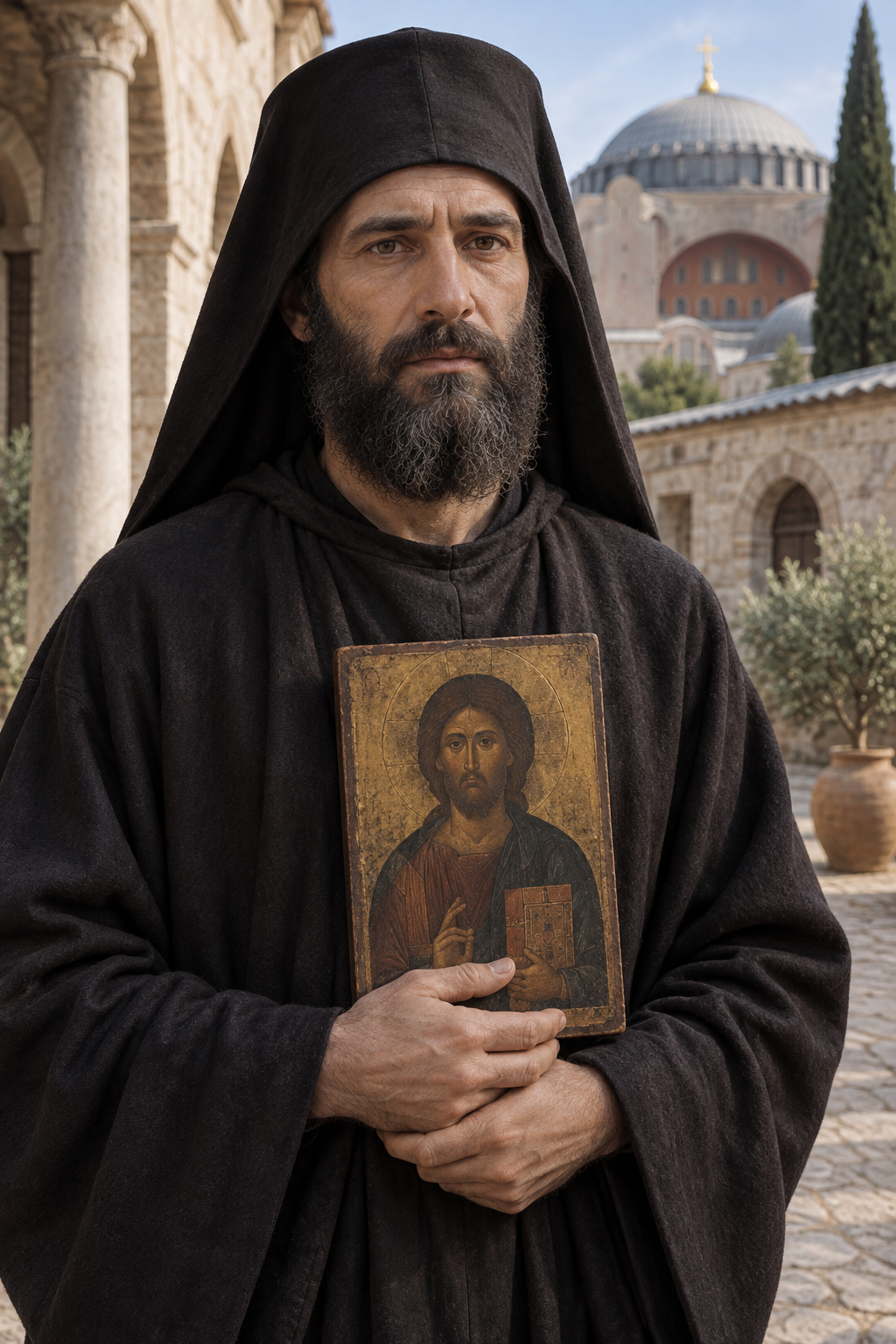
About Andrew of Crete
Andrew of Crete belongs to the eighth-century Byzantine dispute over sacred images. He is also called Andrew in Krisei, after a Constantinopolitan monastery connected with his burial and cult. That identifying name is useful because a different Andrew of Crete was an archbishop and hymnographer. The latter died earlier and is commemorated in July. A responsible profile must keep their offices, writings, and feasts separate: the Andrew honored in October is remembered above all as a monk and opponent of iconoclasm.
The reign of Constantine V forms the political and religious setting of Andrew's martyr tradition. The emperor pursued an iconoclast policy, and opponents of that policy later became prominent in Orthodox memory. Andrew's life is known through two related hagiographic accounts. An early passio was composed relatively near the alleged events; a later version associated with Symeon Metaphrastes reshaped the story. The existence of an early text deserves attention, but neither version reads like a neutral administrative record.
In the received narrative, Andrew leaves Crete for Constantinople and openly challenges the emperor's treatment of icons. Officials seize him, and he suffers punishment before death. The account portrays his resistance as faithful witness in a conflict that concerned how Christians could honor Christ and the saints in images. Its direct speech and dramatic sequence are products of martyr literature. The profile records the tradition and its meaning without treating each exchange or injury as independently verified.
The Orthodox Encyclopedia relates the source tradition and places Andrew's death in 767, while also documenting divergent October commemorations. A date inferred from a vita remains different from a contemporary death certificate. The available evidence makes the eighth-century setting credible, but it does not settle a precise day of death or a birth year. The reviewed record therefore leaves exact life dates empty; readers can still see the historical period in the narrative.
One strand of the tradition associates Andrew's burial with the monastery at Krisei. That association explains the alternate epithet and the endurance of his cult. It does not establish a full travel itinerary or personal background in Crete. His name connects him to the island, yet the narrative does not justify an exact structured birthplace. The biography consequently separates what a monastic title and cult site show from the unrecorded details of his early life.
The Orthodox Church in America and the Greek Orthodox Archdiocese commemorate Andrew on 17 October. Earlier calendar witnesses also preserve 19 or 20 October, according to the Orthodox Encyclopedia. These dates testify to evolving liturgical practice rather than to competing birth or death certificates. The historical point of the observance is the memory of a monk identified with the defense of icons, not the precision of one October date.
Andrew's lasting significance lies in a Byzantine controversy and a transmitted martyr story. The early passio witnesses iconophile memory; the later version recasts it. Source criticism keeps speeches, exact punishments, and unsupported life details within received narrative.
Wondering how to weigh the stories and sources? Learn how to read a saint biography.