Biography
Anna Ellison Butler Alexander
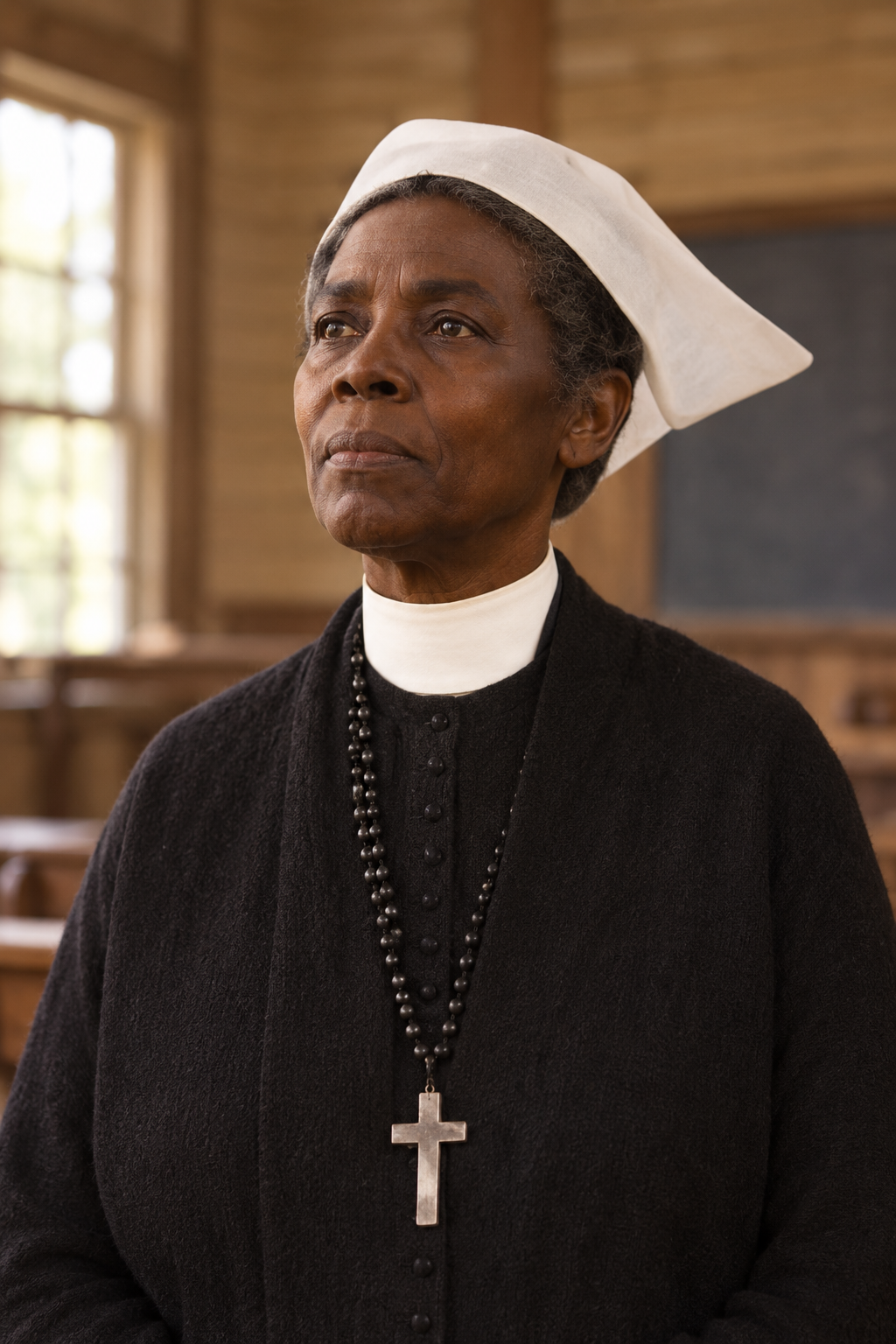
About Anna Ellison Butler Alexander
Anna Ellison Butler Alexander built a ministry around children who needed schooling and neighbors who needed care. In rural Pennick, Georgia, she taught, led worship, and visited the sick. Her work continued through years when poverty and racial segregation restricted the opportunities available to Black Georgians. The school and congregation she helped establish became enduring parts of the community.
She was born on St. Simons Island, probably around 1865, to James and Daphne Alexander, who had been enslaved. She was the youngest of eleven children. Historian Jan Saltzgaber found conflicting birth records and rejected the much later years recorded in some documents. Her early work included teaching with her sisters Mary and Dora at St. Cyprian’s in Darien.
Family history remained important to her. In a surviving page of a 1937 letter to Mrs. Taylor, Alexander apologized for taking time to send the account she had promised. She recalled her paternal grandmother, Hannah Ellison Butler, caring for children in the Butler household. The letter preserves Alexander’s own memory of her family’s connections to that household; its recollections should not be mistaken for an independently verified genealogy.
Her parents had belonged to the household of Pierce Mease Butler. When his debts led to the mass sale remembered as the Weeping Time, they were spared from sale, although the catastrophe divided the community to which they belonged.
Good Shepherd’s mission at Pennick began in 1894, and its school followed in 1902.
In May 1907, Bishop C. K. Nelson admitted Alexander to the office of deaconess at Good Shepherd Church in Thomasville. The occasion brought together Black Episcopalians attending the Council of Colored Churchmen. In a later sermon, Bishop Frank Logue places that ceremony within a network of Black congregations that also operated schools. Delegates knew educational work through their own churches, including those in Darien and Brunswick. Alexander’s recognition belonged within this wider community of teachers and church members.
Recognition did not remove the barriers around her. The diocese had created a separate council for its Black congregations in 1906. Alexander also cooked at Camp Reese, where Black children could not attend as regular campers.
Her own report in 1910 shows how closely the school, congregation, and household visits were connected. Enrollment had risen from twenty-four pupils to nearly one hundred. She reported 141 baptized people on the mission’s lists, mostly children, and five students continuing their education at St. Paul’s School in Virginia. There they worked to meet part of their expenses.
After teaching, she sometimes walked nine or ten miles to visit families. Crossing swampy ground could mean balancing on a log with a pole. She described sick people who needed attention as well as medicine. Children learned prayers and took part in services; at Thanksgiving they brought food for elderly and sick neighbors. When confirmation required travel to Brunswick, members faced a long journey. Her account describes walking to the railway at Sterling, finding lodging, and paying part of the railway costs herself.
The first building served both as a classroom and a place of worship. In 1930, diocesan publicity director Julia St Clair Moore described the difficulties of fitting adult worshippers around school desks. Alexander wanted a separate chapel. Bishop F. F. Reese had laid its cornerstone the previous year, and construction was advancing. Alexander had raised more than a thousand dollars; local people contributed money and labor, with help also coming from elsewhere.
Moore named Mary C. Mann as Alexander’s assistant in the mission. Her account also recorded Alexander’s participation in a diocesan teacher-training class in Savannah, where she was the only Black student. She subsequently organized rural vacation schools. The first received diocesan educational funding, while later work was supported by the mission itself. These details show both the practical help around her and her continuing efforts to develop teaching beyond the ordinary school year.
Fees did not determine who could attend her school. Saltzgaber records that in 1934 only two of thirty pupils could pay the small charge, yet children were not excluded. During the Depression, Alexander distributed food to both Black and white neighbors.
She died in 1947 after retiring from active work. The following March, The Deaconess printed a notice remembering her teaching, services, parish duties, and visits around the countryside. That contemporary obituary gives November 17 as the date of death. Because later accounts give a different date, the year is retained here without assigning a settled day.
The Episcopal Diocese of Georgia recognized her as a saint in 1998, and the wider Episcopal Church added her commemoration in 2018. In 2023, diocesan convention delegates unanimously named her their patron saint. Congregations received permission to observe her September 24 feast on the nearest Sunday and were encouraged to support the schoolhouse’s preservation and the center for reconciliation and healing bearing her name.
Wondering how to weigh the stories and sources? Learn how to read a saint biography.