Biography
Anna the Prophetess
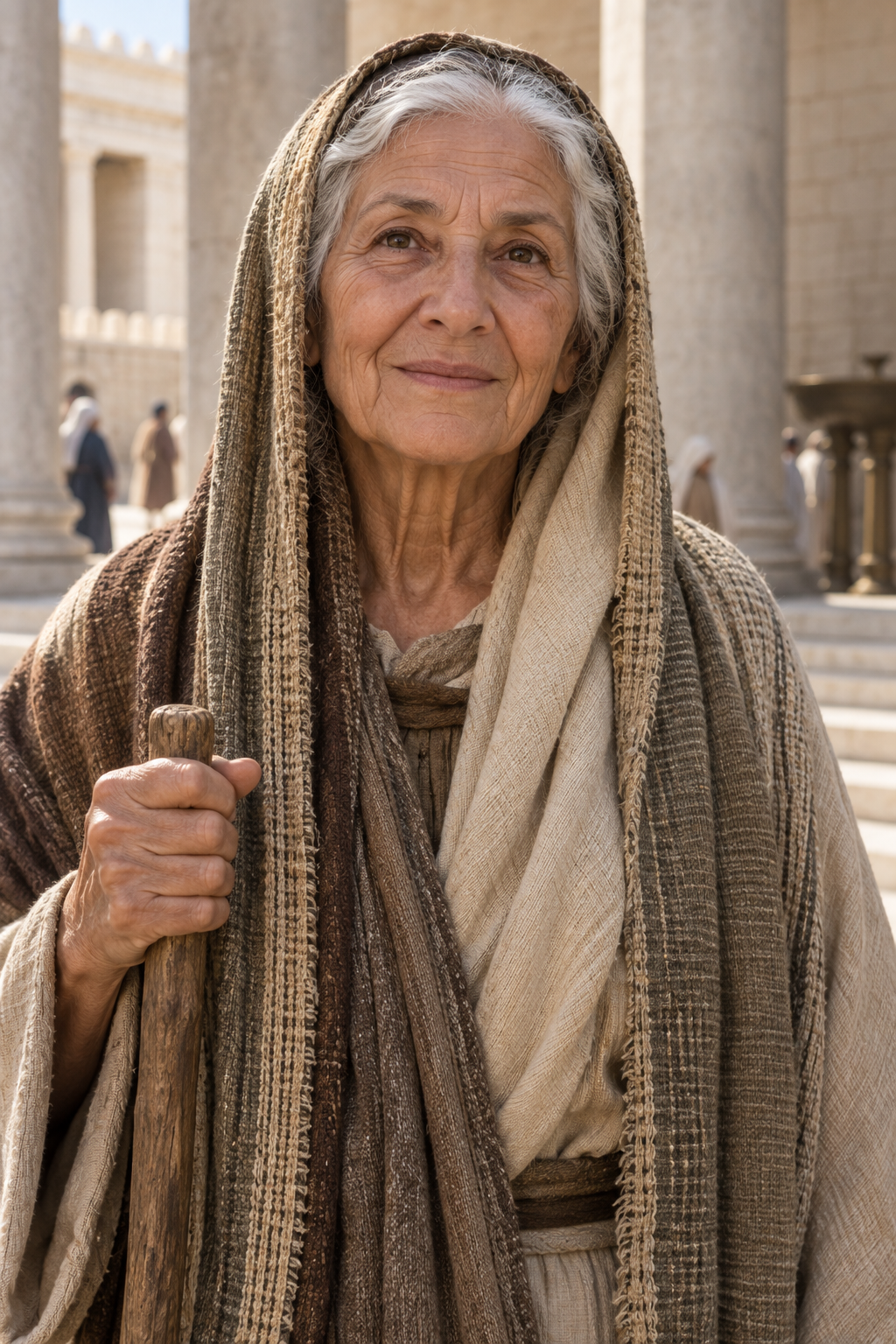
About Anna the Prophetess
Anna appears in the *Gospel of Luke* as a prophetess present when Mary and Joseph brought the child Jesus to the Jerusalem temple. Luke names her father as Phanuel and her tribe as Asher. These identifiers make her more than an unnamed bystander in the story, though the text provides no birthplace or account of her childhood. Her one narrated encounter takes place within Luke's presentation scene, not in a separately documented travel history.
Luke says Anna had been married for seven years and was then widowed. She spent her time in worship, fasting, and prayer. The passage describes her as advanced in years, but its reference to eighty-four is read either as her age or as the length of her widowhood. The NET Bible notes this ambiguity. Neither interpretation supports an exact birth year, and the account does not say where she lived outside her association with the temple.
At the moment Jesus was presented, Luke says Anna came forward, gave thanks to God, and spoke about the child to people awaiting the redemption of Jerusalem. This is the one concrete personal scene the passage gives. It does not transcribe her speech or name the people who heard it. A modern biographer should not supply a quotation or imagine a wider preaching itinerary on the strength of those three verses.
Scholar Sarah Harris observes that Luke pairs Anna with the preceding, more developed account of Simeon. Her published abstract emphasizes a striking limit: Anna speaks in the story, yet Luke does not preserve the content of her words. The comparison helps readers notice a woman's active witness without inventing a speech for her. Harris explores possible intertextual links with earlier biblical women; those are interpretive connections, not proof of Anna's family history or hidden actions.
Anna's significance in Luke is her sustained prayer and her response when she sees the child. Her father and tribe are named, her widowhood is remembered, and her thanksgiving is recorded, but the narrative then falls silent about her later years and death. The single scene can be honored as Luke tells it. A biography beyond that scene must remain modest about what is unknown.
Wondering how to weigh the stories and sources? Learn how to read a saint biography.