Biography
Anne Ayres
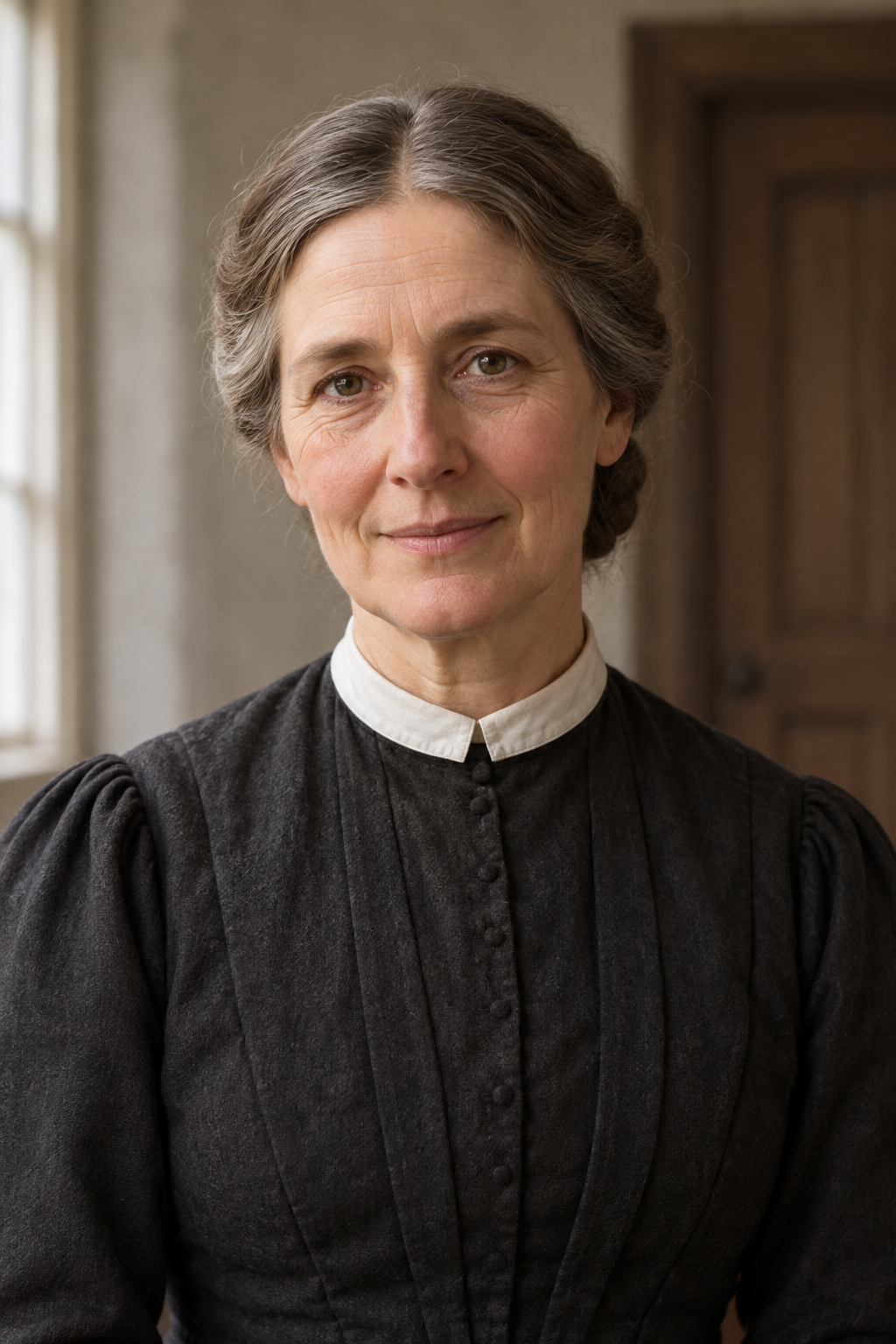
About Anne Ayres
Anne Ayres helped establish a form of religious service for women in the Episcopal Church through teaching, nursing and the management of charitable institutions. Born in London in 1816, she came to the United States in 1836. Her later work connected the Church of the Holy Communion in New York with St. Luke’s Hospital and St. Johnland on Long Island. These institutions brought her religious commitment into the daily care of people who needed shelter, education or nursing.
She arrived in New York with her parents and taught girls from prosperous families. One pupil was a niece of the Episcopal priest William Augustus Muhlenberg. After hearing him preach in the summer of 1845, she decided to dedicate her life to Christian service. Muhlenberg received that dedication in a private ceremony on All Saints’ Day. She became known as Sister Anne.
In her own account, the Sisterhood of the Holy Communion formally organized in 1852. Its members lived together and worked in the parish school, dispensary and infirmary, as well as visiting poor households. Describing their work in 1856, Ayres recorded a seventeen-bed infirmary and a school attended by seventy children. The community combined education with practical assistance for people whose illness or poverty limited their choices.
In 1853 the sisters opened an infirmary beside the parish church. When the new St. Luke’s Hospital was completed in 1858, its patients transferred there. Ayres became responsible for nursing, nurse training and housekeeping. A sister directed each ward, supervising students and paid nurses. This work required continuing attention to the organization of care as well as individual acts of kindness. The hospital’s archival history places the sisters at the beginning of its nursing tradition.
Ayres explained her approach in Practical Thoughts on Sisterhoods, published in 1864. She argued that women who lived where they worked could offer sustained care that occasional visits could not provide. She valued competent nursing over religious instruction detached from bodily needs. Her proposed communities allowed renewable three-year engagements, with a period of probation before full membership. Their rules included daily recreation and time away in summer. Her account also carried the class assumptions of her time, particularly in its contrast between educated volunteers and hired attendants.
The community did not satisfy every woman who joined it. In his later memorial sermon, George William Douglas recalled that some members wanted a more formal organization and left to establish the Sisterhood of St. Mary. He presented the difference as one between legitimate forms of religious service. One approach emphasized a continuing corporate order; another allowed greater independence for the individual worker. His sympathetic account helps explain why the history of Episcopal sisterhoods includes both cooperation and separation. Bellamy also reports that some sisters considered Ayres’s leadership unpredictable and authoritarian.
Ayres also gave increasing attention to St. Johnland, a Long Island community intended to shelter people in need, including children, older people and people with disabilities. She served as a trustee. In 1876 the trustees of both St. Luke’s and St. Johnland recognized her authority with the title Sister Superintendent. She also cared for the aging Muhlenberg and served as his secretary.
Douglas remembered her later work as increasingly independent, although she remained associated with the sisters. He compared it with the ministry of an individual deaconess working alongside a pastor, while explicitly observing that deaconess was not her title. This distinction matters: her work did not fit neatly into a single institutional model. The memorial sermon described a vocation that changed as her responsibilities and circumstances changed.
After Muhlenberg died in 1877, Ayres retired from the hospital. The nursing and housekeeping departments subsequently separated. The archival account describes growing patient numbers, more complex medical care and fewer applicants to the sisterhood as pressures on the earlier system. St. Luke’s established a training school in 1888 with six students. That development belonged to the next stage of the hospital’s history, building on earlier nursing work while changing its organization.
Ayres edited Muhlenberg’s writings and wrote his biography from his diaries and papers. Bellamy’s historical account records that his papers were destroyed according to his instructions and that Ayres later destroyed her own. These losses limit the surviving personal record.
She died at St. Luke’s Hospital in New York on February 9, 1896. Her life had joined religious community, nursing and the administration of institutions serving people in need.
St. Johnland’s contemporary annual report records her burial there on February 12. Her sister Mary, who had once assisted her at the community, was buried beside her later that year. Friends and relatives provided headstones for their graves. This institutional record preserves the burial date separately from the date of death.
St. Mary’s Episcopal Church in Kansas City lists Ayres with Muhlenberg on April 8. This is an Episcopal commemoration, distinct from Roman Catholic canonization.
Wondering how to weigh the stories and sources? Learn how to read a saint biography.