Biography
Ansovinus
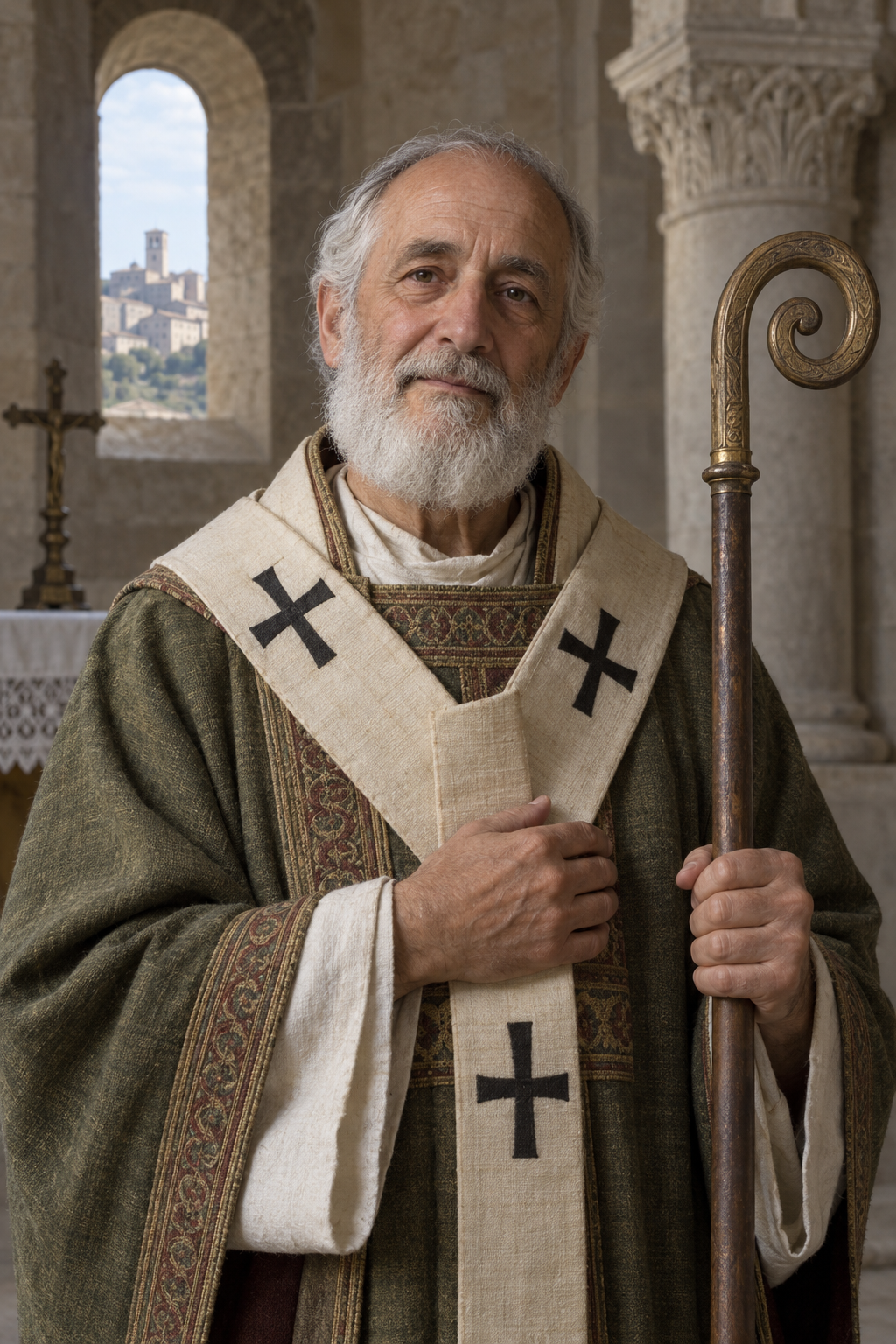
About Ansovinus
Ansovinus belongs to the history of the church of Camerino, a city in central Italy. The archdiocese names him in its episcopal succession after Fratello and before Eudo. Its chronology places his service approximately between 850 and 868 and calls him the saint of that part of the list. The same chronology warns that early medieval records are incomplete. Such a local list supports his office and setting while leaving an exact ordination date uncertain.
The church's own account says people honored Ansovinus during and after his life for his care of the community. It describes him as challenging unacceptable customs and helping his people through charity. These are broad qualities remembered by later local tradition, not a diary of individual interventions. The profile therefore does not fabricate a campaign, beneficiary, or speech to make his pastoral work more vivid. What remains clear is the enduring place of a bishop named Ansovinus in Camerino's memory.
A Vita composed in the tenth century gives a fuller story. The Enciclopedia Cattolica says it was written by a monk named Egino. It portrays Ansovinus as a confessor to Emperor Louis the Pious and says he accepted the bishopric on condition that bishops be released from military service. The episode speaks to a real tension between ecclesial and secular duties, but a later hagiographic narrative cannot by itself prove the exact conversation or terms of an appointment.
The Bollandist publication preserves the older local dossier and its attention to Camerino's cult. It shows how subsequent readers encountered Ansovinus through a written life, not just through a bare list of bishops. That transmission matters, yet the interval between the reported episcopate and the text prevents the Vita from serving as an eyewitness record of every scene. The office is more secure than the court details, and neither a full itinerary nor a birth year can be recovered.
Dating requires particular restraint. Camerino's current chronology gives about 850–868, whereas the Orthodox Encyclopedia lists a death on 13 March 861 and consecration around 844. The Enciclopedia Cattolica stays with the first half of the ninth century rather than fixing a year. These references agree that Ansovinus was a ninth-century bishop, but they do not offer a settled year for structured life data. The March date is his liturgical commemoration; it should not be used to choose between the conflicting death years.
The Enciclopedia Cattolica records 13 March in the Roman Martyrology. That feast is an observance within a named Catholic calendar, not a claim that every Christian tradition commemorates him identically. Camerino's later cathedral image and local devotion show the longevity of his remembrance. The record can identify him as a bishop and saint of Camerino without assigning unverified life places or a patronage domain from a modern list.
Ansovinus is significant as a remembered shepherd in a period when Camerino's written episcopal chronology has gaps. His received life gave later Christians a picture of a bishop who put pastoral duties before coercive demands. Historical care requires keeping that picture identified as tradition while retaining what the local episcopal list and continuing cult support. The result is a shorter account, grounded in place and office, rather than a precise life assembled from incompatible dates.
Wondering how to weigh the stories and sources? Learn how to read a saint biography.